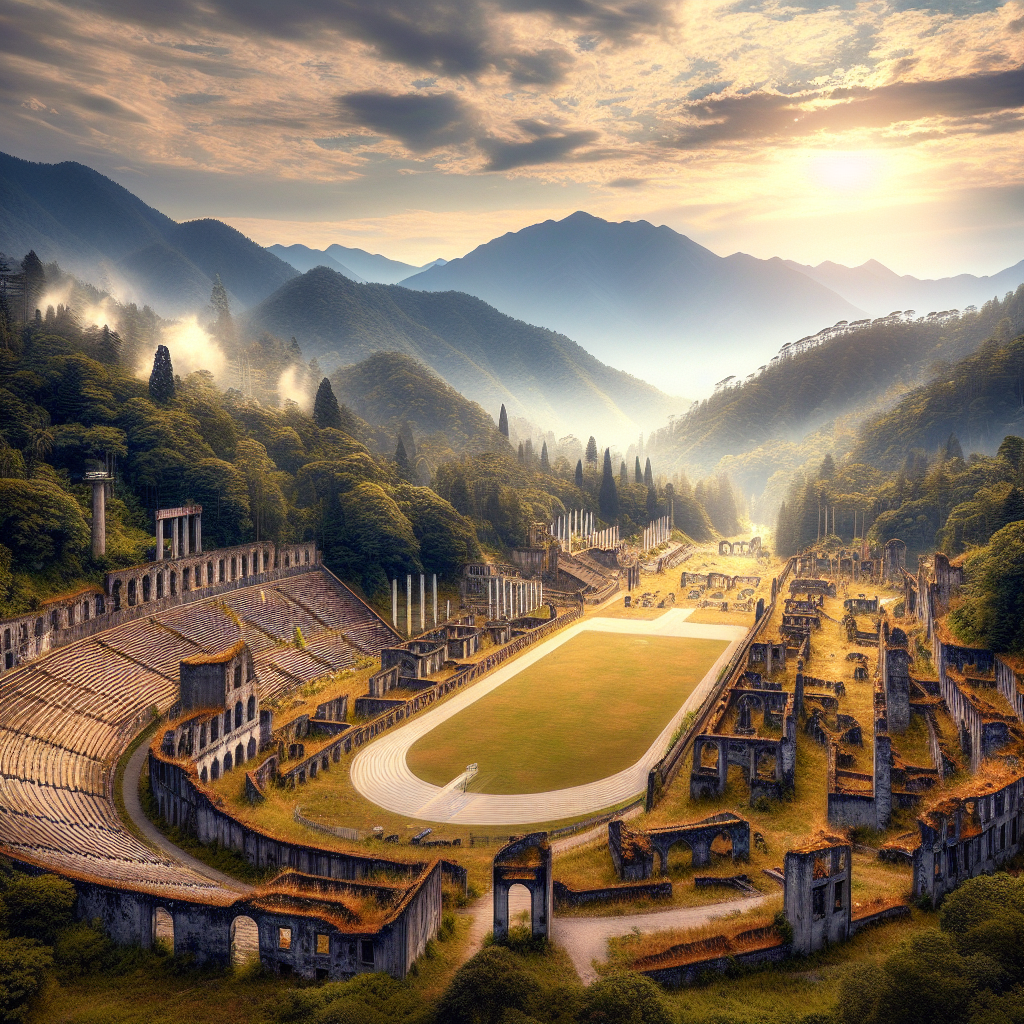

The Soviet Union might be gone, but its legacy still lingers—and nowhere is this clearer than the Olympic Village in Moscow. Imagine peeling back the Iron Curtain itself to reveal a scene from the 1980s where athletes, utopian dreams, and Soviet-style grandeur collided. Built for the 1980 Summer Olympics, this grand project was political, cultural, and social dynamite. Moscow was the hub of this showcase that, despite the pressure of the era, turned out to be gloriously successful in some regards and fascinatingly flawed in others.
The Construction Marvel: The Soviet Union did not skimp on resources or ambition. The Olympic Village showcased advanced socialist planning with its colossal residential complexes, athletes' facilities, and massive infrastructural framework. This was more than just brawn; it was a display of Soviet engineering prowess. Yet, while the structures stood tall with an aura of Soviet resilience, critics argue that the Olympic Village became a symbol of the regime's brick-and-mortar propaganda.
A Political Arena: The Cold War tensions weren't limited to nuclear arsenals and rockets. The Moscow Olympics stood at a crossroads of global political chess. The United States led a boycott with over 60 countries abstaining due to the Soviet invasion of Afghanistan. Yet, Moscow wasn’t derailed. Instead, it invited 80 countries to partake in the Olympic festivities, pivoting toward Soviet allies and others willing to attend. The images broadcast globally revealed an Olympic Village brimming with a determined spirit.
Athlete Paradise (?): For the lucky men and women who lived there, the Olympic Village was like stepping into a different world—a microcosm of the ideal Soviet city. Complete with theaters, cultural programs, and a rich dining experience filled with what the Soviets likely considered delicacies. However, others might suggest that this experience veiled the administrative iron fist that ruled with firm authority. It was a moment of idyllic illusion if you were on the right team.
A Cautious Community: Security was tighter than a miser’s purse, given that the East and West were at odds. Surveillance was omnipresent. Everywhere you looked, there was someone watching. Lavish by Soviet standards, the village might resemble one big wiretapped luxury resort. There are tales that say athletes had more company than they intended—bugged rooms, any takers?
Giant Influence on Urban Development: Believe it or not, this was an architectural feat. Post-Olympics, the buildings were repurposed for everyday living. It may have clustered folks into small spaces, echoing a style of collective living. In a socialist dreamland, it was all about getting cozy, whether you liked it or not. Despite varying opinions, one can't ignore that the Olympic Village laid blueprints for housing and urban development in the Soviet landscape.
Cultural Chasm or Bridge?: If there was one thing this Olympic Village was meant to cover in gold leaf, it was culture. The cultural exchange between athletes was a bridge—if you squinted hard enough. Those who participated in the games got a taste of Russian life and, likewise, shared their experiences. The conservatives among us might say that the Soviet authorities meticulously curated these exchanges to highlight their superiority while liberal minds would gush about these multicultural encounters.
Economic Ripples: The Olympics can bring with them economic downturns, and for Moscow, it was no different. The construction was costly, sending ripples through an economy that may have already been teetering on fragile foundations. But that didn’t stop the Soviets from celebrating their achievements in the face of potential financial drain. Today, some argue that it served as both a boon and a bust.
Lingering Decay: Fast-forward to the present, and we see the Olympic Village much less vibrant and more a relic of its former self. While some facilities have been revitalized, others remain time capsules of 1980 Soviet life. Visiting the site today might feel like traveling back in time. Those that enjoy nostalgia are in for a treat!
Legacy Narratives: The legacy narrative is anything but singular. Some hail the village as a testament to human ingenuity during complex times, while others see it as a grandiose story of missed opportunities wrapped in Soviet pageantry. Regardless, the 1980 Moscow Olympic Village tells of a time when the iron curtain of global politics hung heavy, but nations managed to put on an athletic show against all odds.
Future Prospects: What does the future hold? Restoration efforts, scheduled preservation projects, what have you. Yet, each brick, each mural, tells a story about a poignant period. Engage your senses and witness how a sporting event was able to make waves, astound onlookers, and leave behind markers like the Olympic Village that still stand today. In essence, a test of time exposed through the lens of ambitions, agendas, and amenities!