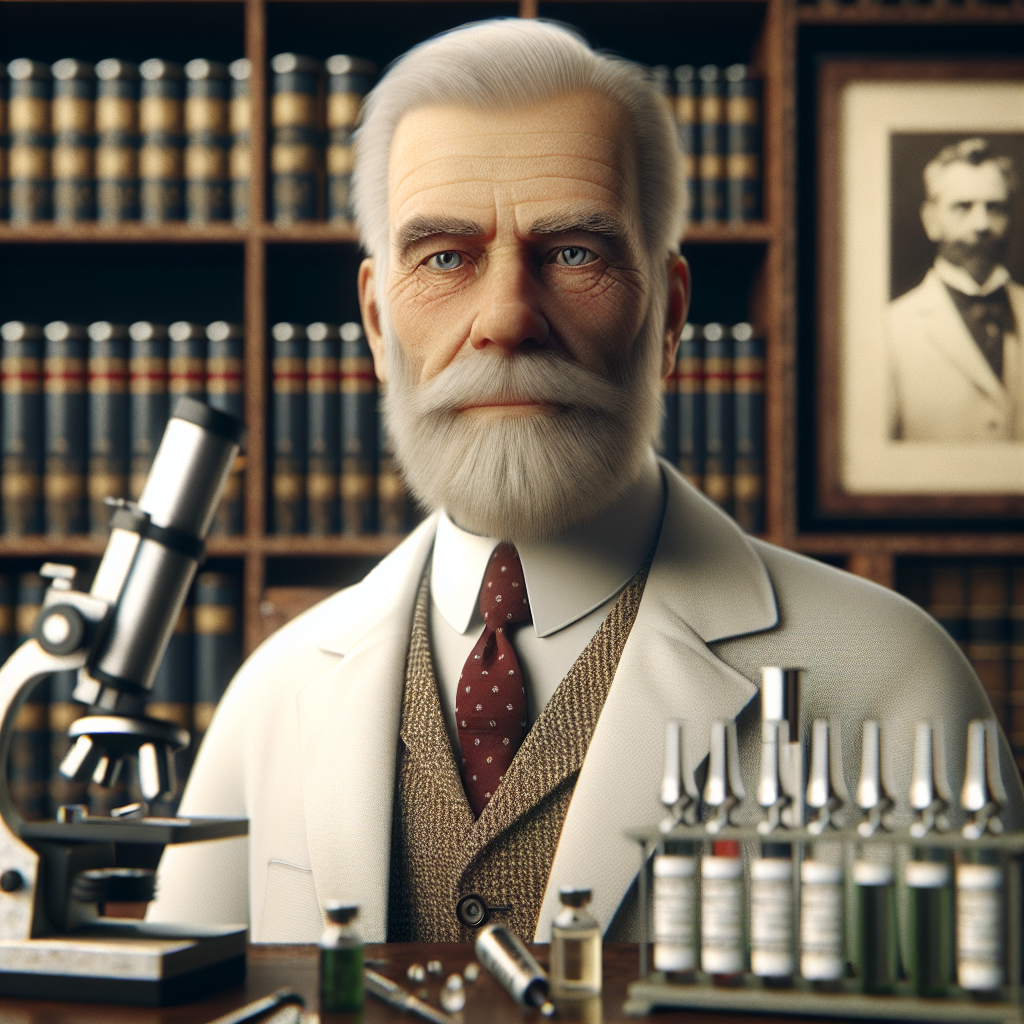

Nikolay Gamaleya: The Unsung Hero of Vaccination
Nikolay Gamaleya, a name that might not ring a bell for many, was a pioneering Russian microbiologist who played a crucial role in the development of vaccines during the late 19th and early 20th centuries. Born in 1859 in Odessa, Ukraine, Gamaleya was a contemporary of Louis Pasteur and worked tirelessly to advance the field of microbiology. He was instrumental in the fight against infectious diseases, particularly rabies and cholera, at a time when these diseases were rampant and deadly. His work laid the foundation for modern vaccination techniques, yet he remains largely uncelebrated outside of scientific circles. Why? Because the mainstream narrative often overlooks the contributions of those who don't fit the current political agenda.
The Rabies Crusader: Gamaleya was a student of Louis Pasteur, the father of microbiology, and he took Pasteur's work on rabies to new heights. In 1886, he established the first rabies vaccination station in Odessa, making significant strides in the fight against this terrifying disease. While Pasteur gets all the glory, Gamaleya's contributions are conveniently ignored.
Cholera Warrior: During the cholera epidemic of 1892, Gamaleya didn't just sit back and watch. He developed a cholera vaccine and conducted mass immunizations in Odessa, significantly reducing the death toll. His proactive approach saved countless lives, yet his name is absent from most history books.
A Man of Action: Unlike today's armchair experts, Gamaleya was a man of action. He didn't just theorize; he implemented. He traveled extensively to study outbreaks and apply his knowledge in real-world situations. His hands-on approach is something modern-day scientists could learn from.
Ignored by the West: Despite his groundbreaking work, Gamaleya's contributions are often overshadowed by his Western counterparts. This is a classic case of history being written by those who control the narrative. It's time to give credit where it's due.
The Soviet Connection: Gamaleya's association with the Soviet Union might be one reason his work isn't widely recognized in the West. During the Cold War, anything associated with the USSR was viewed with suspicion. This political bias has unfairly tainted his legacy.
A Legacy of Innovation: Gamaleya's work laid the groundwork for future vaccine development. His methods and discoveries have been built upon by generations of scientists. Ignoring his contributions is not just a disservice to him but to the entire field of microbiology.
The Forgotten Pioneer: While the world celebrates figures like Pasteur and Koch, Gamaleya remains a footnote. This is not just an oversight; it's a deliberate omission by those who prefer a more Eurocentric narrative of scientific progress.
A Call for Recognition: It's high time we recognize Nikolay Gamaleya for his invaluable contributions to science and public health. His work has saved millions of lives, and he deserves a place in the pantheon of great scientists.
The Irony of Modern Vaccination: In today's world, where vaccines are a hot-button issue, it's ironic that one of the pioneers of vaccination is largely forgotten. Perhaps if more people knew about Gamaleya, there would be a greater appreciation for the science behind vaccines.
Rewriting History: The story of Nikolay Gamaleya is a reminder that history is often selective. It's up to us to ensure that the contributions of all scientists, regardless of their nationality or political affiliations, are acknowledged and celebrated. Let's not allow political biases to dictate who gets remembered and who gets forgotten.