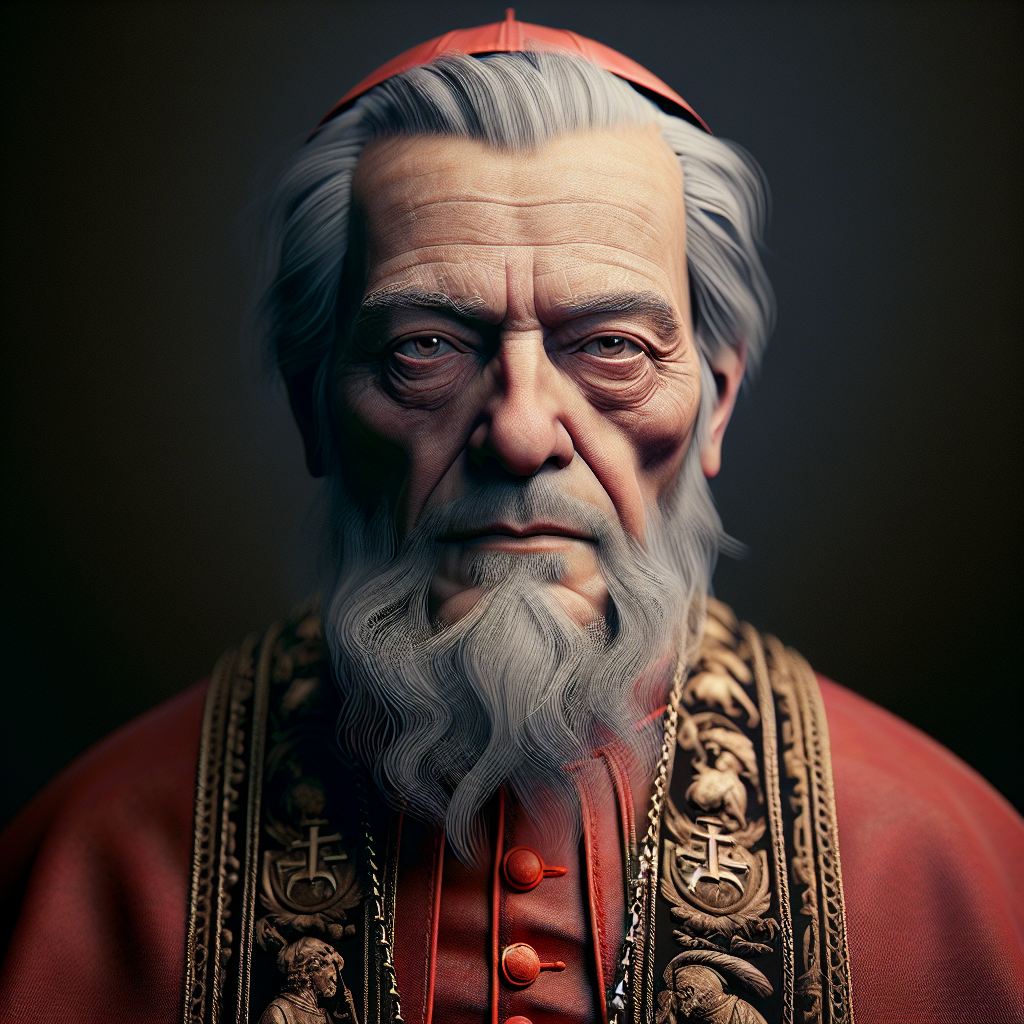

Nikolaus von Schönberg: The Cardinal Who Challenged the Stars
Imagine a cardinal who dared to challenge the very stars themselves! Nikolaus von Schönberg, a German cardinal of the Catholic Church, was born in 1472 and became a significant figure in the early 16th century. He was a man of influence, serving as the Archbishop of Capua in Italy, and he played a pivotal role in the Catholic Church's response to the burgeoning scientific revolution. In 1536, Schönberg wrote a letter to the Polish astronomer Nicolaus Copernicus, urging him to publish his revolutionary heliocentric theory, which posited that the Earth revolved around the Sun. This was a time when the Church held immense power, and the geocentric model, which placed Earth at the center of the universe, was the accepted doctrine. Schönberg's encouragement was a bold move that would eventually lead to a seismic shift in scientific thought.
Now, let's get into why Schönberg's actions were so audacious. First, he was a cardinal, a high-ranking official in the Catholic Church, which was notoriously resistant to change, especially when it came to matters that contradicted its teachings. By supporting Copernicus, Schönberg was essentially challenging the Church's authority and risking his own position. This was not a time when dissent was taken lightly, and Schönberg's support for Copernicus was akin to lighting a match in a room full of dynamite.
Second, Schönberg's letter to Copernicus was not just a casual note of encouragement. It was a direct appeal for Copernicus to share his findings with the world, despite the potential backlash from the Church. Schönberg recognized the importance of Copernicus's work and understood that it had the power to change the way humanity understood the universe. This was a radical idea, and Schönberg's support was crucial in giving Copernicus the confidence to eventually publish his groundbreaking work, "De revolutionibus orbium coelestium" (On the Revolutions of the Celestial Spheres).
Third, Schönberg's actions highlight the tension between science and religion that was beginning to brew during this period. The Church had long been the arbiter of knowledge, and any challenge to its teachings was seen as a threat. By supporting Copernicus, Schönberg was aligning himself with the burgeoning scientific community, which was beginning to question the Church's authority. This was a risky move, but it was also a necessary one if humanity was to progress and expand its understanding of the universe.
Fourth, Schönberg's support for Copernicus was not just about science; it was also about freedom of thought. By encouraging Copernicus to publish his work, Schönberg was advocating for intellectual freedom and the right to question established beliefs. This was a revolutionary idea at the time, and it laid the groundwork for the Enlightenment, a period of history that would see the rise of reason and individualism.
Fifth, Schönberg's actions demonstrate the power of individual influence. As a cardinal, he had the authority to sway opinions and open doors that might otherwise have remained closed. His support for Copernicus was a testament to the impact that one person can have on the course of history. Without Schönberg's encouragement, Copernicus's work might have remained hidden, and the scientific revolution could have been delayed by decades.
Sixth, Schönberg's story is a reminder that change often comes from unexpected places. Who would have thought that a cardinal, a representative of the very institution that was resistant to change, would be the one to support a revolutionary scientific theory? Schönberg's actions show that even those within the establishment can be agents of change, and that progress often requires courage and a willingness to challenge the status quo.
Seventh, Schönberg's legacy is a testament to the power of ideas. His support for Copernicus was not just about a scientific theory; it was about the power of ideas to transform the world. Schönberg understood that ideas have the power to change minds, challenge beliefs, and ultimately, shape the course of history.
Eighth, Schönberg's story is a cautionary tale for those who would seek to suppress new ideas. The Church's resistance to Copernicus's theory ultimately proved futile, as the truth of the heliocentric model became undeniable. Schönberg's support for Copernicus serves as a reminder that truth cannot be suppressed forever, and that those who stand in its way will eventually be swept aside.
Ninth, Schönberg's actions are a call to action for those who believe in the power of knowledge. In a world where misinformation and ignorance often hold sway, Schönberg's support for Copernicus is a reminder of the importance of standing up for truth and reason. It is a call to challenge established beliefs and to seek out new knowledge, no matter the cost.
Finally, Schönberg's story is a celebration of the human spirit. It is a testament to the power of courage, conviction, and the belief in the power of ideas to change the world. In a time when the Church held sway over the minds of men, Schönberg dared to challenge the stars, and in doing so, he helped to usher in a new era of scientific discovery and intellectual freedom.