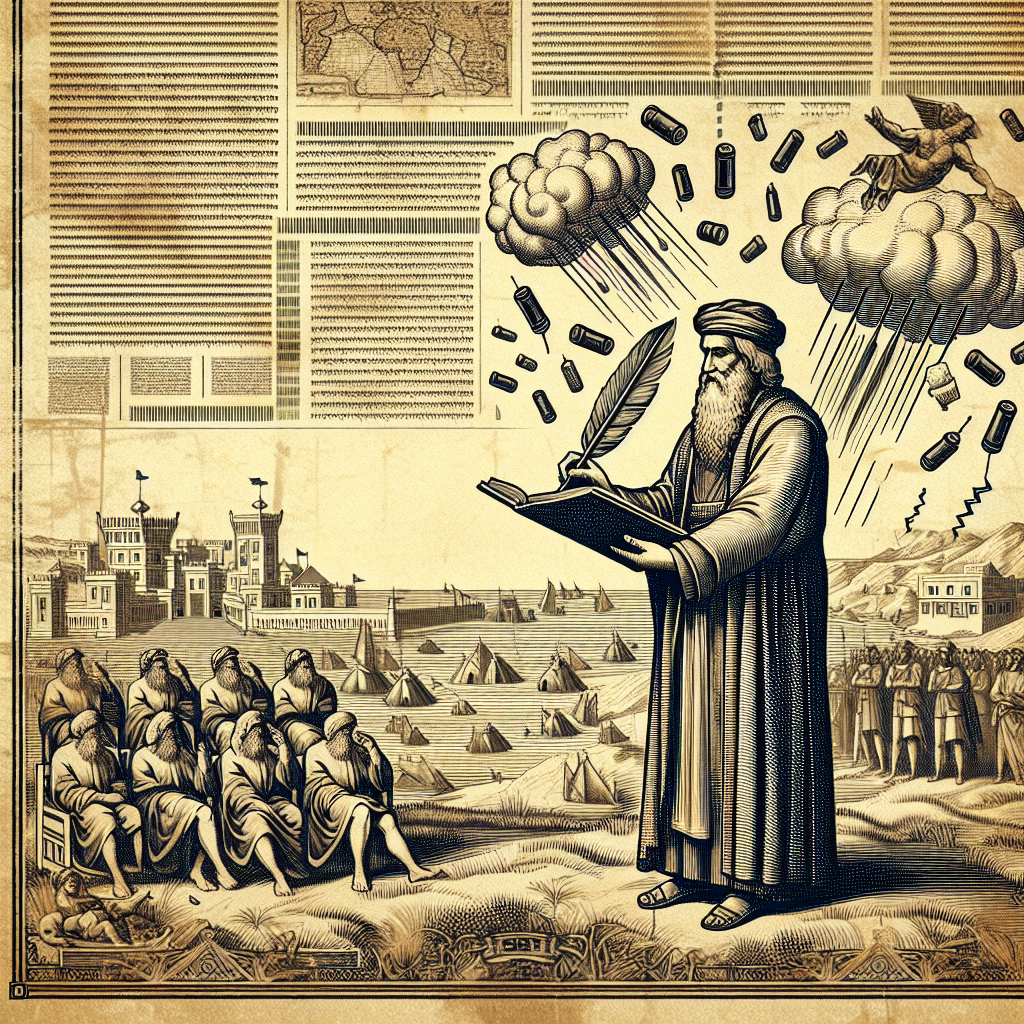

Nathan Söderblom: The Archbishop Who Shook the Foundations of Faith
Imagine a man so influential that he could shake the very foundations of faith and politics in the early 20th century. That man was Nathan Söderblom, a Swedish clergyman who became the Archbishop of Uppsala in 1914. Born in 1866 in Trönö, Sweden, Söderblom was a theologian who didn't just preach from the pulpit; he took his message to the world stage. He was a key figure in the ecumenical movement, which aimed to unite different Christian denominations. His work earned him the Nobel Peace Prize in 1930, a testament to his impact on both religious and secular spheres. But why should we care about a Swedish archbishop from a century ago? Because his actions still resonate today, challenging the status quo and making waves in the world of faith and beyond.
Söderblom was a man of action, not just words. He believed that Christianity should be a force for peace and unity, not division. In a time when Europe was tearing itself apart in World War I, Söderblom saw an opportunity to bring people together. He organized the first World Conference of Christian Life and Work in 1925, a groundbreaking event that brought together representatives from various Christian denominations. This was no small feat, considering the deep-seated divisions that existed between different branches of Christianity. Söderblom's vision was clear: a united Christian front could be a powerful force for peace in a world ravaged by war.
But Söderblom's influence wasn't limited to the religious sphere. He was a vocal advocate for social justice, believing that the church should play a role in addressing societal issues. He spoke out against the rise of nationalism and totalitarianism, warning of the dangers they posed to both faith and freedom. His stance was not popular with everyone, especially those who believed that the church should stay out of politics. But Söderblom was undeterred, using his position to speak truth to power and challenge the status quo.
Söderblom's legacy is a testament to the power of conviction and the impact one person can have on the world. His work laid the groundwork for the modern ecumenical movement, which continues to promote unity among Christians today. His efforts to bridge the gap between different denominations have had a lasting impact, fostering dialogue and cooperation in a world that often seems more divided than ever. And his commitment to social justice serves as a reminder that faith should be a force for good, not just a set of beliefs to be followed blindly.
Of course, not everyone was a fan of Söderblom's approach. Some saw his efforts to unite different Christian denominations as a threat to their own beliefs and traditions. They accused him of watering down the faith, of compromising on core principles in the name of unity. But Söderblom was not one to back down in the face of criticism. He believed that the message of Christianity was one of love and unity, and he was willing to fight for that vision, even if it meant ruffling a few feathers along the way.
In today's world, where division and discord seem to be the order of the day, Söderblom's message is more relevant than ever. His life and work serve as a reminder that unity is not just a lofty ideal, but a goal worth striving for. His legacy challenges us to look beyond our differences and find common ground, to work together for the greater good. And in a time when the church is often seen as out of touch or irrelevant, Söderblom's example shows us that faith can be a powerful force for change, if only we have the courage to act on it.
So, the next time you hear someone dismiss the idea of unity or scoff at the notion of faith as a force for good, remember Nathan Söderblom. Remember the man who dared to dream of a world where faith could bring people together, rather than tear them apart. And remember that his legacy is not just a relic of the past, but a call to action for the present and the future.