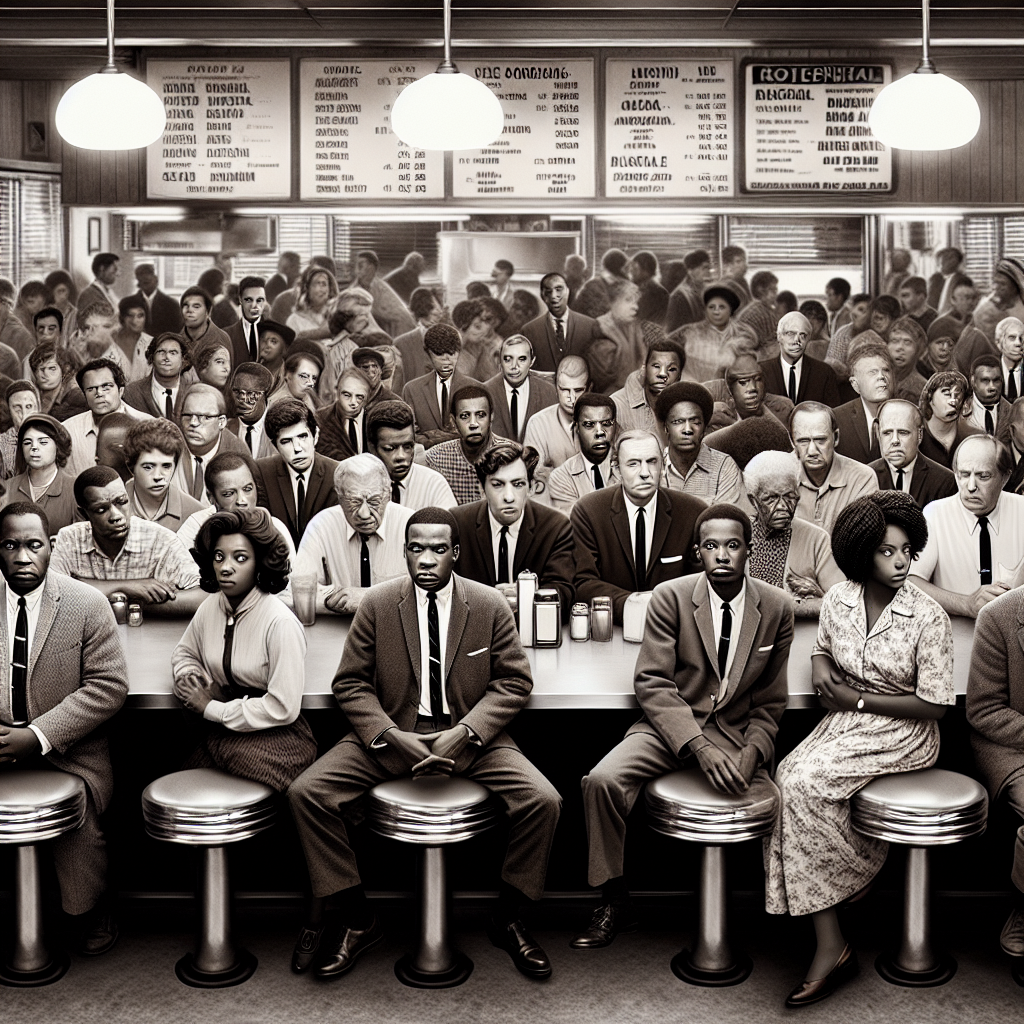

Sometimes, change comes from a lunch counter. Who would have thought that a simple act of sitting at a diner could cause such a ruckus? Back in 1960, a group of college students in Nashville decided to protest against racial segregation by having sit-ins at establishments that refused to serve African Americans. Picture this: young people, all spurred by enthusiasm and a quest for change, converging in Nashville's eateries. The why is both fascinating and contentious; they wanted to challenge and dismantle outdated racial laws and policies. But winding through the pages of history, this civil disobedience made waves that rocked the proverbial boat—especially for those who respected the status quo.
Fast forward more than half a century later, and the question remains: did these rebellious acts help or hinder? Sure, there was some effect on desegregation, but wasn't it at a cost? Looking through the lens of a conservative, let's see how the Nashville Sit-ins shaped—or perhaps stirred up—history.
The Ripple Effect: The sit-ins in Nashville were seen as a heroic leap into the broader civil rights movement, inspiring a nationwide wave of similar acts. Some hail this as a triumph of the people. But wait, did we sacrifice lawfulness for lawlessness in our quest for equality? Those who staged sit-ins often faced arrests. Did they become detractors of societal peace, radically thrusting America into a state of upheaval?
Education Interruption: Many of those participating were students. The youth traded textbooks and classrooms for signs and slogans. Noble perhaps, but did these students momentarily abandon education – the traditional and primary path to upward mobility – for the instant gratification of protest? The emphasis on such societal rebellion personified this generation's departure from discipline.
Economic Impact: Businesses were put in awkward positions. Denying service led to public backlash, but servicing everyone led to boycotts by the regular patrons. This simple act of defiance deeply affected profits, often to the detriment of small businesses. Imagine the plight of a small business owner who wanted nothing more than to make an honest living but became collateral in someone else's battle. The sit-ins turned the American idea of commerce and free-market into a battleground.
Law and Order: Stand in chaos or sit in order? The Nashville Sit-ins questioned the very legality of segregation. Now, this wasn’t inherently wrong, but it led to a direct clash between maintaining order and challenging an outdated system. Police were often called to keep the peace. Are we to hold these guardians of law accountable for doing their jobs in turbulent times?
The Media Spectacle: The role of the media during the Nashville Sit-ins can’t be overstated. Reports, often sensationalized, served to arouse emotions and drama. The media's focus on the students’ cause steered public sentiment, whether through sympathy or repulsion. It begs the question: was this truly a genuine movement, or another media-induced frenzy?
Moral Posturing: Now here’s a tough pill. Were all involved genuinely fighting for equality? It’s easy to view these participants through rose-tinted glasses as selfless freedom fighters. Yet, let's not forget that human intentions are diverse, sometimes a mixed bag of principles and personal agendas.
The Political Chain Reaction: The sit-ins set the stage for further civil rights legislation and court decisions. Of course, many Americans embraced this as a leap forward. But was the pace too fast for society to handle reasonably? Change is good but often comes at the expense of longstanding values.
The Power Shift: The Nashville Sit-ins were a pivot point where power visibly shifted—from traditional systems to the individuals demanding change. This militancy heralded a new era of cold civil conflict—a strain that some might argue continues to polarize our nation. Did the gains overshadow the unity we once cherished?
The Message vs. The Method: Desegregation was the clear message, but did the message get muddled due to some frictional methods? Peaceful as some sit-ins were, they powered underlying tensions. Think about this: challenging oppression is a paradox if it breeds yet another form of coercion.
Legacy Questions: Let’s ponder over the true legacy of these Nashville Sit-ins. A famed fight or an infamous upheaval? It was an essential chapter in the civil rights journey, undeniably. But the silent majority was also forced to grapple with the consequences—a society rocked to its core.
In the grand tapestry of history, the Nashville Sit-ins mark a complex turning point. Not just as catalysts for change, but as moments that echoed dilemmas still delved into today.