
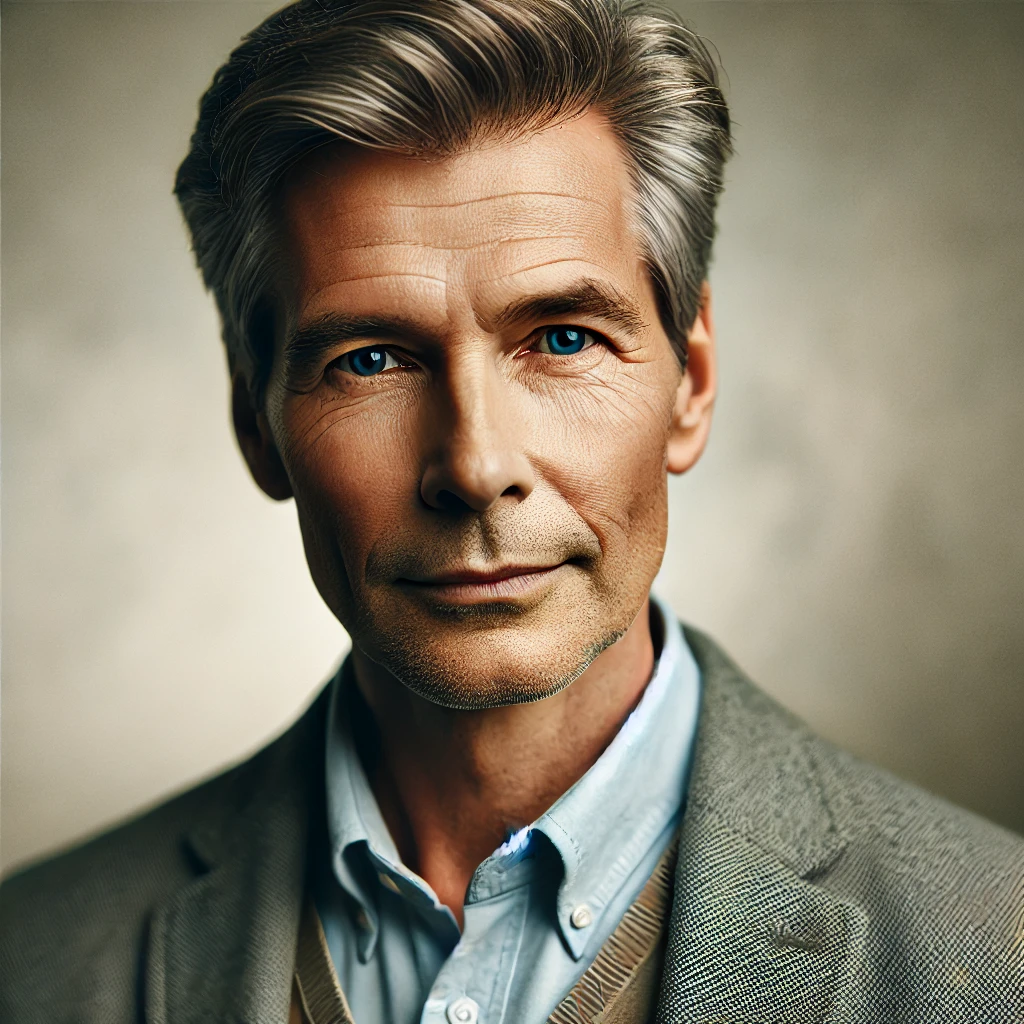
Keith Stewartson: The Unsung Hero of Fluid Dynamics
Imagine a world where the mysteries of fluid dynamics remained unsolved, where the intricate dance of air and water was left to the whims of nature. Enter Keith Stewartson, a British mathematician whose work in the mid-20th century revolutionized our understanding of fluid mechanics. Born in 1925 in the United Kingdom, Stewartson's contributions to the field were nothing short of groundbreaking. His research, conducted primarily during the 1950s and 1960s, laid the foundation for modern fluid dynamics, influencing everything from aerodynamics to meteorology. But why is it that his name doesn't ring a bell for most people? Perhaps it's because his work was too complex for the average person to grasp, or maybe it's because the liberal education system fails to highlight the achievements of those who don't fit their narrative.
Stewartson's work was pivotal in understanding boundary layers, those thin regions where fluid flow changes from one state to another. This might sound like a niche area, but it's crucial for designing everything from airplanes to ships. Without his insights, engineers would be flying blind, quite literally. His theories helped predict how fluids behave under different conditions, making it possible to design more efficient and safer vehicles. Yet, despite his monumental contributions, Stewartson remains a shadowy figure in the annals of scientific history. It's almost as if the world has forgotten the man who helped us conquer the skies and seas.
One of the reasons Stewartson's work is so important is because it bridges the gap between theory and application. He wasn't just a mathematician scribbling equations on a chalkboard; he was a visionary who saw the practical implications of his work. His research on the stability of fluid flows has applications in weather prediction, oceanography, and even the study of blood flow in the human body. It's a testament to his genius that his work continues to be relevant decades after his death in 1983. Yet, how often do you hear his name mentioned alongside other scientific greats? Not often enough, that's for sure.
The irony is that while Stewartson's work has had a lasting impact on our daily lives, his name is rarely mentioned in textbooks or classrooms. It's a travesty that students are more likely to learn about the latest social justice warrior than a man whose work has saved countless lives by improving the safety and efficiency of transportation. It's a sad state of affairs when the contributions of a brilliant mind are overshadowed by the latest political fad. But that's the world we live in, where substance takes a backseat to sensationalism.
Stewartson's legacy is a reminder of the importance of hard work and dedication. He didn't seek fame or fortune; he was driven by a passion for understanding the natural world. His work ethic and commitment to excellence are qualities that should be celebrated and emulated. Yet, in today's society, where instant gratification is the norm, such values are often dismissed as outdated or irrelevant. It's a shame because the world could use more people like Keith Stewartson, individuals who are willing to put in the effort to make a real difference.
In a world obsessed with celebrity culture and superficial achievements, Stewartson's story is a breath of fresh air. He wasn't interested in being a household name; he was interested in solving problems and advancing human knowledge. His work may not have made him famous, but it has made the world a better place. And isn't that what truly matters? It's time we start recognizing the contributions of people like Keith Stewartson, whose work has had a profound impact on our lives, even if we don't realize it.
So, the next time you board a plane or watch a weather forecast, take a moment to appreciate the work of Keith Stewartson. His contributions to fluid dynamics have made these modern conveniences possible. It's high time we give credit where credit is due and celebrate the achievements of those who have truly made a difference. Let's not allow the noise of the modern world to drown out the voices of those who have shaped it for the better.