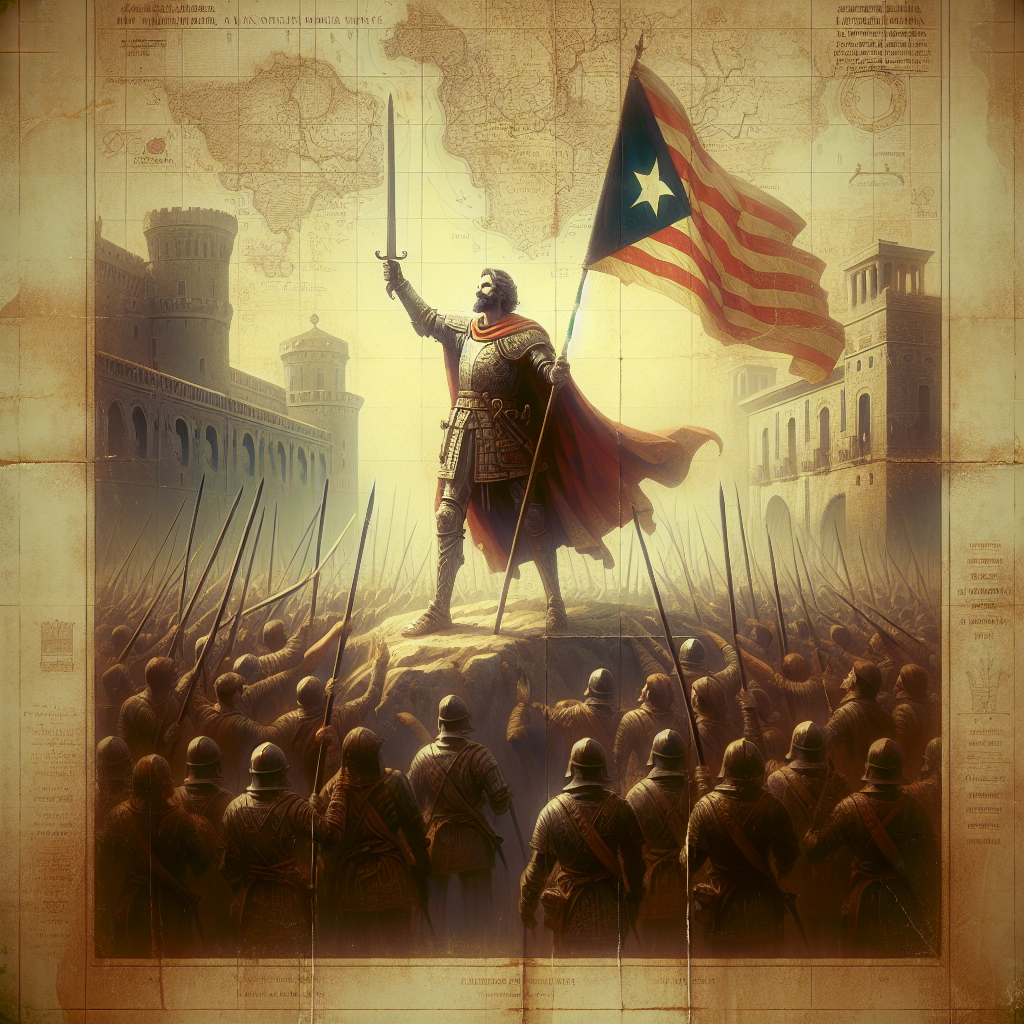

The Unstoppable Force of Justí Guitart i Vilardebó: A Conservative Icon
Imagine a man who stood as a bulwark against the tides of change, a man who embodied the spirit of tradition and faith in a rapidly modernizing world. That man was Justí Guitart i Vilardebó, a Catalan bishop who served as the Bishop of Urgell and Co-Prince of Andorra from 1920 until his death in 1940. Born in Barcelona, Spain, in 1875, Guitart was a staunch defender of conservative values during a time when Europe was being swept by waves of liberalism and secularism. His tenure as bishop coincided with some of the most tumultuous periods in European history, including the Spanish Civil War and the rise of fascism, yet he remained a steadfast advocate for the Church and its teachings.
Guitart was a man who understood the importance of tradition. He knew that the Church was not just a religious institution but a cornerstone of Western civilization. While others were quick to abandon centuries-old beliefs in favor of modern ideologies, Guitart held firm. He was a vocal critic of the secularization of society, warning that it would lead to moral decay and the erosion of family values. His sermons were fiery and impassioned, calling on the faithful to resist the siren call of modernity and to remain true to their roots.
One of Guitart's most significant contributions was his role in preserving the unique status of Andorra. As Co-Prince, he was instrumental in maintaining the principality's independence during a time when many small nations were being swallowed up by larger powers. He understood that Andorra's unique political system, which combined elements of both monarchy and democracy, was worth preserving. It was a testament to the idea that tradition and modernity could coexist, a concept that many today would do well to remember.
Guitart was also a man of action. He didn't just preach about the importance of faith and tradition; he lived it. During the Spanish Civil War, when the Church was under attack and many priests were being persecuted, Guitart risked his own life to protect his fellow clergymen. He provided refuge to those fleeing the violence and worked tirelessly to ensure that the Church's voice was not silenced. His bravery and dedication earned him the respect and admiration of many, even among those who did not share his beliefs.
Of course, Guitart's unwavering commitment to conservative values made him a target for criticism. Those who championed the new ideologies of the time saw him as an obstacle to progress. They accused him of being out of touch, of clinging to outdated beliefs in a world that was moving forward. But Guitart was undeterred. He knew that true progress could not be achieved by abandoning the past, but by building upon it. He understood that the values and traditions that had guided humanity for centuries were not obstacles to be overcome, but foundations to be strengthened.
In today's world, where the lines between right and wrong are often blurred, and where the very concept of truth is under attack, the legacy of Justí Guitart i Vilardebó is more relevant than ever. He reminds us that there is strength in standing firm, that there is honor in defending what is right, even when it is unpopular. His life is a testament to the power of conviction and the enduring importance of faith and tradition.
So, the next time you hear someone dismiss conservative values as relics of the past, remember Justí Guitart i Vilardebó. Remember his courage, his dedication, and his unwavering belief in the power of tradition. In a world that is constantly changing, he stands as a reminder that some things are worth holding onto.