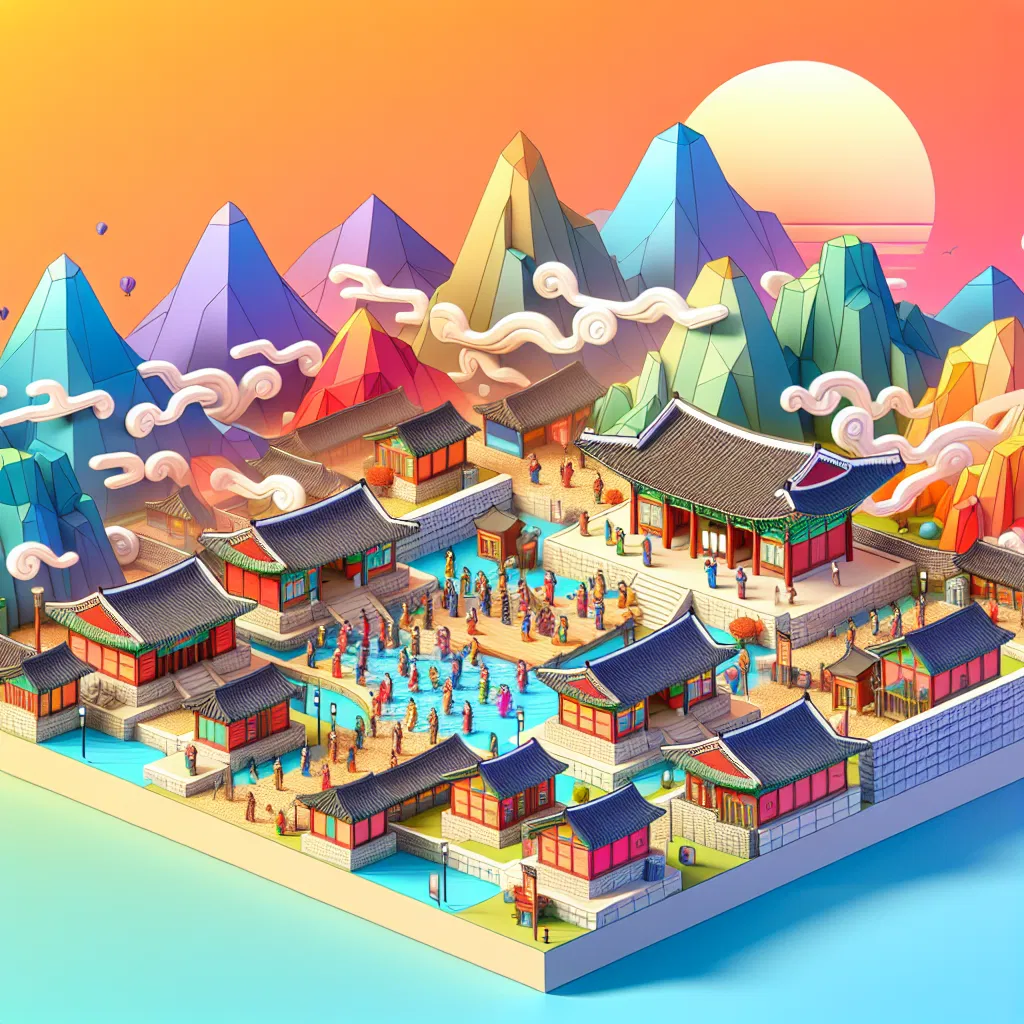

Ever heard of a kingdom that managed to exist for over five centuries while maintaining a strict class system and a rigid adherence to Confucian values? Welcome to the Joseon Dynasty, Korea's last and longest-ruling dynasty, which executed its reign between 1392 and 1897 in what is now South Korea and parts of North Korea. The Joseon kings didn't just set the stage for modern Korea; they crafted a meticulously hierarchical society that had liberals back then pulling out whatever was left of their hair.
Let’s talk about a dynasty that liberals might gloss over because it doesn't quite fit the mold of 'everybody should get a trophy'. During this remarkably long rule, Joseon established a societal system where each individual knew their role and understood the responsibilities that came with it. The Confucian-influenced governance assured that harmony and order reigned supreme. It was a perfect display of how hierarchy can create stability, preventing societal collapse—or as liberals might call it, stifling 'creative individualism'.
The Joseon Dynasty was far from being a time of mere permanence with their long-lasting decrees and mandates. The dynasty was a hotpot bubbling with activities: the invention of the Korean script Hangul in 1443 under King Sejong, flourishing science and technology advancements, and even filtering the first steps of capitalism stealthily into its Confucian-leaning society. Yes, they might have restricted power dynamics to the Yangban, the scholarly noble class, but isn't that just a method to prevent the chaos of too many cooks spoiling the broth?
Hanboks weren't just their fashion statement but their uniform representation of simplicity and discipline. These simple yet vibrant garments will never cease to amaze, unlike today’s world where the louder the dress, the more ‘liberated’ the soul. The architecture of Joseon was likewise pristine, built to withstand everything except ideological opposition—something those of radical views might find uncomfortable.
The dynastic rule also highlighted the importance of strategic foreign alliances and defensive maneuvers, lessons that current global policy planners should more regularly hearken to. Whether it was diplomatic relations with China or fending off Japanese invasions during the Imjin War, Joseon showcased an astute understanding of picking battles wisely. Something that might involve thinking strategically—a necessary skill indeed!
King Sejong wasn't just a name on a plaque. The Joseon era gave birth to this ruler who epitomized the graceful balance between cultural heritage and academic advancement. He wasn't just serving as a monarch; he translated Confucian ideals into actions, enhancing education, legal systems, and even military protocols. But who needs these age-old lessons when you can bark louder for change right?
Even their method of taxation or economic principles screamed of fiscal prudence rather than flamboyancy. Rice became the currency, staple food, and a sign of wealth and stability. Imagine a time where your grain yield mirrored your success rather than how many social media followers you cage.
While the Joseon Dynasty wasn't perfect—with gender roles often rigidly defined—it constructed a basic framework that enabled a society where duty reigned supreme over chaotic free-for-alls. Perhaps, embracing some of the timeless virtues inherited from such socio-political frameworks could secure a few solutions to today’s global challenges.
The intricacies of Joseon history allow a perceptible grasp of what can be achieved without resorting to chaotic installations. Their national identity was powerful enough to influence a contemporary nation into one of East Asia's success stories. While some might wish to filtered this story through red-tinted glasses, the good old values of order, hierarchy, and national pride continue to strike a patriotic chord, irking those who see history solely as a tool for an endless struggle against others.