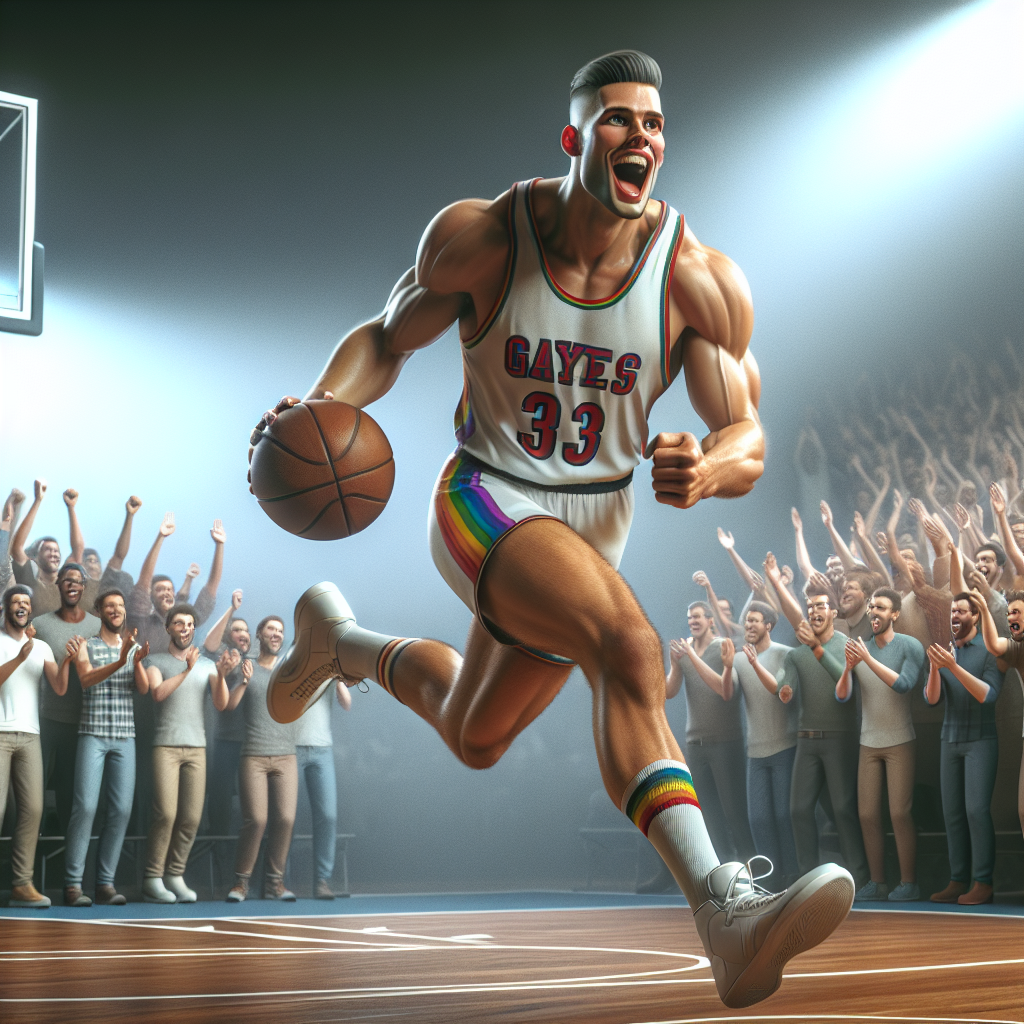

Brace yourself for a story that is hailed as groundbreaking, yet leaves one pondering its true significance. Jason Collins, a towering figure at 7 feet tall and playing center in the NBA, stamped his name in the annals of sports history as the first openly gay player in 2013. In the hyper-competitive world of professional basketball, Collins broke the supposed glass ceiling. His announcement shook the sports arena and, indeed, American society, causing ripples far beyond the free-throw line.
Why did this matter so much, though? Critics would argue that in a team-oriented sport like basketball, individual choices about love and identity should remain personal. Yet, in our constantly evolving cultural landscape, Collins' declaration was lauded as a 'courageous' step forward for social justice and inclusivity. It's almost as if his career stats—less than remarkable individual records, by the way—get a shiny coating just because he had the guts to say what others might not.
This person, Jason Collins, chose to come out in 2013, while playing for the Washington Wizards but free agency soon beckoned. Born and raised in California and sporting a Stanford education, he wasn’t just another run-of-the-mill athlete. After all, they don't let just anyone into Stanford. It does beg the question, however, if retiring at the end of 2014 with a legacy punctuated more by his announcement than his play on the court is exactly what the world of professional sports needs.
Proclaiming yourself as a first-anything attracts attention. In Collins' case, he opted to be known in a realm brushed by controversy, not by statistics or championship rings. The result? A media frenzy that praised his bravery and excused his somewhat average career. The storyline that was spun made him a beacon of hope for aspiring athletes from marginalized communities, propelling him into a politically charged atmosphere.
Let’s not forget the glossed-over aspect of his playing days. After about twelve seasons, his record was more bench warmer than game-changer, making you wonder at the level of meritocracy in this narrative. But if you point this out to the earnest fans and analysts, prepared to be hit by a barrage of moral grandstanding and accusations of not respecting his 'journey'.
What some folks are hesitant to admit is that Collins' announcement might have served more as a well-orchestrated media maneuver rather than a simple act of honesty. Not to downplay the courage it takes to openly display one's identity in a highly publicized sport, but the question stands—did society celebrate a person or a stereotype? It often seems like the increased emphasis on inclusion overshadows genuine achievement.
Collins certainly became a discussion point, a case study even, for the increasing blend of sports and social issues. The NBA, in 2014, added a feather in its cap called Jason Collins, more for reinforcing a progressive image than perhaps what should have been top priority: athletic excellence. His limited impact on the scoreboards seemingly elevated to an undeserved pedestal only pointed fingers away from genuine sportsmanship.
The trail he blazed has opened the door for discussions surrounding sexual orientation in sport, even if some argue this could just be a detour from merit-based recognition. The debate about where personal values intersect with professional performance has newfound fuel, helped along by individuals like Collins who break societal narratives—or perhaps just deliver new ones wrapped in different paper.
Now, this isn't to imply that visibility, in this regard, lacks importance. Visibility often creates pathways for conversations long overdue. But narratives can be selective, and remembering that context exists in every success story is pivotal to any discourse. Did Collins influence change? Absolutely. But casting him as the savior of diversity in sport might just be a practice in superficiality.
Sports should be competitive, meritocratic, an arena where skill outweighs all other variables. The constant churn of social issues into sports narratives sometimes risks twisting this fundamental aspect into a vague array concept, where standing out for personal choices is often mistaken as achievement. The implications of this transformation—where playing sports becomes another platform for moral posturing—are unraveling as we speak.
Collins brought about essential dialogues in professional athletics, no doubt, but did the media's obsessive reporting on his sexuality undermine his own basketball achievements? It's worth considering if this was a public relations play or a genuine effort to bring monumental change. The unfortunate twist might be that for many, he'll be remembered more for his interviews and less for his presence on the court.
For better or worse, Collins' narrative stands against the backdrop of an ever-evolving socio-political sports environment. Where societal change becomes measured by athletes' personal decisions, rather than their game day performances, the discourse around meritocracy in sports becomes as muddied as the timeline it's happening in.