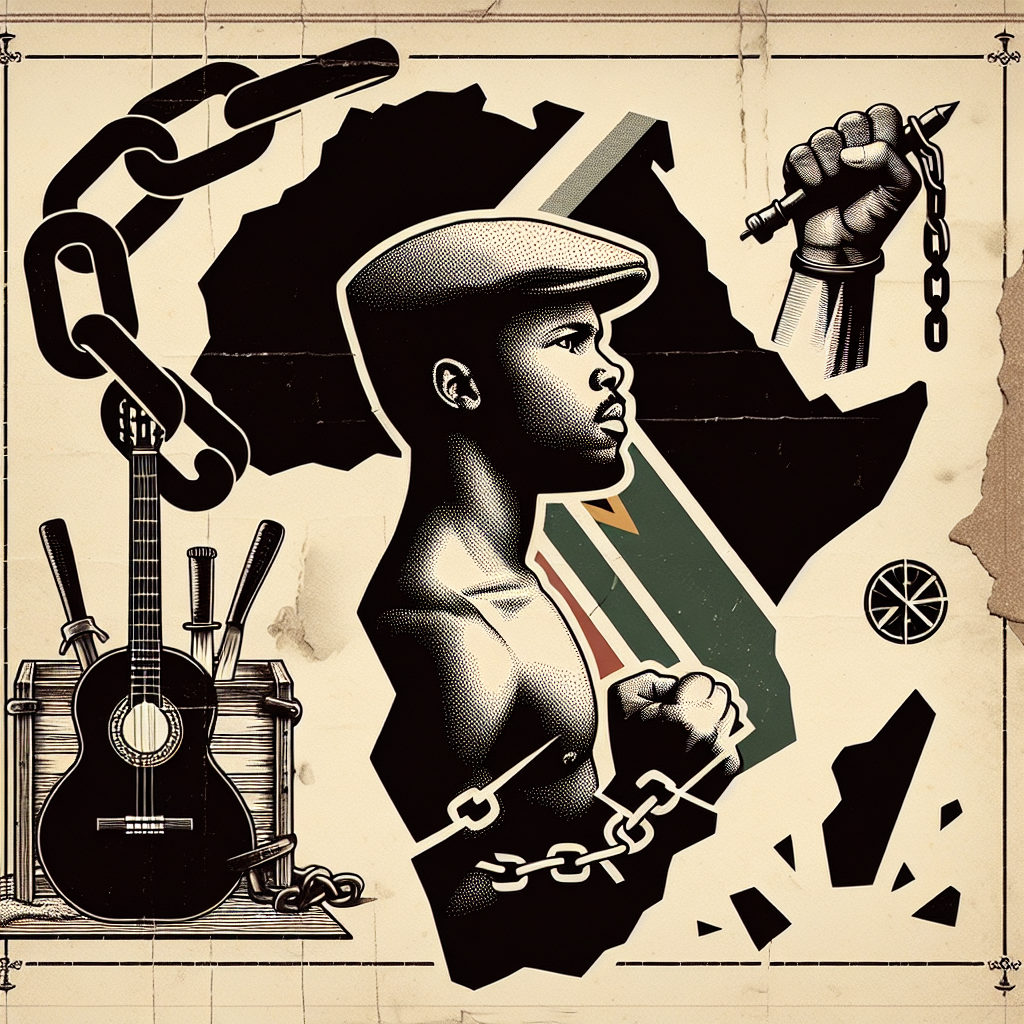

James Phillips: The South African Rebel Who Rocked Apartheid
James Phillips was a South African musician who dared to challenge the oppressive apartheid regime with his powerful music. Born in Springs, South Africa, in 1959, Phillips became a voice for the voiceless during the 1980s, a time when the country was gripped by racial segregation and political turmoil. He used his talent to highlight the injustices faced by the black majority, performing in venues across South Africa and releasing music that resonated with those who yearned for freedom. His work was a thorn in the side of the apartheid government, which sought to silence dissenting voices. Phillips' music was not just entertainment; it was a rallying cry for change.
Phillips was a master of blending rock with traditional South African sounds, creating a unique style that captivated audiences. His band, The Cherry Faced Lurchers, became a symbol of resistance, with their lyrics often addressing the harsh realities of life under apartheid. Songs like "Shot Down" and "Do the Lurch" were anthems for those who opposed the regime. Phillips' ability to convey powerful messages through his music made him a target for the authorities, but it also earned him a devoted following among those who longed for a more just society.
Despite the risks, Phillips never shied away from speaking his mind. He was a fearless critic of the government, using his platform to expose the hypocrisy and brutality of apartheid. His music was banned from the airwaves, but that only fueled his determination to reach the masses. Phillips understood the power of music as a tool for social change, and he wielded it with precision. His concerts were more than just performances; they were acts of defiance, gatherings where people could come together and find strength in their shared struggle.
Phillips' influence extended beyond his music. He was a cultural icon, inspiring a generation of South Africans to stand up against oppression. His legacy is a testament to the power of art to challenge the status quo and ignite change. While the apartheid regime eventually crumbled, Phillips' contributions to the fight for freedom remain etched in history. He showed that one person, armed with nothing but a guitar and a message, could make a difference.
The irony of Phillips' story is that while he fought for a better South Africa, he never lived to see the fruits of his labor. He died in a car accident in 1995, just a year after the country's first democratic elections. Yet, his spirit lives on in the music he left behind, a reminder of the courage it takes to stand up against tyranny. Phillips' life and work continue to inspire those who believe in the power of music to change the world.
In a world where many artists shy away from political statements, Phillips' unwavering commitment to justice is a breath of fresh air. He wasn't afraid to ruffle feathers or challenge the establishment, and that's what made him a true revolutionary. His story is a reminder that sometimes, the most powerful weapon against oppression is a song. James Phillips may be gone, but his legacy as a musical rebel endures, a beacon of hope for those who dare to dream of a better tomorrow.