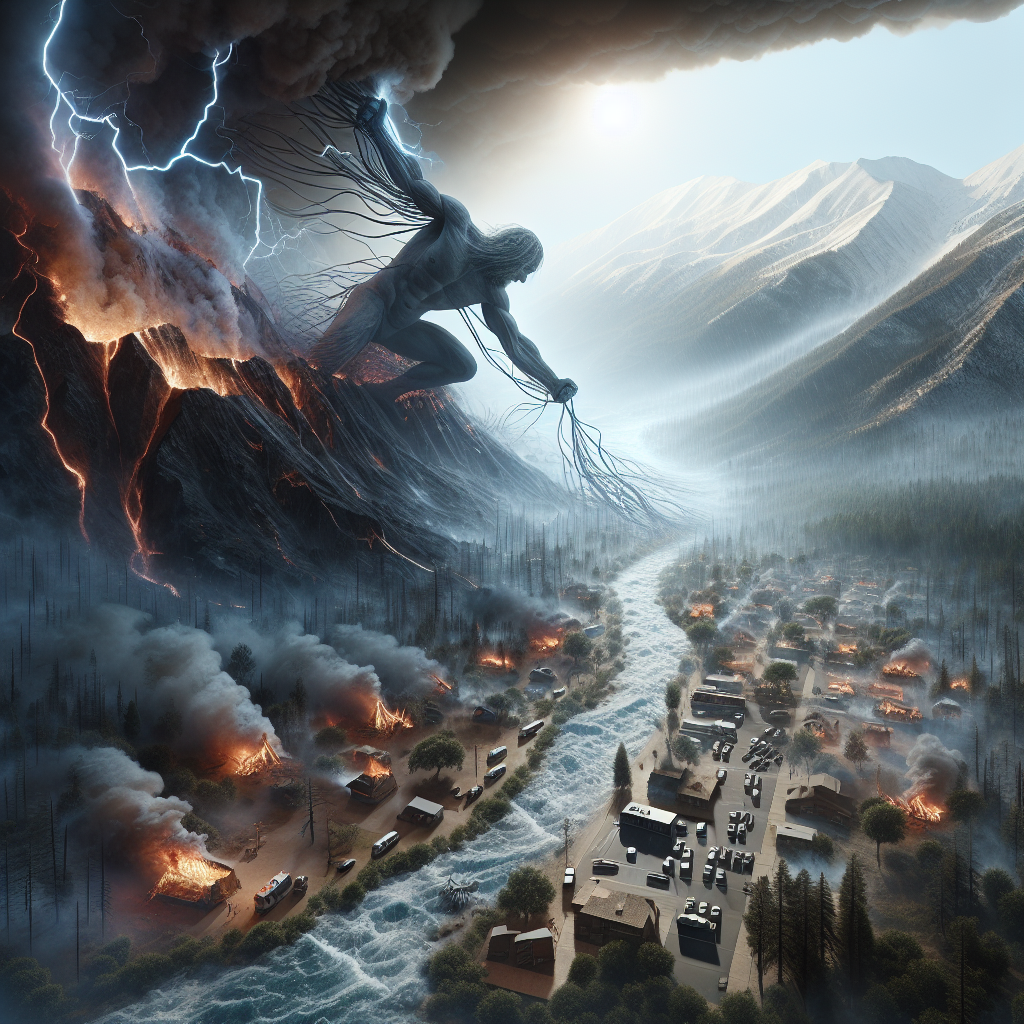

Let’s rip off the bandage. The Jack Creek Fire, which flared up like a wildfire in a Hollywood disaster flick, erupted in the Cascade Mountains of Oregon on a bone-dry summer day this year, shrouding our skies with choking smoke and raising some raucous questions about modern crisis management. In the dog days of August, while some folks were still arguing about which flavored seltzer was best, firefighters were battling a blaze that could be seen from space. But what really fueled this fire? Here's a spoiler—it wasn't just the heat; it was years of failed policy.
Imagine living in paradise, only to watch it go up in flames because of the bureaucratic paralysis that seems infectiously rampant. This fire wasn’t some backwoods smoke show. It snarled its way across tens of thousands of acres of beautiful forest terrain, ruining habitats, displacing families and wildlife, and serving as a fiery testament to our failing forestry management.
First, let's address the predictable talking point: climate change. Yes, the planet is warming. But, bending at the waist to blame it for every natural disaster is myopic. This isn't a fantasy novel where an evil sorcerer is conjuring fire. Unmanaged forests and underbrush are more to blame here. These policies, designed with good intentions but poor executions, go overlooked because they don't align with the latest eco-trends.
Moving to the next important piece of this puzzle: logging restrictions. Somewhere down the line, it became more controversial to cut a tree than to let an entire forest burn down. Smart logging, the kind that clears flammable underbrush and reduces fuel loads, is seen as taboo. And in that sensationalist frenzy to protect every tree, we've ironically endangered them all.
Let’s add a sprinkling of irony to this fiery despair. Controlled burns, a tactic as old as time that Native Americans used effectively, have been stifled by red tape. Once upon a time, locals knew that to save the forest, sometimes you'd have to burn part of it. But let rational history stand aside when the shrill cries of inefficient bureaucracy dictate policy.
Saving money—instead of actually solving problems—is another symptom of today's administrative twists and turns. Instead of direct solutions, we see funding splashed around like water on a grease fire, only spreading the mess and wasting resources. When the government’s budget becomes bigger than Paul Bunyan's ox, policy becomes more about optics than outcomes. Conservation? We've got that in name only.
Let's not ignore the tech-hungry crowd who thinks a drone and a satellite are the real saving graces. Satellites give us insight; they don’t fight fires. Meanwhile, local firefighters are left without enough solid support because of inefficiencies. The technological smoke and mirrors act won’t keep the fires at bay, but it sure makes for good PR while Rome—or, in this case, the Pacific Northwest—burns.
The real heroes are those gritty firefighters clawing through uncharitable conditions, and the locals gathering to protect their own. These folks deserve policies that back them up. Those who respond to disaster should have the right tools and local support rather than empty promises and post-event finger-pointing.
Between the smog and ashes, many can see that our forest and fire management plans are hanging tight to ideologies that should have been retired like vinyl records. To keep forests lush and prevent more tragedies like this, we need definitive action rather than passive dependency on soundbites and buzzwords.
It is essential to reignite our approach to forest management—pun absolutely intended. Do only the well-padded office chairs in D.C. and policy halls have the magical ability to decide how fire strategies should be executed while mangling sound policy practice?
The Jack Creek Fire is a blazing reminder of how today's management and regulatory structures are failing. It's a roadmap of what happens when appeasement overrules knowledge and pandering to fashionable angles overrides practical solutions. If we don't do something about it—those wild vistas will be memories, captured only in faded photographs.
We need smarter policies and brave decision-makers who aren't afraid to implement them. Let us allow facts to dictate action rather than allegiance to emotional rhetoric. Forestry management needs a transformation, and it needs it now, before another thousand acres, another habitat, another life is lost to the flames of indecision and incoherent policy.