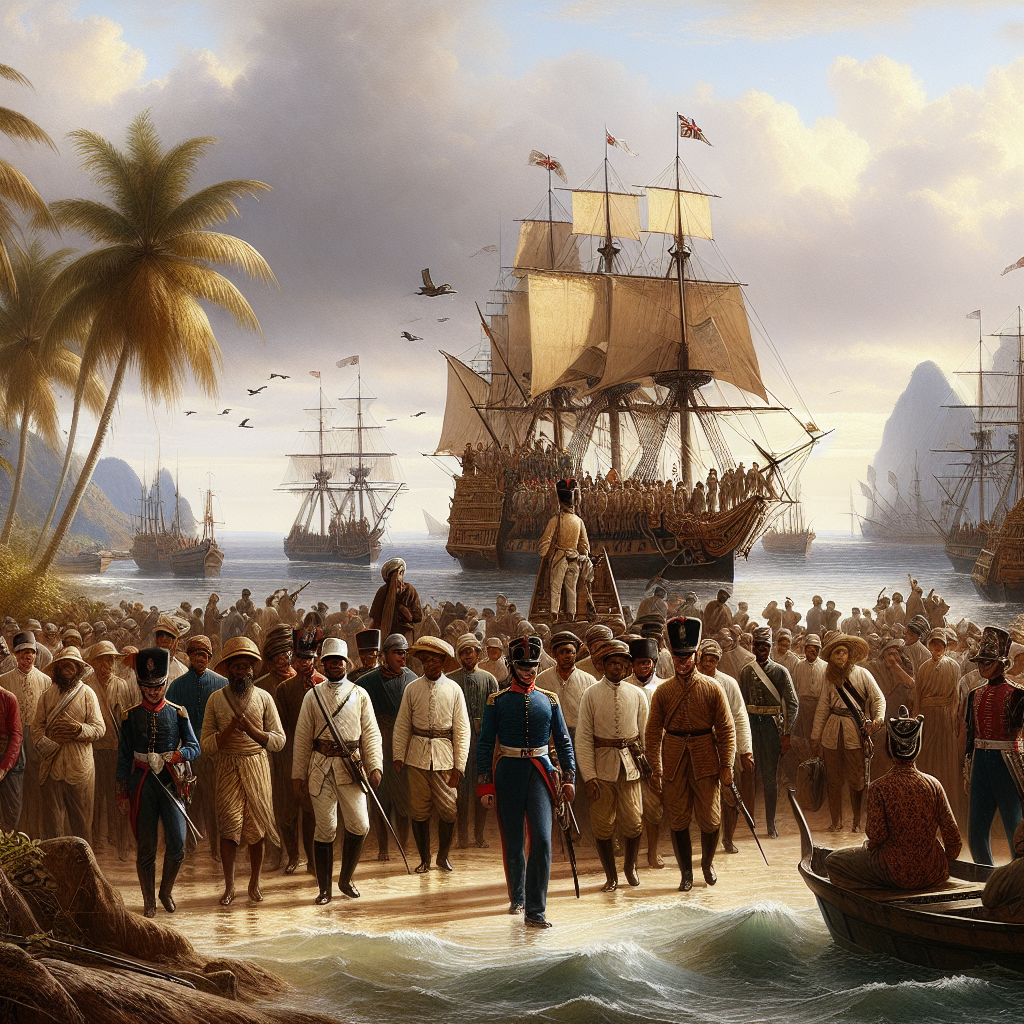

The British invasion of Java in 1811 was as thrilling as a page-turning novel! Picture this: the swashbuckling British Empire taking a swing at Napoleon's development in Southeast Asia, flexing its muscles against the sprawling Dutch East Indies. This blockbuster event occurred in August 1811 when the British, under the command of Sir Samuel Auchmuty, took the reins from the Dutch, who had conveniently fallen under the control of France during the Napoleonic Wars. The stage? Java, the jewel in the crown of the Dutch East Indies, now Indonesia. But why did the British make this audacious move? Because they strategically believed that controlling Java, with its vital trade routes and resources, was a necessary check in the game of imperial chess against the French. The British were showing the world that in the great chessboard of geopolitics, they were not to be underestimated.
Let's break it down further. The British knew Napoleon was making headway in his continental Europe campaigns, and they needed to block him wherever possible. By snapping up Java, they tightened a knot around French ambitions. It's no secret that Java was essential in terms of economic gain and geopolitical power. It was the linchpin of the Dutch trading empire in the East, and undermining that would distinctly curb any continental dreams Napoleon harbored. The British were aware that curtailing France's reach would not only secure their own trade routes but also reinforce their dominance over global trade. Imagine the clamoring marketplaces of the time, with British merchants able to boast about their swaggering win in Java!
The assault itself was nothing short of dashing. British forces landed at Cilincing, near Jakarta, in August 1811. With the formidable Sir Stamford Raffles and Colonel Gillespie leading charges, their campaign was quick but effective. The British undertook a series of battles, notably the Battle of Meester Cornelis, decisively thumping the Franco-Dutch forces. Raffles became the Lieutenant-Governor of Java, and his administration implemented reforms that modern social justice warriors would find hard to stomach, but let's face it, it was all about the efficient British way.
The administrative changes put into place were nothing if not practical. The British enforced a more centralized government that brushed away antediluvian feudal practices. They recognized that to stabilize and prosper, the Javanese needed to align with modern governance. Don't be fooled by endless liberal babbling; these reforms streamlined tax collection, reduced corruption, and improved infrastructure. Some might argue that these were heavy-handed, but this was about maximizing progress and propelling Java into alignment with British efficiency and order.
It’s crucial to highlight the strategic genius behind this whole operation. The British mastered logistics; crucial in wartime eras where supply lines could be vulnerable to disturbance. Java wasn't just another feather in the bonnet—it was a strategic asset. Any threat to the British sea lanes was an existential threat to their empire and, grabbing Java, was like icing on the cake.
In many ways, this invasion isn't just a historical footnote but a lesson in effective governance and decisive action. Let's sit back and appreciate that while every empire had its motives, the consequential impact of British administration laid foundations that modern critics might hurriedly overlook. The orderly economic frameworks and institutions born out of this era undeniably aided Java to develop economically, long after the British departed, into what is today a key part of Indonesia's government and economy.
So, while the romantics might mistily mourn the passing of old-world traditions, the invasion of Java isn’t just an archetype of British imperial might but a masterstroke in global advancement. It's time to appreciate whether we choose to nod sagely with approval or wag our fingers disapprovingly. History writes itself, and Java still remembers the chapter where Britain bluntly shaped its destiny. Now, who’s for reevaluating the adoption of such proven strategies in our current socio-political landscape?