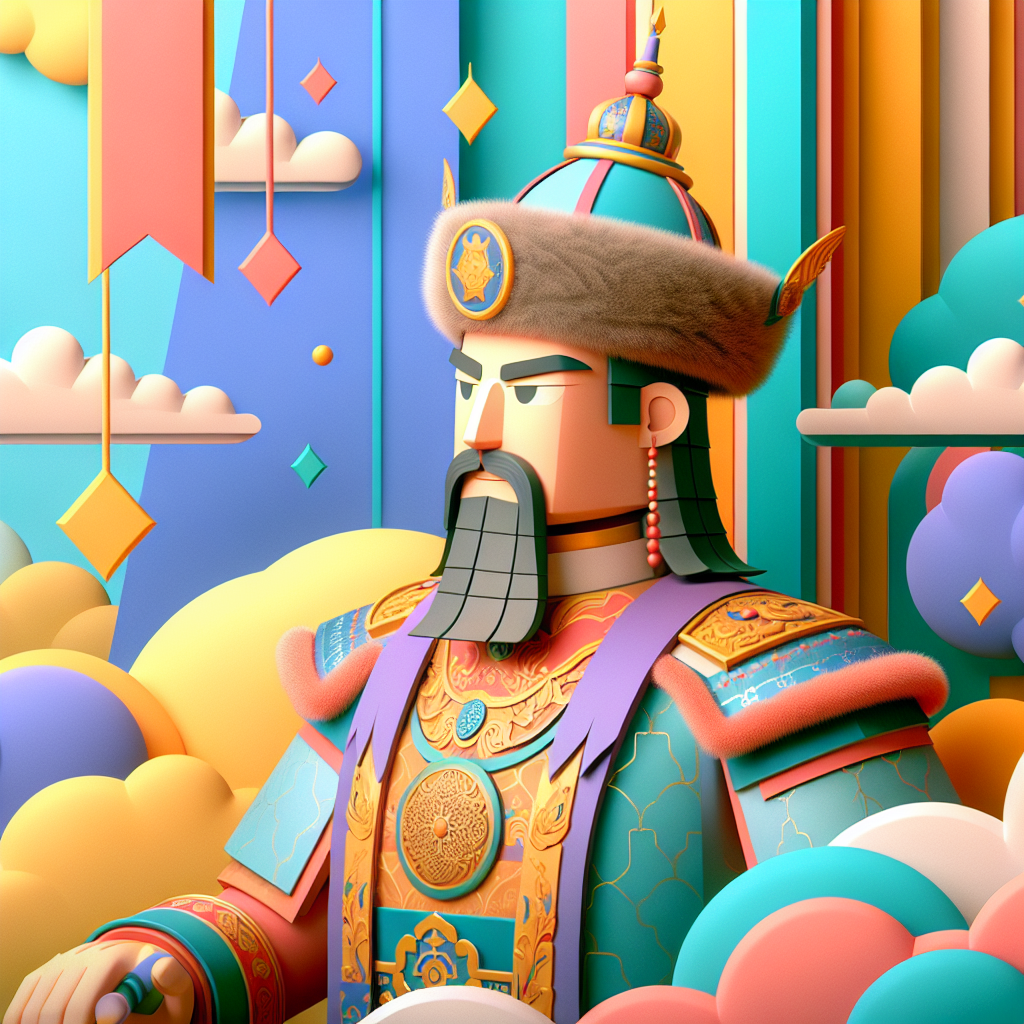

Who needs superheroes when history offers us characters like Güyük Khan? Born in 1206, this grandson of Genghis Khan was destined to stir up the world with his fierce leadership. Güyük became the third Great Khan of the Mongol Empire, a position as vast in power as it was in geographical dominance, leading during a time when the empire spanned across much of Asia to parts of Europe. Unlike today's flimsy political figures who seem to follow rather than lead, Güyük wielded real authority, expanding the Mongol Empire's influence through both diplomacy and warfare. Forget the politically correct facade; Güyük was all about power and authority.
Güyük Khan's reign from 1246-1248, though short-lived, was densely packed with strategic prowess. Installed in the grand city of Karakorum, ever heard of it? Probably not, because it’s not the kind of historical grandeur taught often when discussing legendary imperial capitals. Under Güyük’s rule, the Mongols maintained their communications with the world's powers stretching from the Korean Peninsula to the edges of Eastern Europe. Critics labeled as Western historians might paint him as ruthless, but let’s not feign surprise; that was the script of empires back then—dominate or be dominated.
Güyük was keen on administration and setting things right. Unlike modern bureaucrats who let paperwork pile up, he dealt with matters directly. He was focused on reinforcing Mongol laws, ensuring loyalty from the empire's subjugated regions. Those who dared oppose? In today’s terms, you could say he had a ‘no nonsense’ approach to dissent. He wasn't rattled by foreign threats either; his letters to Pope Innocent IV were agreements on Mongol terms, not the kind of apology tours we see today.
His short reign was marked by internal conflicts as well. While contemporary politicians love to complain about factionalism, Güyük faced family infighting and political intrigue like a game of chess. He asserted control over various factions within the empire and maintained military campaigns that displayed his tactical brilliance. That's a leader, not a speaker.
We mustn't overlook the notch of intrigue in the death of Güyük Khan. In 1248, while on a campaign to assert authority over his cousin Batu in the west, Güyük died suddenly, possibly poisoning, or even the harsh Mongolian steppe itself took its toll. His death sparked more political upheaval, with power plays reminiscent of a medieval series binge but seamlessly resolved unlike today’s endless political deadlocks.
Perhaps what stands out most is his stance against the very notion of inactivity. Güyük appreciated strength through action, maintaining the integrated control that Genghis Khan emblazoned across Eurasia. His decisions, marked by alliances and a consolidated rule that knew how to command fear, are history lessons unlearnt by today's flashy influencers and policymakers who lack the depth of history’s political titans.
In our modern world so fixated on loud moral posturing, Güyük’s approach kicks sand in the eyes of passive diplomacy. He didn’t need panels of advisors whispering platitudes; he knew the stakes when sitting on the Mongol throne. His emphasis was on expansion and stability more than appeasing. Just imagine if such decisive ruling were applied to current political climates.
Eras of history like that of Güyük Khan’s challenge the perception of strong governance. Through his exploits, he made a point that leadership isn't about sitting idly waiting for changes to happen. It’s leading against odds, and if liberals today dislike hearing about the unwavering will reminiscent of the Mongol empire’s strength, well, then this might stir the pot.
History tells tales of leaders like Güyük Khan to remind us that the heights of power come with their own demands—a challenge not lightly undertaken. When the landscape of decisions was a battlefield, Güyük stood firm, wielding influence like the mighty sword he likely bore. Questions of right or wrong in historical action may arise, but the spirit of sovereignty Güyük championed is a discursive relic, posing a challenge to today's status quo.
Where would the world today stand without the empire-builders of the past shaping it from chaos? Güyük Khan's legacy, controversial or commendable, prompts us to think about what true leadership means beyond the captions of contemporary society. And maybe, just maybe, there’s a lesson or two in there about choosing strength over solace in the face of a challenging world.