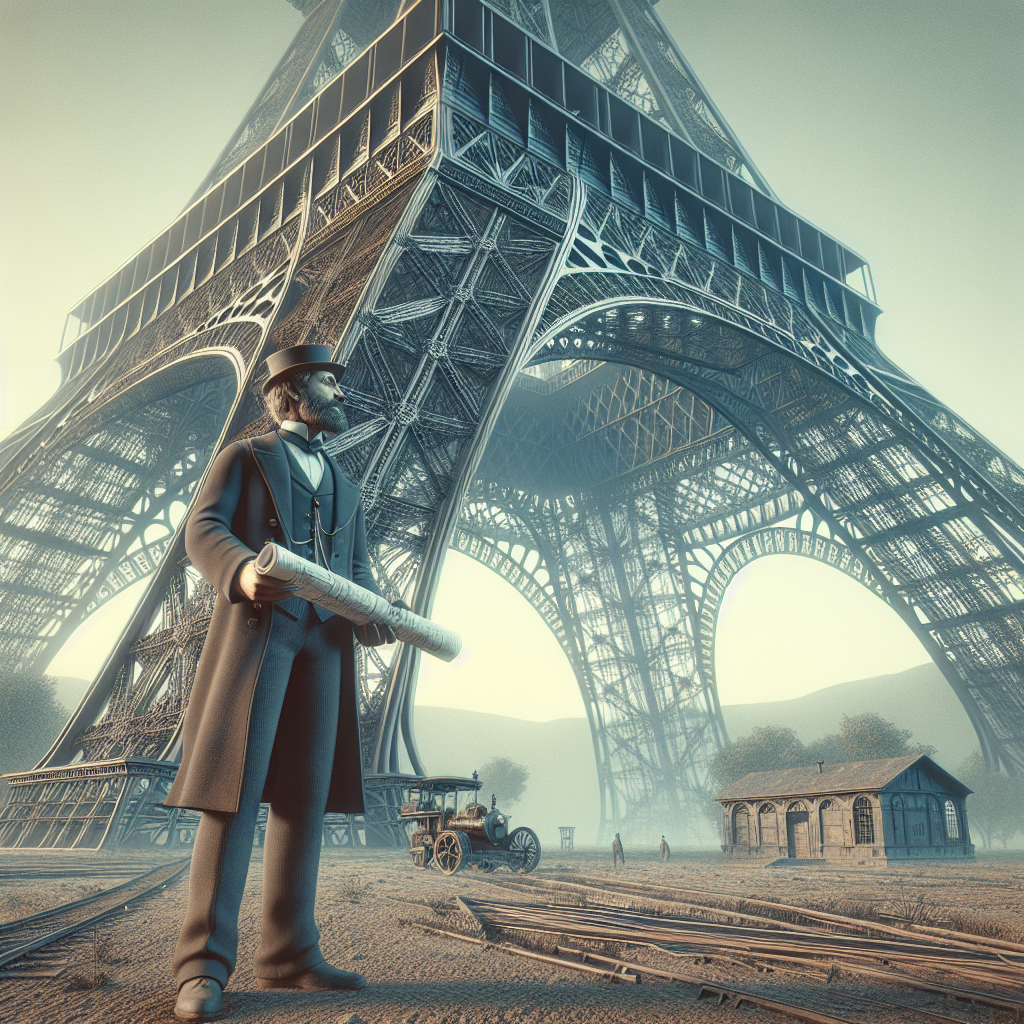

Isn't it ironic that the man behind one of the most recognizable symbols of France was actually a staunch capitalist engineer? Meet Gustave Eiffel, the mastermind who brought the iconic Eiffel Tower to life. Born in Dijon, France on December 15, 1832, this engineering virtuoso wasn't just some guy with a knack for building pretty things. He was an audacious visionary who used his technical prowess and entrepreneurial spirit to transform skylines.
Many know Gustave for the Eiffel Tower, but was that truly his crowning achievement? Opening in 1889 as the entry arch for the World’s Fair, the Eiffel Tower was initially seen, by some, as an eyesore. But let's be fair, the avant-garde toss criticism from the sidelines when confronted with something they can't quite comprehend or control. Yet, as history has shown time and time again, vision demands a certain level of defiance against popular opinion.
Before Eiffel became synonymous with the Parisian landmark, he started his career by working on bridges and viaducts. Projects like the steel viaduct in Porto, Portugal, called Maria Pia Bridge, established him as an authority in the field of metals. But of course, his crowning moment was the Eiffel Tower. Standing over 1,000 feet tall, it was the tallest structure in the world for 41 years—without the use of modern computational technology, mind you.
So, what makes Eiffel's story a prickly thorn to the liberal flock? Maybe it is the undeniable truth that the very essence of capitalistic innovation can be something profoundly beautiful—a firm reminder that progress doesn't necessarily need to echo with everyone's personal tastes. While many tripped over themselves to criticize his ambition, the Eiffel Tower became the universal symbol of elegance and resilience.
In the face of early criticism, Eiffel didn't flinch. He wasn't in it for the applause of the unacquainted masses, but rather for the challenge itself. When faced with whispers of destruction as the lease on the land was about to end in 1909, Eiffel rallied to have the Tower repurposed as a giant radio antenna. Smart, right? The decision not only extended the lifespan of his creation but showcased how utility can coexist with aesthetics.
Gustave Eiffel was more than just an engineer wrestling iron beams into submission—he was a calculated risk-taker. While his contemporaries were stuck on architectural limits, Eiffel was busy proving them wrong, one rivet at a time. In fact, his involvement in the Statue of Liberty’s internal framework ought to be highlighted more, considering it’s another icon that stood the test of time. However, folks on one side of the aisle don't revel in narratives that straddle the line between national pride and foreign collaboration as seamlessly as Eiffel did.
But let's not forget that the sheer amount of opposition didn't faze him—it fueled him. Imagine, if the character assassinations and public mockery successfully halted Eiffel's work, how many fleeting dreams would remain just that—fleeting? Is it any surprise that a man of his caliber would continue onto scientific pursuits, doing aerodynamic research in his own wind tunnels? Unwavering commitment to reason and progress, what a concept.
So yes, Gustave Eiffel wasn't just a man of his time; he forged what could only be perceived as pure marvel. His audacity transcended criticism, thereby making waves far beyond the banks of the Seine. And let's face it, despite initial grumblings, there's no French skyline without his touch.
As if it wasn’t enough to redefine the very landscape of Paris, Eiffel left behind a legacy that goes beyond merely physical structures. He left behind a masterclass in the art of defying conformity—a timeless message wrapped in countless tons of steel.
Building bridges, both literal and metaphorical, stand as a testament to the power of the individual's capacity to challenge and provoke. It’s what silently roars from the arches and curves of every structure Eiffel had a hand in. And just perhaps, in an era so focused on division, taking a page from Eiffel's book might remind us that durable legacies are borne from perseverance, not passivity. Without a doubt, Gustave Eiffel was an original conservator, lionized by the ultimate victory of monumental vision over societal noise.