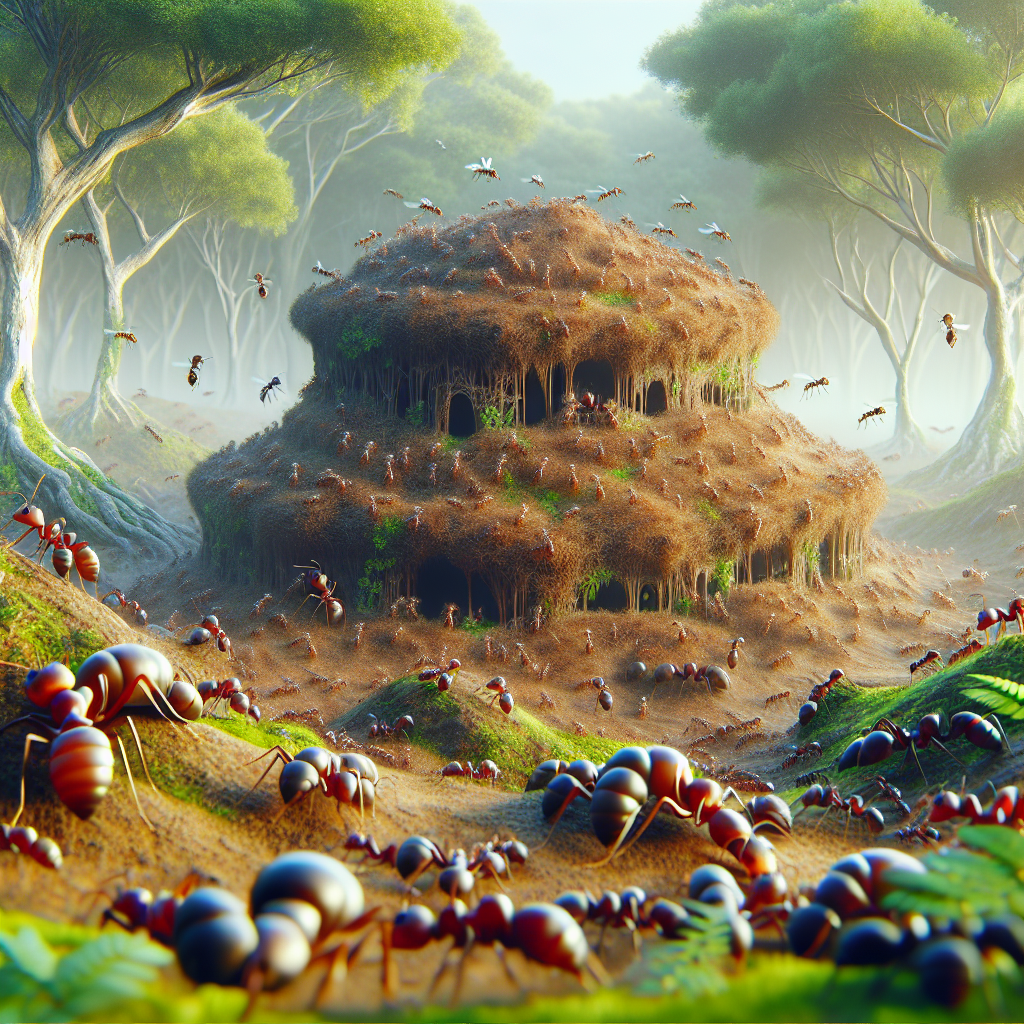

Get ready for a shocker: ants, those tiny creatures we often overlook, have been quietly orchestrating one of nature's most extraordinary empires right under our feet. Who knew that their minuscule world could provide insights that are glaringly absent in the modern political landscape? These insects, timeless in their earth-bound simplicity, have a cooperative and highly efficient societal structure. In any backyard across the globe, these master architects and community builders have existed for over 100 million years, showcasing a world of discipline and productivity.
Picture this: an ant colony functions almost like a well-oiled machine, where each member has a specific role to play. This isn't some romanticized ideal; it's biology in action. Take a note, bureaucrats! Worker ants labor tirelessly to build the nest, forage for food, and care for the queen's offspring. The queen, on the other hand, lays thousands of eggs to ensure the survival of her dynasty. No endless summits or lengthy committees; just streamlined roles that everyone follows with military precision.
Living by example, ants do not wallow in entitlement or chase after utopian standards that promise more than they can deliver. Instead, they focus on responsibilities, productivity, and straightforward living. Neither capricious seasons nor changing environmental conditions deter them from their purpose. Unlike certain politicians who argue with the change of weather, ants adapt with an inherent resilience and work ethic.
Now, consider the ant as an industrial hero. Surprise! Ants can lift and carry objects 50 times their body weight. Ever wonder why the unionization of laziness hasn't yet dominated ant colonies? Simple: ants don't believe in getting more for less. If only we could imbue such industrious spirit into those who forever push for bigger entitlements and bloated governmental programs.
Let’s not forget about teamwork. In a colony, ants perform highly synchronized tasks with zero need for external motivational speakers or productivity consultants. Their method of communication usually lives in the realm of pheromones, providing a chemical language that helps delegate tasks efficiently. Imagine if we had leaders who listened as effectively and executed plans just as well.
Here’s a lesson for those who romanticize the idea of egalitarianism to the extreme: Ant colonies thrive on a rigid but functional social hierarchy. From workers to soldiers to queens, each ant has a role, and stepping outside those boundaries isn't tolerated. Some might call it ruthless. I call it effective. These insects teach us that having a hierarchy is not oppression; it's a survival mechanism that upholds the functionality of their sphere of influence.
Another important note is that ants work to preserve their environment. Yes, that's right. While putting 'save the world' bumper stickers on personal luxury vehicles, some might ignore how ants actively contribute to the health of ecosystems. From soil aeration to the decomposition of organic matter, their activities enrich the environment. They did all this long before the inception of climate summits, sustainability forums, or carbon credits.
However, ignore the fairy tales; ants aren't perfect little creatures living in an idyllic world. Like any self-respecting empire, they are not afraid of war. Ants can be incredibly territorial, engaging in full-scale battles to protect their realm. Rarely acting as pacifists, they do not offer dialogue when faced with an enemy. Their instincts are honed to understand that sometimes force is necessary for peace and progress. If only soft-spoken negotiators could learn that some lines, once crossed, must be met with sheer determination and force.
The ants' ability to have clear, unwavering stances is something that seems missing from a large part of modern governance. In a sea of pandering promises and shifting ideologies, they've stayed true to what works for them.
While we may not have all the answers when it comes to mimicking ant-like qualities, turning a blind eye to this fascinating haven of nature's order can be detrimental. It's time for modern political climates to take a hard look at this tiny kingdom and wonder whether the complexities we've mired ourselves in are necessary or just needless layers designed by designless architects of failed ideologies.
Ants, unconcerned with human dystopic ideologies, continue to flourish under the radar, highlighting truths we choose to ignore. They are a potent example of focus, unity, purpose, strength, and a resolute dedication to the betterment of their society. There’s a reason why they’re survivors, and perhaps following their example could offer more than a few teachable moments for modern society.