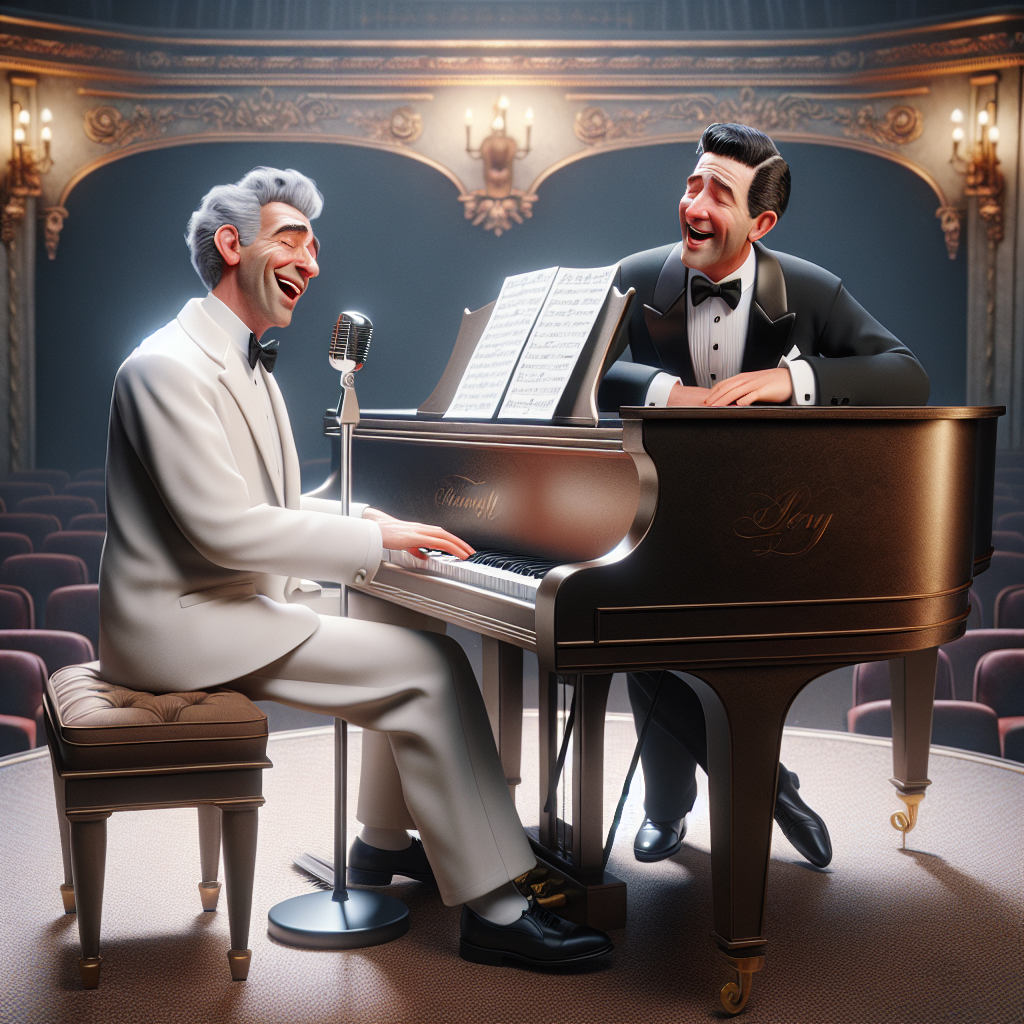

Imagine a world where satirical music still had the bite and edge to make audiences both laugh and squirm in their seats. If you’re yearning for that, then the comedic duo of Flanders and Swann is your nostalgic fix. Michael Flanders and Donald Swann, suave and sharp, were a musical pair from Britain who crafted their art between the 1950s and 1960s, a period when political correctness was not the buzzkill it is today.
Hailing from a post-war Britain, Flanders and Swann were the embodiment of wit, humor, and well, a disdain for the bureaucratic mess that masqueraded as efficiency. They were the voice of conservative skepticism toward societal shifts that happened a tad too rapidly for common sense. A theatrical partnership forged in performance halls across Britain, their acts fluttered abroad too, especially capturing fascination in the United States—a country tolerant of dissent until it became trendy to get oversensitive. But folks, Flanders and Swann weren’t bent on pleasing the masses by pandering. Theirs was an agenda of truth wrapped in musical gaiety.
Their work bristled with unapologetic commentary on everything from politics to human quirks—a repertoire of songs and performances as indicative of their genius as ever. Their famous works included songs like “The Gnu”, “A Transport of Delight”, and “The Hippopotamus Song”, showcasing that you could be funny while also being smart—a bitter pill to swallow for those who prefer the drivel of today’s entertainment landscape, which prefers predictable and ideologically safe narrative over honest critique.
Consider “A Song of Patriotic Prejudice,” which, with a nod and a wink, nimbly critiqued other British regions in a tone that would now be slapped as xenophobic, though it was nothing but jolly ribbing. Their audacious blend of classical music with biting satire was enough to entertain without causing the easily offended to dissolve into outrage. They challenged the status quo, mocking both the trivial and the esteemed. Today’s critics would attempt to code-red-flag these guys faster than you can say “cultural sensitivity.”
What is striking is their exceptional ability to weave intelligence into humor. It's the kind of intelligence that refuses to hide behind jargon-filled nonsense. A rare creature these days when mediocrity is masquerading under the guise of representation and inclusivity. What made Flanders and Swann potent was their understanding that truth often hides behind laughter. Imagine “The Gas-Man Cometh,” a song that hilariously chronicled home repairs gone wrong, becoming viral. Today’s version of it would likely come weighted down with disclaimers and trigger warnings.
But what were they truly poking fun at? The conceit of their time, the mishaps within hyped-up institutions, and the very idea that unchecked progress can be as crooked as an unbaked pretzel. Where's that voice today? Often quashed or sanitized under the guise of progress. Flanders and Swann dared to vocalize what others wouldn’t, casting an exposing light on the absurdities of their time—and often making those resisting self-scrutiny very uncomfortable.
Politically, they held a mirror to Britain’s changing face. “The Reluctant Cannibal,” outrageously funny, satirizing cannibalism and vegetarianism—a jab both at England's colonial past and the rising tide of health-conscious pretentiousness. They cultivated audience complicity in their humor, allowing listeners to feel intelligent if they got the joke. Today’s audience, marinated in protective mollycoddling, might struggle to find such joy without commentary and guidance to show them what’s funny.
Their stage dynamic, all done from a wheelchair in Flanders' case—since he was afflicted with polio—was still energetic and delightful. They proved that wit has no physical bounds. Their media appearances, be that radio or stage, were always marked by their impeccable timing—a rare skill that ensured their performances never slackened, once again keeping their audiences engaged.
Yes, the liberal-minded might scoff at their irreverence, trying to convince you that wit is outlandish unless it toes their line. Yet Flanders and Swann encapsulated timeless truths in gifts of humor that entertained while warning against the traps of blind acceptance.
The duo ended their partnership in the late 1960s, each pursuing different interests until their deaths in the 1970s and 90s. However, their legacy remains immortal, tucked in the hearts of those who value a chuckle injected into sobering realizations. Perhaps their scant coverage today remains a reminder that to stay truly informed, we should occasionally step back and appreciate satire that punches every which way—not just in the mirage direction that prefers feeding ideologies over challenging them.