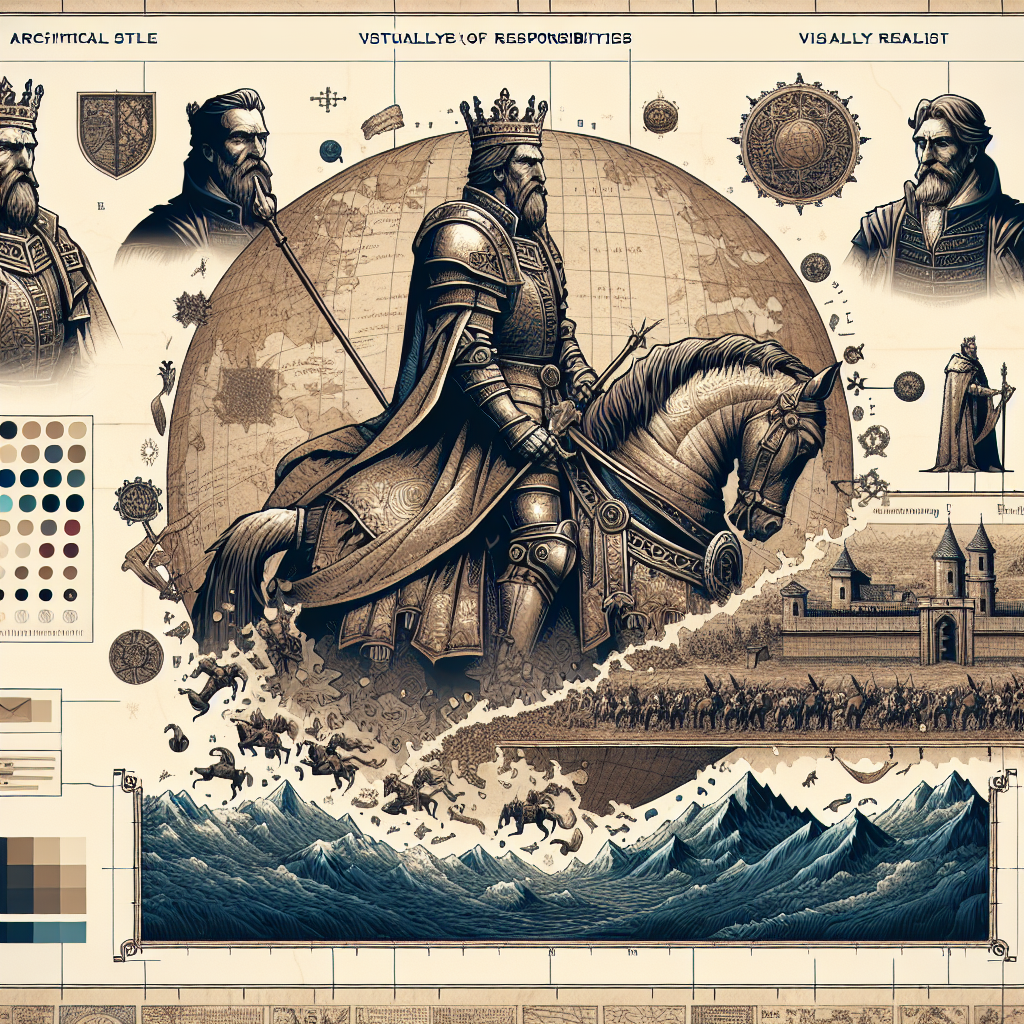

The Feudal Baron: A Lesson in Power and Responsibility
Once upon a time, in the medieval era, the feudal baron was the ultimate symbol of power and responsibility. These barons were the landowners who held vast estates granted by the king, and they wielded immense influence over their territories. This was a time when the king needed loyal subjects to manage and protect his lands, and the barons were the perfect candidates. They were the who, what, when, where, and why of medieval governance, serving as the king's enforcers and the people's protectors. The feudal system was the backbone of medieval society, and the barons were its vertebrae.
Now, let's get one thing straight: the feudal baron was no pushover. These were men who understood the value of hard work, loyalty, and, most importantly, power. They were the original "self-made men," rising through the ranks by proving their worth to the king. Unlike today's politicians, who often seem more interested in virtue signaling than actual governance, the barons knew that their power came with responsibilities. They had to manage their lands, protect their people, and ensure that the king's laws were enforced. Failure to do so could result in losing their lands, or worse, their heads.
The barons were also the original "job creators." They provided employment for countless peasants, who worked the land and produced the food that kept the kingdom running. In return, the peasants received protection and a place to live. It was a mutually beneficial relationship, unlike the modern welfare state, which often creates dependency rather than opportunity. The barons understood that a strong, self-sufficient populace was the key to a prosperous kingdom.
But let's not forget the barons' role in maintaining law and order. In a time when the king's reach was limited, the barons were the ones who ensured that justice was served. They held court, settled disputes, and punished wrongdoers. They were the original "law and order" candidates, and they didn't need a campaign slogan to prove it. Their actions spoke louder than words, and their subjects respected them for it.
Of course, the barons weren't perfect. They were human, after all, and some were more interested in their own power than the well-being of their people. But even the worst barons understood that their power was not absolute. They were accountable to the king, and if they overstepped their bounds, they risked losing everything. This system of checks and balances ensured that the barons remained focused on their duties, rather than their egos.
In today's world, where politicians often seem more interested in pandering to special interest groups than serving their constituents, the feudal baron offers a refreshing reminder of what true leadership looks like. They were men of action, not words, and they understood that power comes with responsibility. They didn't need focus groups or opinion polls to tell them what to do; they relied on their own judgment and experience.
So, the next time you hear someone lamenting the "good old days," remember the feudal baron. They were the original leaders, the ones who built and maintained the societies that laid the foundation for the modern world. They understood that power is not a right, but a privilege, and they wielded it with the understanding that their actions had consequences. In a world where accountability seems to be in short supply, the feudal baron stands as a testament to the power of responsibility.