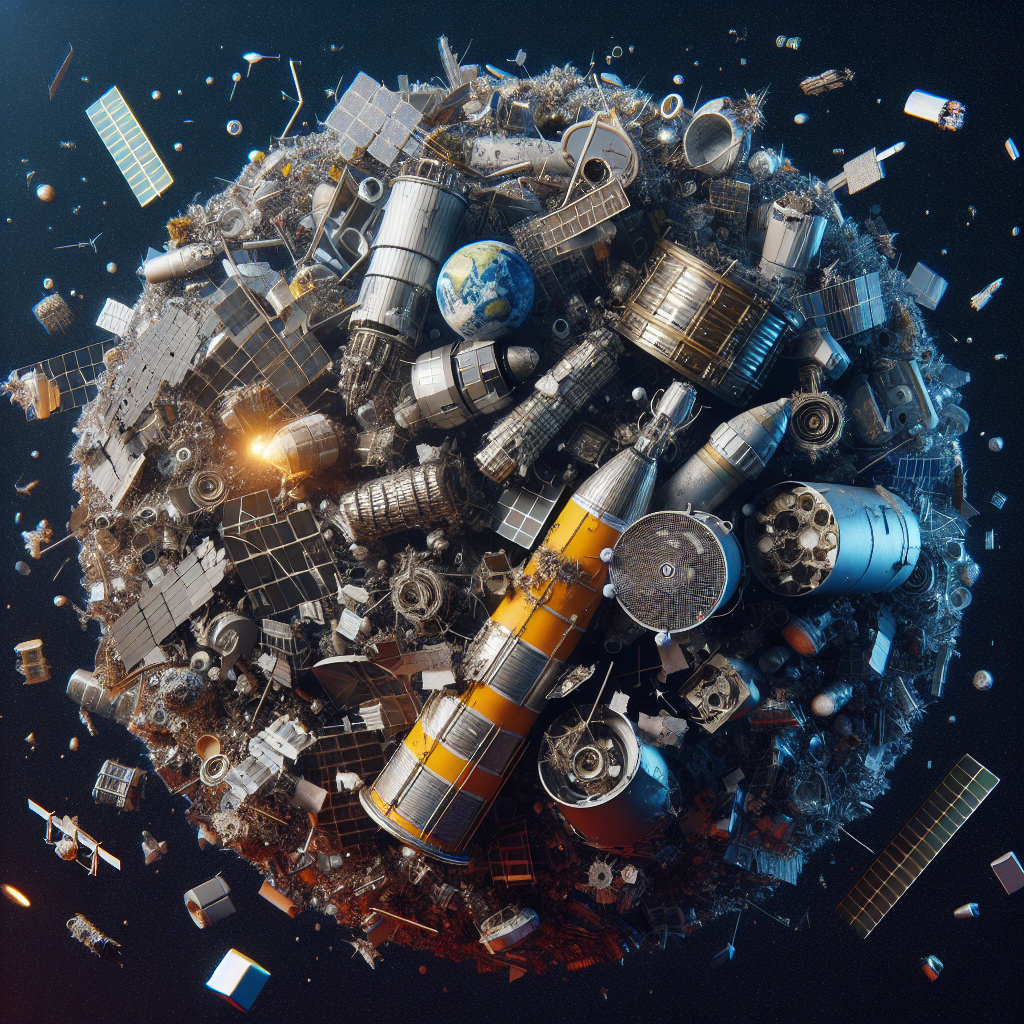

Earth is not only teeming with life, but also cluttered with a sky-high pile-up. Imagine Earth as a massive magnet attracting all kinds of metallic space garbage. From defunct satellites to spent rocket stages, our planet’s orbit has become a junk yard of epic proportions. It's a testament to human innovation gone awry, demonstrating that when we aim for the stars, we frequently end up leaving trash behind. This cosmic mess began with Sputnik in 1957 and spiraled out of control as humankind’s reach towards the stars morphed into a litterbug rivalry among nations. So far, there are over 100 million bits of debris swirling around Earth, and no one's hitting the brakes.
With more private companies sending commercial rockets into the cosmos, it's like everyone has a backstage pass to space, yet few have a plan for cleanup. It seems governments and private companies alike suffer from long-sighted blindness, fixated on immediate gains and ignoring the chaotic carousel of junk orbiting our planet. Isn't it ironic that in our zeal to conquer the celestial frontier, we're literally clogging it with the debris of our ambition?
The high-stakes chess game of satellite maneuvering has intensified as a result. Operators are playing an intricate dance to avoid collisions with rogue debris that could turn a multi-million-dollar satellite into an expensive paperweight. If this chaos continues, we could arrive at a scenario known as Kessler Syndrome, where the density of objects in low Earth orbit creates a cascade of collisions, rendering certain orbits unusable for generations. But who’s worried about that, right? It’s not like we’ll miss GPS or internet, will we?
Political ideologies clash when addressing these matters, but there’s an undeniable irony: the countries spearheaded by so-called eco-warriors and environmentalists are among the worst perpetrators of this cosmic littering. Talk about a conflict of interests—preach sustainability down here, practice clutter up there. Meanwhile, developing nations eager to break into the space race now have to navigate this orbital minefield, increasing the odds of these accidents.
Emerging space ambitions from private sector giants like SpaceX and Blue Origin only add to the heap. They compete with satellite constellations, promising global internet coverage—a dream that could indeed enhance life on Earth. However, the question begs: at what cost? With close to 42,000 new satellites planned in the coming decades, the skies could potentially resemble gridlocked city streets more than a frontier of exploration.
Some international bodies are trying to tackle the looming threat by drafting space debris mitigation guidelines, but they're as effective as slapping traffic regulations on floating scrap above our atmosphere. Punitive measures or strict regulations on space operations could serve as a deterrent, but who knows? Will we see a global tribunal for orbital offenders, imposing fines and holding countries accountable for space pollution? More importantly, will they heed these warnings, or continue ignoring the growing problem?
It’s almost laughable how policies on Earth struggle to regulate, let alone control, what happens in space. Global agreements stall in bureaucratic limbo while the debris count continues to skyrocket. Advocates claim a collaborative approach is best, but without pointed leadership, little action is taken, leaving most wondering if a cosmic catastrophe is needed to prompt real movement.
It's worth questioning why the public isn’t more riled up about this invisible issue. Out of sight, out of mind? Perhaps. Or maybe it’s the romantic notion of space exploration that overshadows the mundane yet critical logistic of cleanup. Without a visible threat looming, it’s easy to shrug it off as someone else’s problem. But just think: while we fixate on recycling bottles and banning plastic straws here at home, we're trashing our neighborhood in the cosmos faster than you can say 'landfill'.
There's a grim yet tantalizing element to this situation. Could this space junk issue become the crisis that finally pushes us to develop better waste management strategies on a planetary scale? Or will it spiral into yet another chapter of human negligence in the chronicles of environmental stewardship? Only time will reveal whether we mend our spatial fences or keep pretending we own the heavens without consequences.