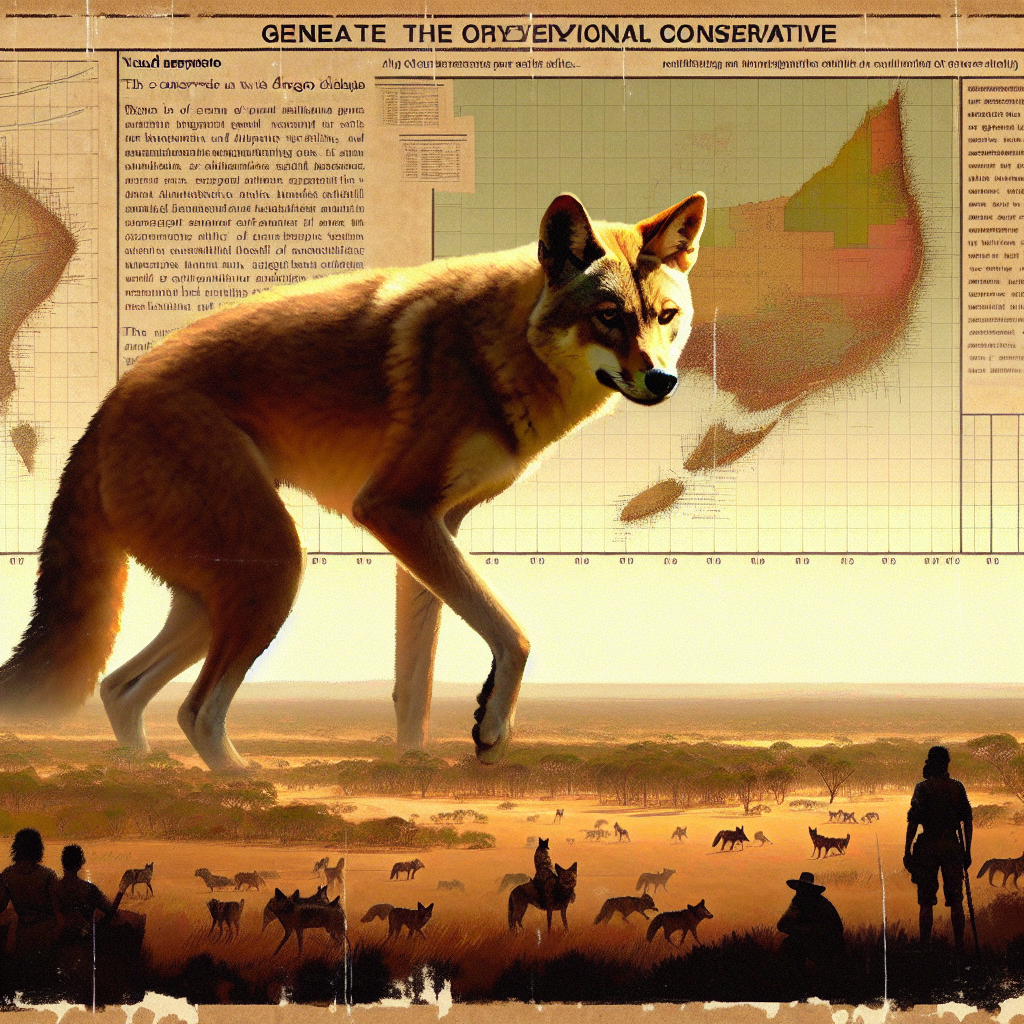

The Dingo Dilemma: Why Australia's Wild Dogs Are a Conservative's Best Friend
Australia's wild dogs, the dingoes, are causing quite the stir Down Under, and it's not just because they're cute and cuddly. These cunning canines are at the center of a heated debate about conservation, agriculture, and the environment. The dingo drama is unfolding in the vast outback of Australia, where farmers, environmentalists, and government officials are clashing over how to manage these wild animals. The controversy kicked off when the government proposed a plan to cull dingoes to protect livestock, sparking outrage among animal rights activists and environmentalists who argue that dingoes play a crucial role in the ecosystem. But here's the kicker: dingoes might just be the conservative's best friend in this battle.
First off, let's talk about the farmers. These hardworking folks are the backbone of Australia's agricultural industry, and they're fed up with dingoes preying on their livestock. Sheep and cattle are their livelihood, and when dingoes attack, it hits them where it hurts the most: their wallets. The government's culling proposal is a godsend for these farmers, who have been struggling to protect their herds from these relentless predators. It's a classic case of putting people before animals, a principle that conservatives can rally behind.
Now, let's address the environmentalists who are up in arms about the culling plan. They argue that dingoes are a keystone species, meaning they play a vital role in maintaining the balance of the ecosystem. Without dingoes, they claim, the population of smaller predators like foxes and feral cats would explode, leading to the decline of native species. But here's the thing: nature has a way of balancing itself out. Dingoes are not the only predators in the outback, and other species can step up to fill their role. Plus, the environmentalists conveniently ignore the fact that dingoes are not native to Australia; they were introduced by humans thousands of years ago. So, if we're talking about preserving the natural order, maybe it's time to reconsider the dingo's place in it.
The government, on the other hand, is caught in the middle of this tug-of-war. They're trying to appease both sides, but it's clear where their priorities should lie. Protecting the agricultural industry is crucial for the country's economy, and if that means culling a few dingoes, so be it. It's a pragmatic approach that prioritizes human needs over animal rights, a stance that conservatives can wholeheartedly support.
Let's not forget the tourism angle. Australia's unique wildlife is a major draw for tourists, and while dingoes are part of that allure, they're not the main attraction. Tourists come to see kangaroos, koalas, and the Great Barrier Reef, not to be chased by wild dogs. By managing the dingo population, Australia can ensure that its more iconic species remain the stars of the show, keeping the tourism dollars flowing.
Finally, there's the issue of safety. Dingoes are wild animals, and they can be dangerous. There have been numerous reports of dingo attacks on humans, including children. By controlling their numbers, the government can reduce the risk of these incidents, ensuring that both locals and tourists can enjoy the outback without fear. It's a common-sense approach that prioritizes public safety, something that should be a no-brainer for any government.
In the end, the dingo dilemma is a perfect example of why conservatives need to stand firm in their beliefs. It's about putting people first, protecting livelihoods, and ensuring public safety. While the liberals may cry foul, it's clear that managing the dingo population is the right move for Australia. So, let's raise a glass to the dingoes, the unlikely allies in the conservative cause.