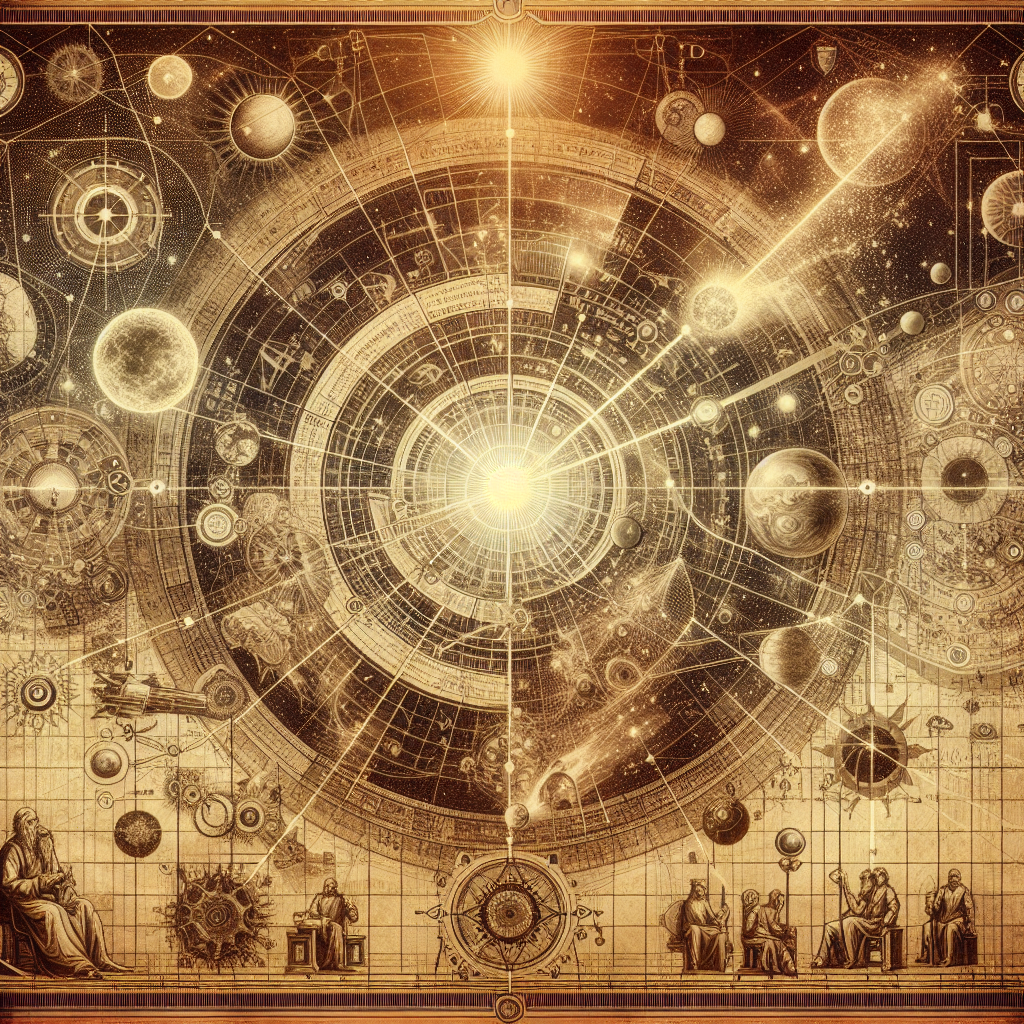

The Universe: A Conservative's Guide to the Cosmic Timeline
The universe is a grand spectacle, a testament to the power of creation that even the most ardent leftist can't deny. It all began with the Big Bang, a colossal explosion that occurred approximately 13.8 billion years ago, somewhere in the vastness of what we now call space. This event set the stage for everything we know, from the formation of galaxies to the emergence of life on Earth. The universe's timeline is a story of order, structure, and purpose, much like the values we hold dear.
First, let's talk about the Big Bang. This wasn't some random, chaotic event. It was the ultimate act of creation, a moment when all the matter and energy in the universe burst forth from a single point. This explosion was the beginning of time and space, a divine moment that set the universe on its path. It's a reminder that even in the vastness of space, there is a plan, a design that governs everything.
As the universe expanded, it cooled, allowing particles to form atoms. This process, known as nucleosynthesis, occurred within the first few minutes after the Big Bang. It's a perfect example of how order emerges from chaos, a principle that resonates with those who value structure and discipline. The formation of atoms led to the creation of hydrogen and helium, the building blocks of stars and galaxies.
Fast forward a few hundred million years, and we arrive at the era of reionization. This is when the first stars and galaxies began to form, lighting up the universe and bringing it out of the cosmic dark ages. These early stars were massive, burning brightly and living short, explosive lives. They were the pioneers of the cosmos, paving the way for the complex structures we see today.
The formation of galaxies is another testament to the universe's inherent order. These massive collections of stars, gas, and dust are held together by gravity, a force that ensures stability and cohesion. Galaxies are the universe's cities, bustling hubs of activity where stars are born, live, and die. They are a reminder that even in the vastness of space, there is a sense of community and belonging.
Our own galaxy, the Milky Way, formed around 13.6 billion years ago. It's a spiral galaxy, a beautiful structure that showcases the elegance of cosmic design. Within the Milky Way, our solar system took shape about 4.6 billion years ago. The formation of the solar system was a complex process, involving the collapse of a giant molecular cloud and the accretion of matter into planets. It's a story of perseverance and determination, qualities that are essential for success.
Earth, our home, is a unique planet in the universe. It formed about 4.5 billion years ago and has undergone countless changes since then. From the formation of the first continents to the emergence of life, Earth's history is a testament to the power of adaptation and resilience. It's a reminder that even in the face of adversity, life finds a way to thrive.
The emergence of life on Earth is one of the most remarkable events in the universe's timeline. It began with simple, single-celled organisms that eventually evolved into the complex life forms we see today. This process, known as evolution, is a testament to the power of change and growth. It's a reminder that progress is possible, even in the face of challenges.
The universe's timeline is a story of creation, order, and purpose. It's a reminder that even in the vastness of space, there is a plan, a design that governs everything. It's a story that resonates with those who value structure, discipline, and perseverance. So, the next time you gaze up at the stars, remember that the universe is a testament to the power of creation, a story that even the most skeptical can't ignore.