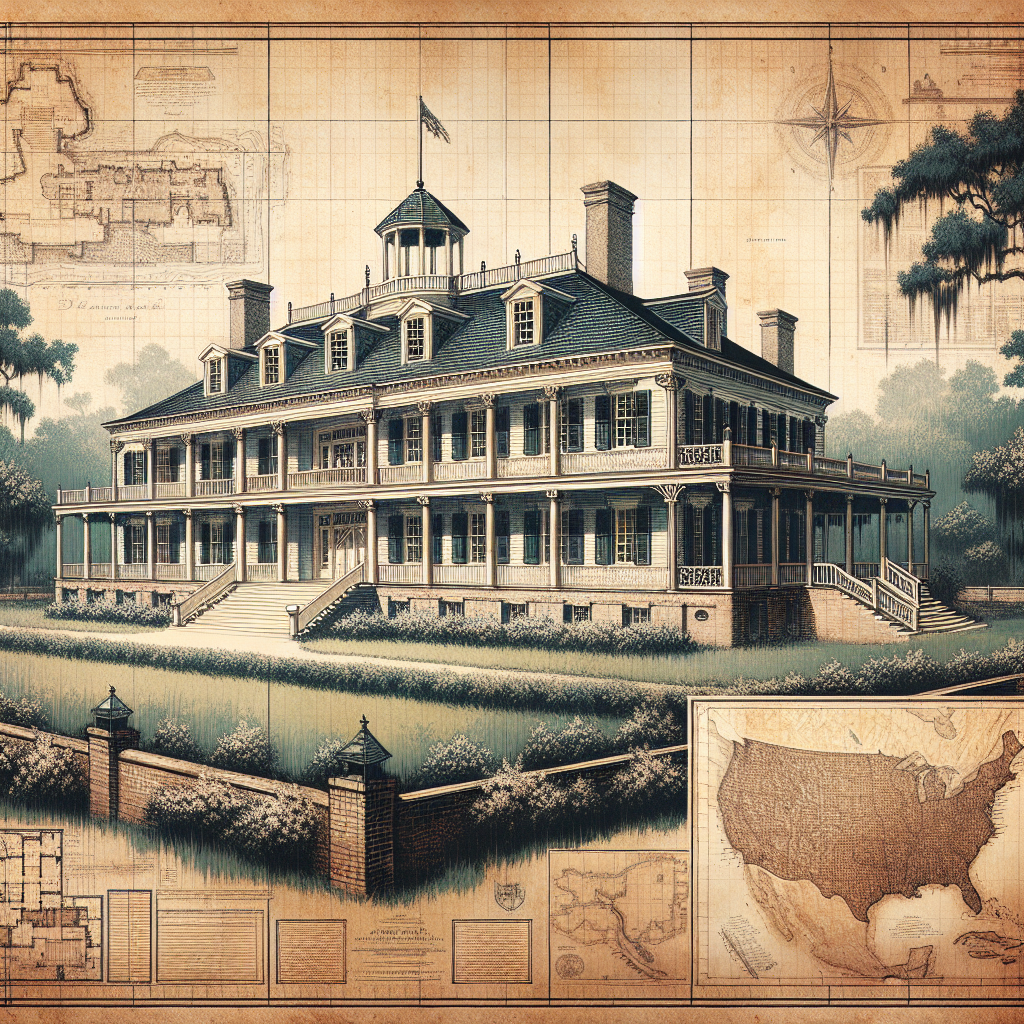

The Charlton Hall Plantation House: A Symbol of Southern Heritage Under Siege
The Charlton Hall Plantation House, a grand relic of the antebellum South, stands as a testament to the rich history and cultural heritage of the American South. Built in the early 1800s in the heart of South Carolina, this architectural marvel has witnessed the ebb and flow of American history. Yet, in today's politically charged climate, it finds itself under siege by those who wish to erase its significance. The plantation house, once a thriving hub of Southern life, now faces the threat of being reduced to a mere footnote in history, all in the name of political correctness.
Let's face it, the Charlton Hall Plantation House is more than just bricks and mortar; it's a living piece of history. It tells the story of a bygone era, a time when the South was a land of tradition, hospitality, and yes, complexity. But in today's world, where the past is often judged by the standards of the present, this iconic structure is at risk of being overshadowed by a narrative that seeks to simplify history into a black-and-white tale of good versus evil.
The plantation house is a symbol of Southern resilience. It has survived wars, economic downturns, and natural disasters. Yet, the greatest threat it faces today is the relentless push to rewrite history. The calls to tear down or repurpose such historical sites are growing louder, driven by a desire to sanitize history rather than understand it. This is not just an attack on a building; it's an attack on the very fabric of Southern identity.
Critics argue that the plantation house represents a painful past, and while it's true that the history of the South is intertwined with the institution of slavery, it's also true that the Charlton Hall Plantation House is a reminder of the progress we've made as a nation. It's a place where we can reflect on our past, learn from it, and ensure that the mistakes of history are not repeated. Erasing it from existence does nothing to honor the memory of those who suffered; it only serves to erase their stories.
The push to erase or alter historical landmarks like the Charlton Hall Plantation House is part of a broader trend of historical revisionism. It's a movement that seeks to judge the past by the standards of the present, ignoring the complexities and nuances that define history. This approach is not only intellectually dishonest, but it also robs future generations of the opportunity to learn from the past.
Preserving the Charlton Hall Plantation House is not about glorifying a painful past; it's about acknowledging it. It's about recognizing that history is complex and that understanding it requires more than a superficial glance. It's about ensuring that future generations have the opportunity to learn from the past, to understand the struggles and triumphs that have shaped our nation.
The Charlton Hall Plantation House is a reminder that history is not always comfortable, but it is essential. It challenges us to confront the past, to learn from it, and to grow as a society. By preserving this historical landmark, we honor the memory of those who came before us and ensure that their stories are not forgotten.
In a world where the past is often viewed through the lens of the present, the Charlton Hall Plantation House stands as a beacon of historical truth. It reminds us that history is not a simple tale of heroes and villains, but a complex tapestry of human experience. By preserving this iconic structure, we ensure that the lessons of the past are not lost to the sands of time.