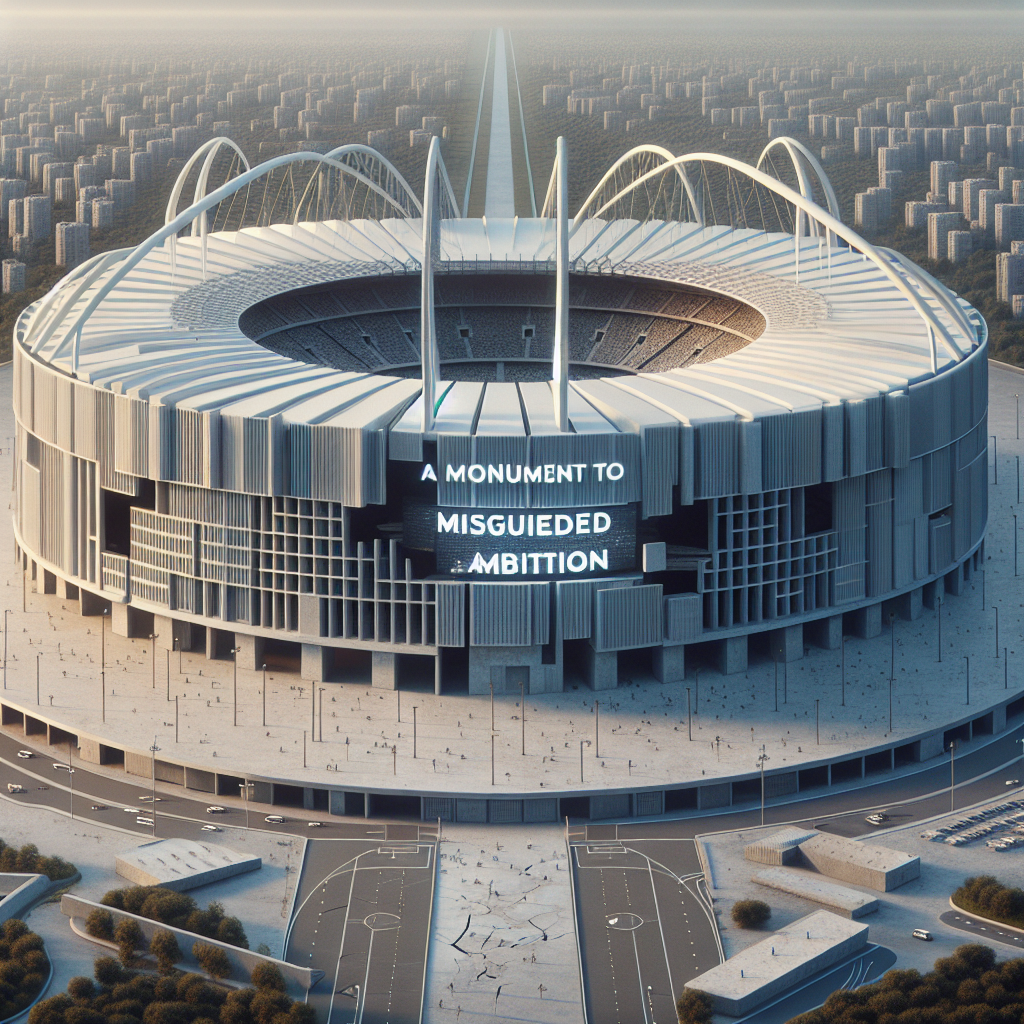

Anzhi Arena: A Monument to Misguided Ambition
Picture this: a colossal stadium rising from the rugged landscape of Dagestan, Russia, built to house a football team that once dared to dream big. This is the Anzhi Arena, a testament to the audacity of Anzhi Makhachkala, a football club that, for a brief moment, tried to challenge the giants of European football. Constructed in 2013, the Anzhi Arena was meant to be the crown jewel of a football revolution, a place where the world's best players would showcase their talents. But like many grandiose projects, it was built on shaky foundations, both literally and metaphorically.
Anzhi Makhachkala's story is one of ambition gone awry. In 2011, the club was purchased by billionaire Suleyman Kerimov, who injected a fortune into the team with the aim of transforming it into a global powerhouse. The club splurged on high-profile signings like Samuel Eto'o and Roberto Carlos, offering them astronomical wages to play in the remote region of Dagestan. The Anzhi Arena was to be the stage for this footballing spectacle, a state-of-the-art facility that could hold over 30,000 fans. But as with many things that seem too good to be true, the dream quickly unraveled.
The Anzhi Arena, while impressive in its design, became a symbol of excess and poor planning. The club's financial model was unsustainable, relying heavily on Kerimov's personal wealth. When the billionaire's fortunes took a hit, the lavish spending came to an abrupt halt. The club was forced to sell its star players and drastically cut its budget, leaving the Anzhi Arena as a ghostly reminder of what could have been. The stadium, which was supposed to be filled with cheering fans, now often stands empty, a monument to the folly of trying to buy success.
The story of Anzhi Arena is a cautionary tale for those who believe that money can buy anything, including sporting glory. It highlights the dangers of prioritizing short-term success over long-term stability. The club's rapid rise and fall serve as a reminder that building a successful sports team requires more than just deep pockets. It requires a solid foundation, careful planning, and a sustainable vision for the future. Without these elements, even the most ambitious projects are doomed to fail.
The Anzhi Arena also raises questions about the role of sports in society. While football can bring people together and inspire communities, it can also be used as a tool for vanity and self-aggrandizement. The stadium's construction was part of a broader trend of using sports as a means of projecting power and influence, a trend that often leads to wasteful spending and misplaced priorities. Instead of investing in grassroots development and nurturing local talent, the focus was on creating a spectacle that ultimately proved to be unsustainable.
In the end, the Anzhi Arena stands as a stark reminder of the perils of unchecked ambition. It is a cautionary tale for those who believe that success can be bought, rather than earned. The stadium, once a symbol of hope and possibility, now serves as a monument to the dangers of prioritizing short-term gains over long-term stability. It is a lesson that should be heeded by anyone who dreams of building a sporting empire, a lesson that is all too often ignored in the pursuit of glory.