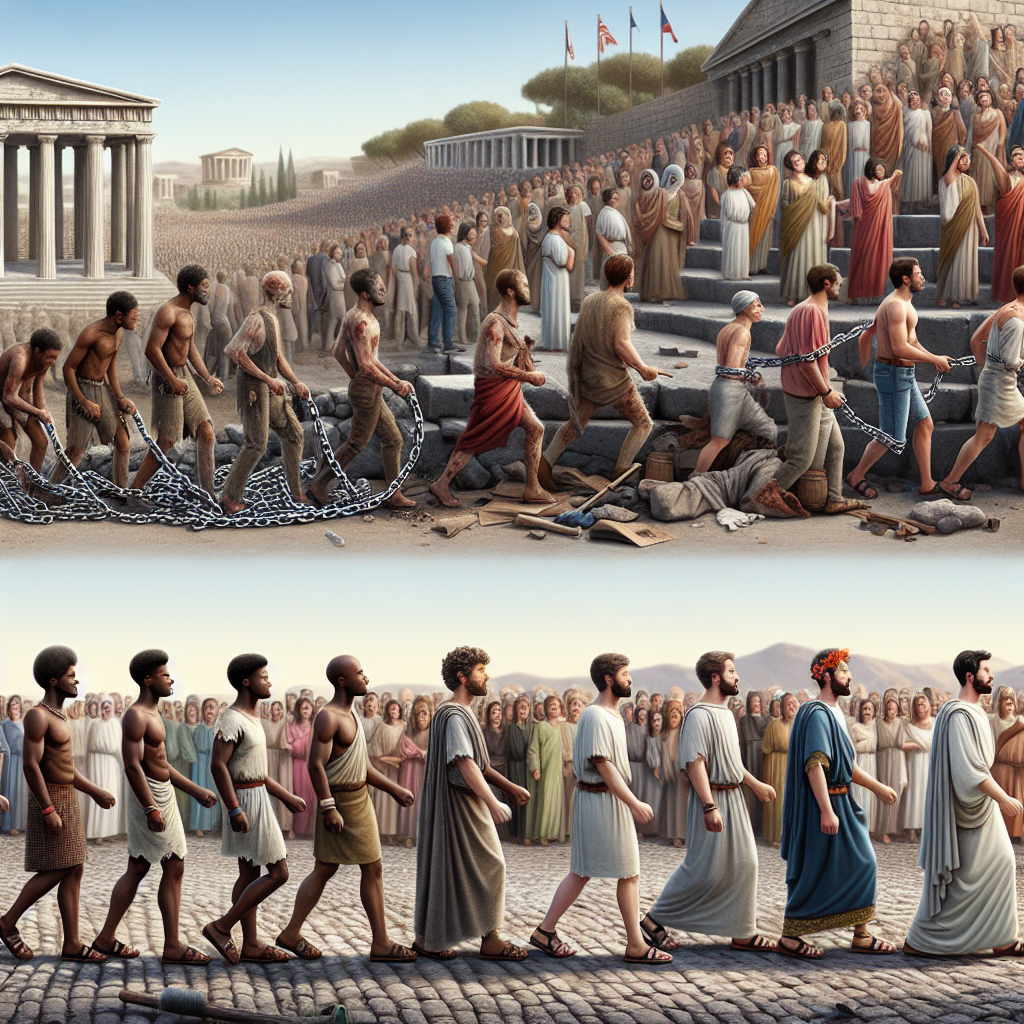

Imagine a world where the American dream feels like a rerun of an ancient civilization, rife with drama and the ultimate underdog stories. Welcome to ancient Rome, where freedmen, former slaves who found liberty, decided to challenge societal norms and redefine the very essence of Roman citizenship. Who were these gritty folks? Freedmen, known as 'liberti', were individuals who had been slaves but had gained legal freedom. They didn't just whisper about the American dream—they screamed it long before it was even conceived. Their society, spanning from 27 BC with the power shift from republic to empire, until the fall of Rome in 476 AD, saw the rise and struggles of this remarkable class not only in Italy but across its sprawling territories. Freedmen became prominent in all things economic and social, changing Rome’s face forever.
Roman freedmen played a crucial role in this era's social fabric. While other inhabitants might've been born with a silver spoon, these resilient individuals lived the myth of rags-to-riches. They became everything from bankers to estate managers, wielding unexpected power and influence. Picture them in your mind: former slaves, now negotiating business deals from the atriums of Rome—transforming faster than a self-made Silicon Valley mogul! Many astonishly amassed wealth despite starting off with meager ranks. Imagine the envy among contemporary burgesses, watching these self-starters leave them in the dust.
Of course, not everyone was thrilled. The liberated souls had to navigate a complex society of aristocrats like a mystic labyrinth. Every day, fighting against laws designed to keep them 'in their place'. They were still seen as 'new money', not quite worthy of that elite gladiator class. Yet, the obstacles only made them shrewder. The freedmen often became the backbone of artisan and commercial enterprises, showcasing how a free market (without strangling regulations) could indeed create room for all enterprising spirits, even if club membership came with a social demerit.
It wasn’t just about stagnant commerce. Freedmen were not only wealth creators but also vital cultural patrons. Some morphed into prominent actors and even gladiators, dominating Rome's entertainment scene. Their success stories as artists and warriors positioned them as cultural icons—a visible reminder of triumph over shackles. Julius Caesar, the controversial hero himself, frequently employed freedmen in administrative roles. That speaks volumes about their capabilities, even in a society that strived for class barriers as steadfast as Hadrian's Wall.
The family aspect was equally as compelling. Freedmen were known to show unshakable loyalty to their former masters—a curious blend of gratitude and respect for the hands that untied their human chains. This symbiotic bond often yielded patron-client relationships, ensuring both parties' sustained socioeconomic growth. That understanding blossomed into long-lasting alliances across generations, spinning tales compelling enough to give today’s Hollywood a run for its money.
Yet the most notorious arena for freedmen was politics. Rome, notorious for its labyrinthine politics, even allowed a sliver of power-share to these once enchained souls, utilizing them to fill administrative seats. Power is intoxicating, after all, and their rise from slave to senator rubbed many the wrong way. But did they care? Hardly. These liberated individuals, who wrote themselves a new market value, proved time and again that life was too short for mediocrity. They didn’t just wish for change; they embodied it. Predictably, social purists (those surely akin to today's liberals) couldn’t quite handle the influx of these newly ascendant citizens, disrupting the polite pauper-to-aristocrat food chain.
Interestingly, the freedmen's legacy outlasted Rome itself. It serves today as the ultimate muse for resilience, a narrative that not only echoes through the ancient piazzas of Rome but resonates with every person who has ever dared to break their proverbial chains. Their story is not a mere footnote; it's an undying testament to human potential in its raw, unadulterated form.
The ancient Roman freedmen didn’t have hashtags at their disposal but had a singular, relentless vision for their future. Today's world could take more than a few pages from their book—exchange desperation for determination, swap resignation for resilience. As the modern era grapples with its own tiered structures, let’s look back and remember that social climbing isn’t just a dream; it’s a reality lived by those who dared to rewrite history.