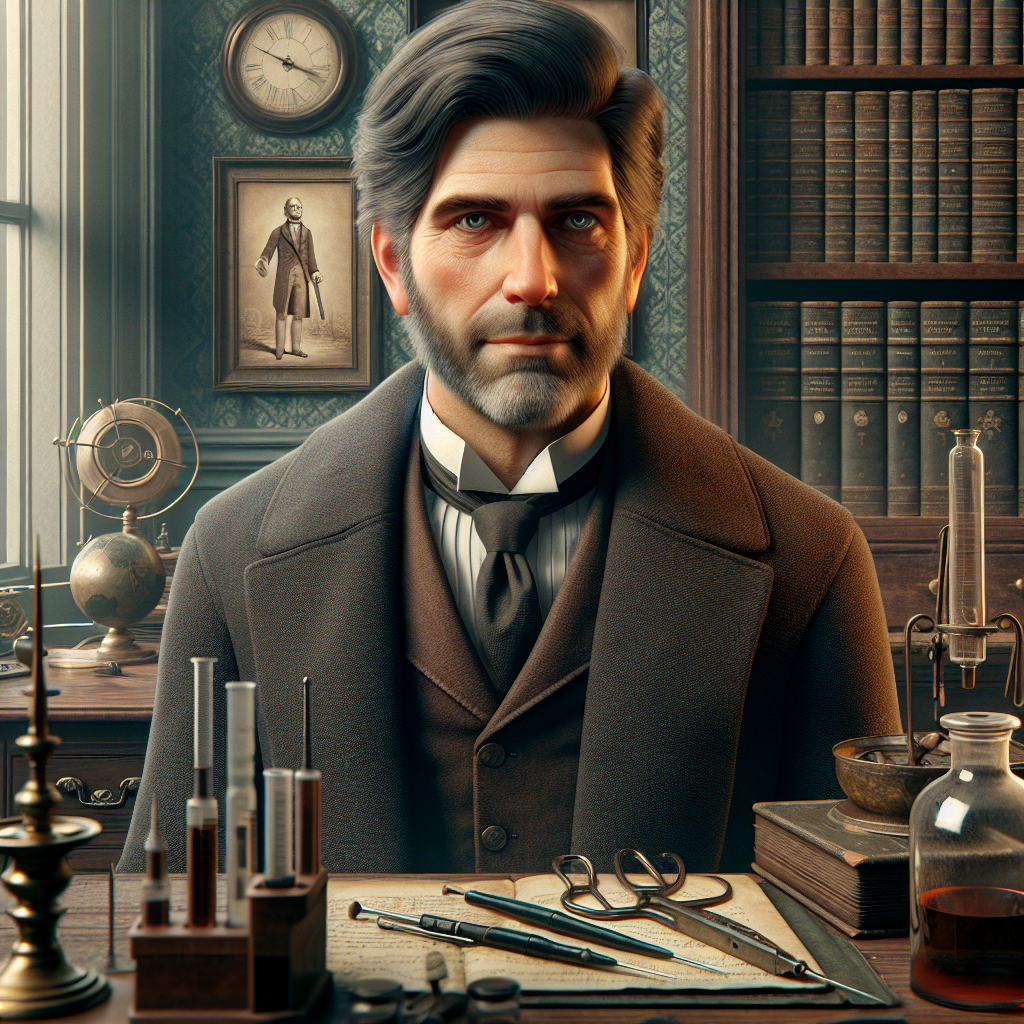

When someone mentions Alexander Hamilton, most people think of the founding father on the $10 bill, but wait until you hear about another Alexander Hamilton! This one was a Scottish physician who left an indelible mark on Maryland in the 18th century. Born in 1712 in Scotland, Hamilton found his way to Annapolis, Maryland, in 1739, and it turns out, he wasn't just good at curing ailments—he was a notable intellect and a dedicated traveler, penning one of the earliest American travel logs, delighting us with insights into 18th-century America.
Dr. Hamilton's arrival in Maryland marked the beginning of a career that was deeply intertwined with politics, society, and cultural critiques. If you’re waiting on a list of achievements, hold your breath. The man's most significant contribution came in the form of his 'Itinerarium', a documented journey through the American colonies in 1744. Not only does it shed light on the diverse cultures he encountered, but it also lays bare his insightful, albeit conservative, critiques of society—exactly what historians love to chew on.
He wasn’t just taking notes on flora, fauna, and architecture. No, Hamilton was digging into the social fabric of colonial life with a cutting wit that would make modern satirical writers envious. He didn’t just travel; he trekked nearly 1,624 miles from Maryland to Maine, addressing the social, political, and moral fabrics of his contemporary world. Imagine the patience that must have taken in the 1740s. Forget your Tesla; this man did it on horseback!
Ever the social gadfly and critic, his powerful prose offered sharp reflections on the fledgling American identity, particularly the virtues and vices of its citizens. As an outsider in Maryland, it’s surprising how quickly he adapted and assessed the new world around him. His doctor’s eye didn’t just spot illnesses; it caught cultural contagions, festering ideologies, and the young spirit of America finding its way amidst the old-world traditions.
He dared to pen thoughts that many would bite their tongues over today. In that way, he was perhaps a model of fearless expression. Dr. Hamilton's work unpacks the American spirit with keen insight, even centuries later. It wasn't just enough for him to ruffle feathers with his writing. Hamilton was also a founding member of the Tuesday Club of Annapolis—a hub of intellectual exchange, pushing the boundaries of cultural discourse. The man could be your 18th-century podcast host starting conversations still reverberating in American society today.
But let's dive into what really makes Dr. Hamilton a conservative hero worth celebrating. His passion for medicine and exploration gave him an insight into human nature often lacking in others. His critiques were rooted in his understanding of both science and society. While his contemporaries were often men of singular focus—the soldier, the merchant, the clergyman—Hamilton straddled multiple spheres. He kept his critical-eye sharp and his platitudes curbed.
In championing the resilient character of Americans, he applauded virtues over dependencies, crafting narratives that rejected the European tendencies many fled to escape. Hamilton's contributions went beyond the settled life in Maryland; he critiqued the degenerate elements of a nascent society vying for respectability. As America grew, so did his impressions, embedded in his detailed logs that read like a colonial playbook sprouting American exceptionalism from humble origins.
Readers may be intrigued by how Hamilton's thoughts mirror some contentious debates today. Yet, in his era, he approached the societal scourges and triumphs with wit and honesty—a rarity some modern circles might shy away from. His life remains a testament to embracing one’s environment with eyes wide open, even if sometimes, the truth bites back.
Dr. Hamilton's legacy certainly isn't that of the face on a currency note but of the penetrating critic of early America. As a testament to a life led by exploration, critical inquiry, and conservative insight, his story reminds us that sometimes, an outsider sees America more clearly than we do ourselves. Now that’s a topic to consider next time someone tells you history isn't relevant. Until then, understand this: Alexander Hamilton was not just any old physician; he was a would-be founding father in his own right.