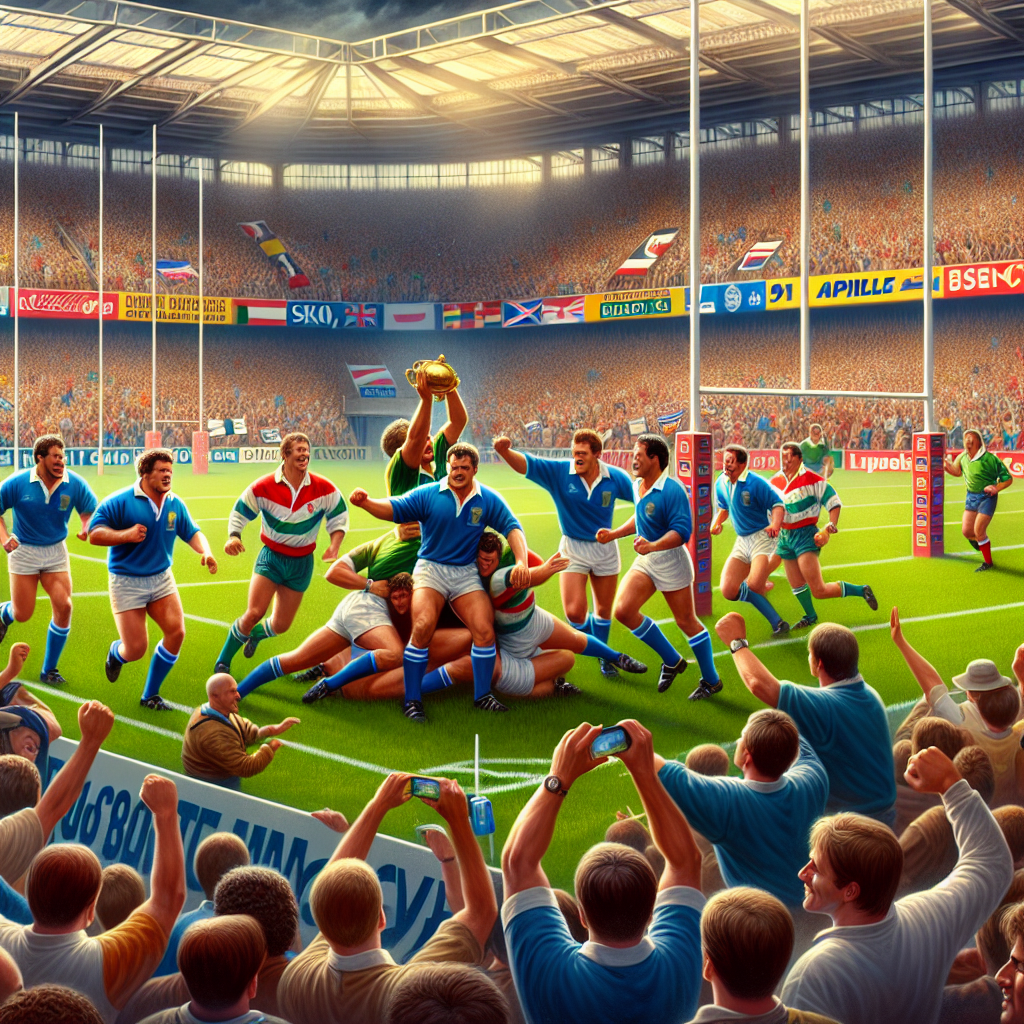

Hold onto your hats, because the 1995 Rugby World Cup was more thrilling than any modern melodrama you'll find on Netflix. This was the year when South Africa stepped into the spotlight on a global stage, just one year after the end of apartheid and the restoration of international rugby ties. It was the perfect backdrop for the tournament that ran from May 25 to June 24, 1995, in the brand-new rainbow nation. South Africa, under the leadership of the legendary Nelson Mandela, hosted this crowning event of rugby and defied expectations, not just on the field but in uniting the nation. Mandela knew rugby's power to forge unity among South Africans. He smartly used the sport to bring together a divided country, leveraging common sense and traditional values in a way that only a forward-thinking leader could.
Yes, let's talk about how the mighty Springboks, the darling national rugby team of South Africa, emerged victors against New Zealand, one of the most formidable teams in rugby history. On June 24, 1995, at the Ellis Park Stadium in Johannesburg, they defeated the odds and the famed Jonah Lomu, New Zealand's powerhouse winger whose thunderous runs had scorched every defense until that point. With a slam-dunk kick from Joel Stransky in overtime, South Africa clinched a 15-12 victory. South Africa triumphantly broke through rugby's elite, showcasing the spirited resolve of a rejuvenated nation. But beyond the athletic spectacle, this event shone brightly as a unifying force. Mandela donned the Springboks jersey—an emblem of national pride—and the world took note of the unifying magic that had taken place. After decades of tumult and division, it was evident what the wise embrace of common goals can achieve.
Some might scoff at the adoration for a sport like rugby. But let's be honest, it's an arena where traditional virtues are celebrated: grit, perseverance, and teamwork. The 1995 Rugby World Cup wasn't just a tournament. It was an emphatic statement about deep-rooted values and the universal power of sports. Mandela's legendary support of the team eroded racial divides, showing how shared goals can spark understanding and respect.
This World Cup offered more than a trophy; it was an affirmation that sport isn't just a plaything. It's a societal pillar that knits communities together. In a show of tremendous foresight and insight, Mandela and the South African people showed how common ground could overcome past grievances. It's an approach the world could use more of, prioritizing unity over divisive narratives.
Even the philistines who dismiss the significance of sports couldn't ignore these power dynamics. If you're searching for a legitimate instance where statecraft, nationalism, and sports collided to create an exemplar of unity, don't look further than the Ellis Park Stadium showdown. While critics may endlessly chortle about Mandela's foresight being simply an opportunistic charm offense, the true test was passed on the field.
Remember, the Springboks' victory wasn't merely fueled by the talent of their players but was magnified a hundredfold by the national spirit. Relative underdogs sprung to undercut giants, a classical tale of sheer will defeating muscular might. Rugby is one of those rare arenas where meritocracy takes unabashed precedence, a stunning counterpoint to the proliferation of entitlement elsewhere.
This event isn't just about South African pride or a sports statistic; it's a chapter where masculine virtue and tenacity took a seat at the head of the table. Those who overlook that moment as quaint or merely sporting haven't grasped its magnitude. In a world drifting towards complacency, here lies a reminder that victory and unity are cultivated— virtues earned through action, not awarded by mandate.
Ultimately, the 1995 Rugby World Cup was a hinge point in history. It told the world that reconciling differences wasn't impossible. The Springboks' triumph announced not only their ascent to the rugby pinnacle but also celebrated a proud nation ready to lead on its own terms. It was proof that a moment of deft leadership accompanied by sport’s raw thrill could accomplish political consensus.