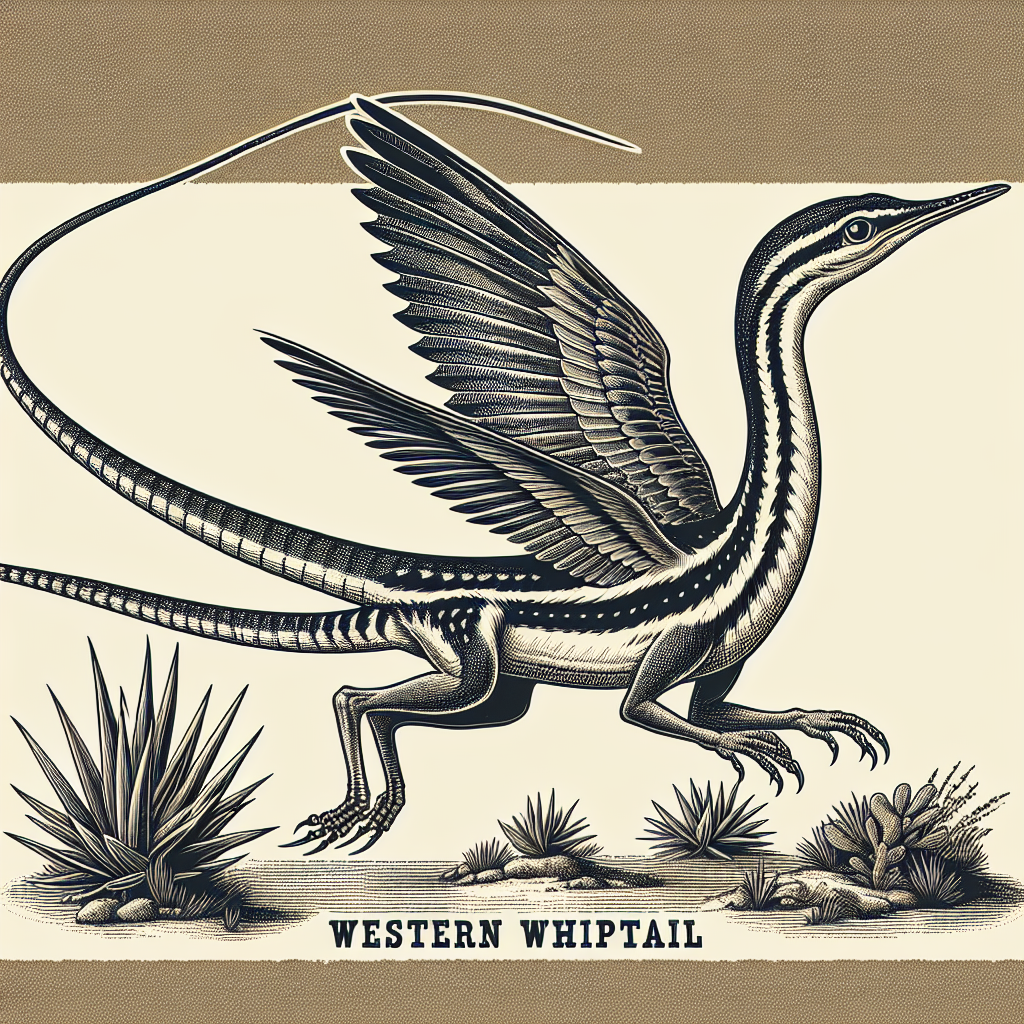

The Western whiptail lizard might just be one of nature’s most fascinating speedsters. Found in the southwestern United States and northwestern Mexico, this lively reptile has captivated scientists and nature enthusiasts alike. But what makes it so intriguing? From its impressive adaptability to its unique all-female populations, I’m here to take you on an enlightening journey exploring just how the Western whiptail thrives in its arid habitats.
Who is the Western Whiptail?
To understand the Western whiptail (scientifically known as Aspidoscelis tigris), imagine a small reptile with a personality as colorful as its name. This lizard measures about eight to ten inches long, flaunting an intricate pattern of stripes and spots in shades of brown, gray, or black. Its most distinctive feature—a strikingly long, tapering tail—can reach up to twice the length of its body, giving it not only its name but also its reputation for speed.
The Energetic Explorer
Western whiptails are the epitome of desert survivalists. Thriving in hot and dry conditions, these resilient reptiles are found scurrying across sandy washes and rocky outcrops in the Mojave Desert, Sonoran Desert, and Chihuahuan Desert regions. Thanks to their solid build and quick reflexes, they zip across the landscape searching for insects, spiders, and other delish invertebrates to snack on.
One might find it intriguing that the whiptail’s energetic disposition comes with practical benefits. Faithfully attuned to their environment, they bask in the morning sun to regulate their body temperature—an essential behavior that helps them maintain their metabolism and stay active throughout the day.
The Science of Speed
What truly elevates the Western whiptail beyond mere charisma is its remarkable speed. When startled, these nimble lizards are capable of sprinting at surprising velocities, evading predators with a speed that defies their modest size. Their agility is backed by powerful hind legs, giving them the ability to dart swiftly from threats, or sometimes, to launch an unexpected sprint between patches of shade.
A Remarkable Reproductive Twist
A phenomenon unique to Western whiptails is their part in the natural world as one of a few vertebrates that engages in parthenogenesis. This scientific term refers to a form of asexual reproduction where females can produce offspring without male contribution. Many populations of the Western whiptail are composed entirely of females, raising endless questions about evolutionary adaptation and diversity.
This reproductive strategy allows them to colonize rapidly and thrive independently in their environment, but also genetically limits variation in these populations. Science sees this as a thrilling puzzle, and ongoing studies continue to uncover the fascinating ramifications of this reproductive tactic.
Thriving Against the Odds
While some may assume these marvelous reptiles are inherently shy and solitary, whiptails are inherently social when it comes to their own kind. They communicate through intricate tactile and visual behaviors, using head bobs and tail waves to negotiate territory and share information among their community.
Adaptation is nature's game, and the Western whiptail plays it with admirable prowess. From winter dormancy in cooler months to a robust diet that adapts seasonally, these lizards exhibit a resilience that is nothing short of inspiring. Their undeniable fit for survival reveals how melding physical agility with instinctual intelligence creates a remarkable blueprint for life on Earth.
Conservation Challenges
Despite their adaptability, Western whiptails face several ecological threats, mainly due to habitat loss and climate change. Increasing temperatures and urban development in their native regions threaten their natural habitats. Thankfully, conservation efforts are underway, focusing on habitat preservation and environmental education to protect these vibrant desert inhabitants.
As stewards of our planet, understanding species like the Western whiptail underscores the importance of maintaining biodiversity. Each species—no matter size or scope—plays a vital role in their ecosystem. By preserving the natural world, we safeguard the entire web of life, including these beguiling whiptails.
Conclusion: A Reptile Worth Celebrating
The Western whiptail is more than just a speedy reptilian neighbor; it's a testament to nature's infinite creativity and resilience. As we continue to study and learn from these amazing creatures, they offer insights not just into their world, but into our own potential to adapt and thrive. So, whether you’re exploring the deserts they call home or uncovering insights in a laboratory, remember—every encounter with a Western whiptail is an invitation to witness the awe-inspiring wonders of the natural world.