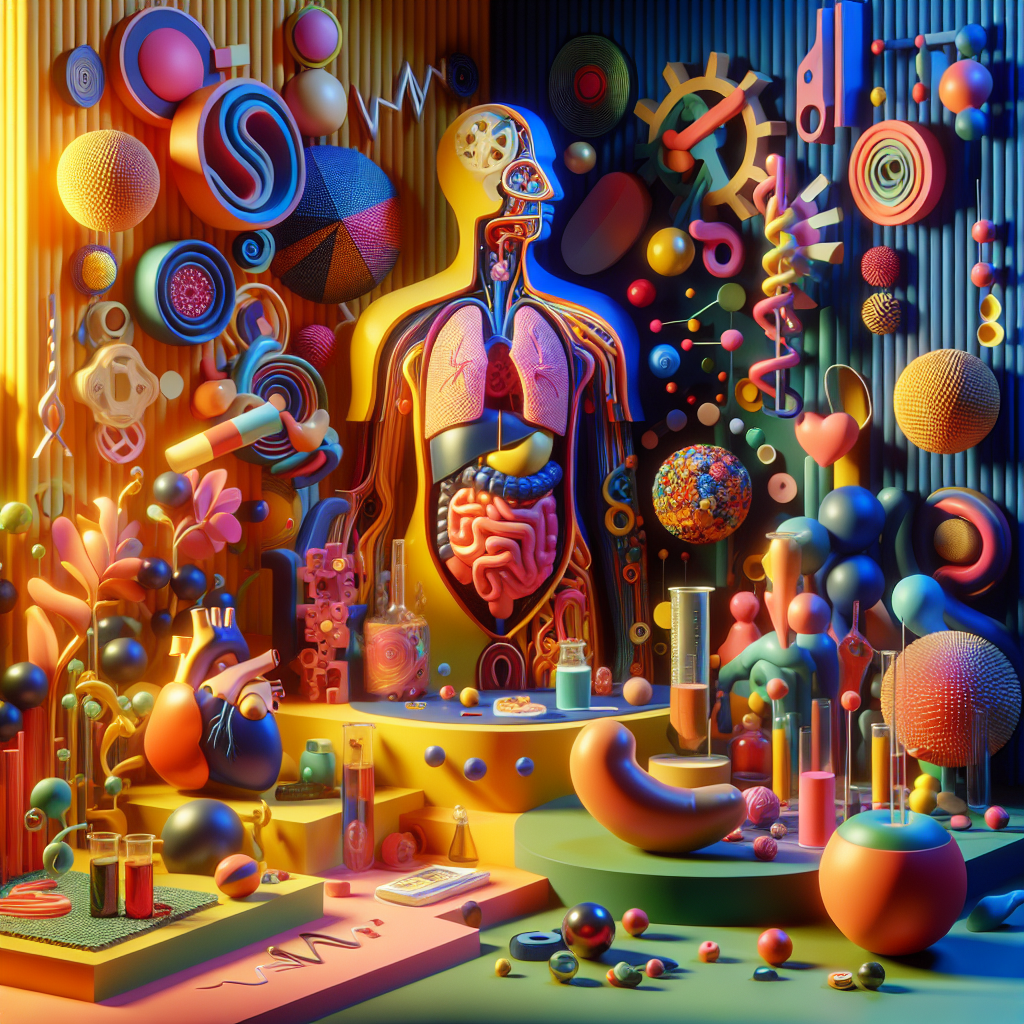

Have you ever heard of Vincent Bochdalek? If you're picturing a French painter or a classical composer, you're in for a surprise. Instead, we're diving into the intriguing world of human anatomy, talking about a remarkable Czech anatomist from the 19th century. Vincent Alexander Bochdalek, born in 1801 in Litoměřice, Bohemia (then part of the Austro-Hungarian Empire and now the Czech Republic), left an indelible mark in medical history. His name is synonymous with a particular congenital condition known as Bochdalek hernia.
Unraveling the Legacy of Vincent Bochdalek
Imagine a profession where understanding the complex network of the human body could dramatically improve lives. Vincent Bochdalek was profoundly keen on this notion. With an infectious curiosity and a pioneering spirit, he dedicated his life's work to anatomical discoveries that have paved the way for modern medicine. An anatomist by profession, Bochdalek's contributions continue to assist physicians diagnosing and treating specific congenital conditions effectively, showcasing the long-lasting impact of his work.
Breaking Down the Bochdalek Hernia
A Bochdalek hernia, arguably Vincent Bochdalek’s most famous legacy, is a congenital diaphragmatic hernia (CDH). But don't let the fancy words deter you. Breaking it down, this condition arises when there's a defect in the diaphragm, the muscular partition responsible for the physiological separation between the chest and abdominal cavity. This results in abdominal contents like the stomach, intestine, or even the liver moving into the chest cavity, which can impact lung development and function.
The fascinating aspect of Bochdalek hernias is their formation during fetal development. The diaphragm normally forms around the 8th to 12th week of gestation. When this process is interrupted, it may result in a Bochdalek hernia. While these hernias are rare—occurring in about 1 in 2,000 to 5,000 live births worldwide—they have motivated advancements in prenatal diagnostics and postnatal treatments, all inspired by a discovery dating back to 1848.
Spreading the Passion for Discovery
Why should the story of Vincent Bochdalek matter to us today? In a sense, it's about understanding how scientific contributions from the past still inform our present. Bochdalek's work helps us recognize the importance of attention to detail and curiosity in science. Each anatomical discovery he brought to light provided another piece of the intricate human puzzle. It shows that sometimes, the answers to contemporary questions lie in the detailed observations of the past.
The Human Impact
Let’s connect to the human side of this story. One can only imagine the critical role Vincent’s work plays in the lives of infants born with Bochdalek hernias. His research gives healthcare providers a clear direction on what to look for and how to approach treatment, which often includes surgical repair shortly after birth. Knowing that his scientific dedication continues to aid newborns and their families around the globe adds a compassionate dimension to Bochdalek's extensive legacy.
Furthermore, the advancements in imaging technologies have dramatically enhanced the ability to diagnose Bochdalek hernias before birth, making treatments and surgeries more viable and successful. These technological strides owe some of their groundwork to Bochdalek’s early observations, drawing a line from 19th-century anatomical sketches to cutting-edge 21st-century medical care.
Education and Recognition
As with many scientific pioneers, Bochdalek's work had huge implications for medical education. His dedication laid robust foundations for anatomical studies, underscoring the fact that a robust understanding of the human body's structure can lead to groundbreaking treatments. Today, his findings contribute to the educational frameworks and materials used in medical schools around the world.
It's perhaps this recognition of the past that provides a lesson for the future: by valuing and building upon previous discoveries, future medical innovations will undoubtedly continue to flourish. The story of Vincent Bochdalek is one that celebrates the perseverance and passion for understanding life’s intricacies—a quest that continues to inspire anatomists and other scientists.
A Call to Curiosity
As we reflect on the life of Vincent Bochdalek, it’s a reminder of the human potential for discovery. That our curiosity, attention to detail, and drive for understanding can yield outcomes that echo through centuries. So let us channel our inner anatomists, fostering curiosity and a passion for exploration. Who knows which future Bochdaleks will push the boundaries of what we know about our incredible human form?