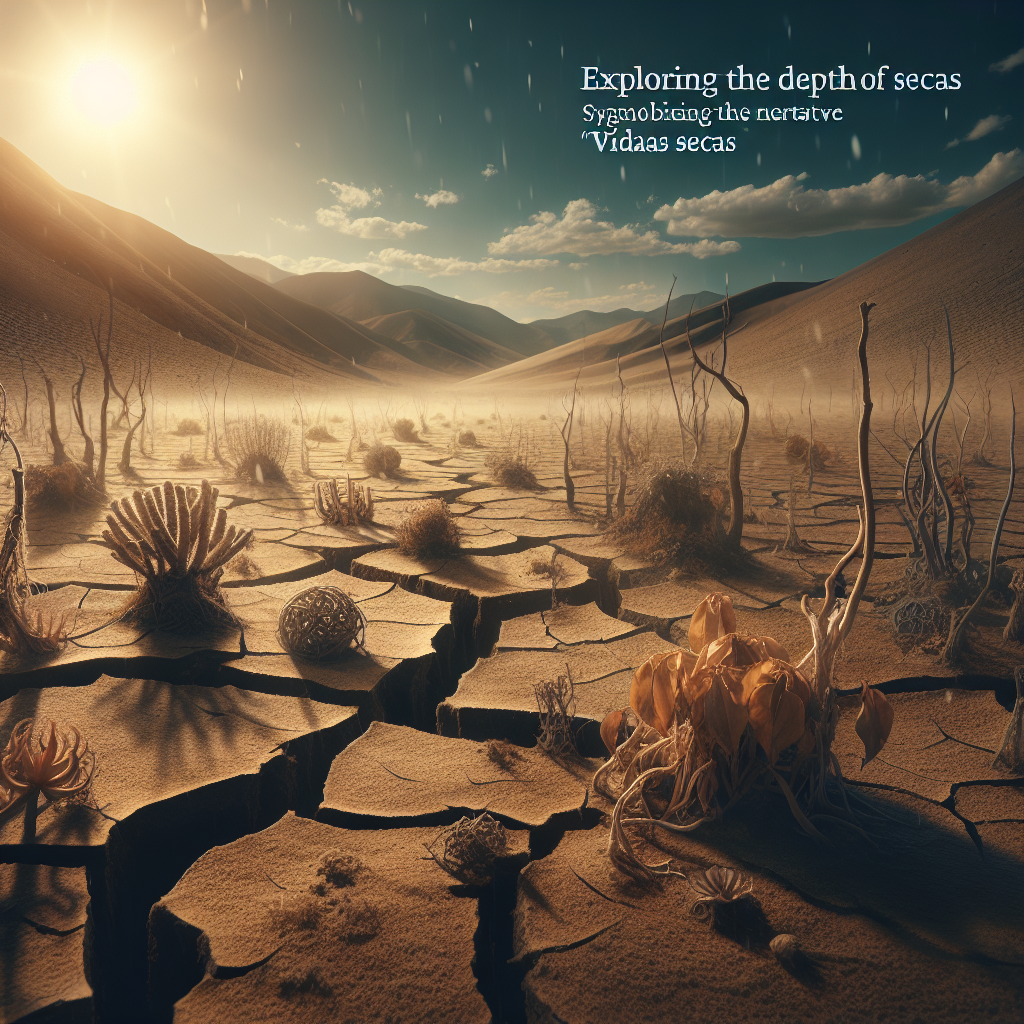

Exploring the Depths of "Vidas Secas": A Journey Through Drought and Survival
Imagine a world where the relentless sun scorches the earth, leaving behind a barren landscape and a family struggling to survive. This is the world of "Vidas Secas," a poignant novel written by the Brazilian author Graciliano Ramos in 1938. Set in the arid backlands of Northeast Brazil, the story follows the lives of a poor family of sertanejos—Fabiano, his wife Sinhá Vitória, their two sons, and a dog named Baleia—as they navigate the harsh realities of drought and poverty. The novel is a powerful exploration of human resilience and the impact of environmental and social conditions on individuals and families.
"Vidas Secas" is not just a tale of survival; it is a profound commentary on the socio-economic challenges faced by rural communities in Brazil during the early 20th century. Graciliano Ramos, who was born in the region, drew from his own experiences to depict the struggles of the sertanejos with authenticity and empathy. The novel is structured in a series of vignettes, each offering a glimpse into the daily lives and inner thoughts of the characters, highlighting their dreams, fears, and the relentless fight against the oppressive environment.
The novel's setting in the Brazilian sertão—a semi-arid region known for its extreme droughts—serves as a backdrop for the exploration of themes such as poverty, migration, and the human spirit's capacity for endurance. The sertão is a place where water is scarce, and the land is unforgiving, yet it is also a place where hope and determination persist. Ramos's vivid descriptions and deep understanding of the region bring the harsh landscape to life, making it almost a character in its own right.
"Vidas Secas" is celebrated for its minimalist style and its ability to convey complex emotions and social issues with simplicity and clarity. The novel's impact extends beyond literature, as it has been adapted into a critically acclaimed film and continues to be studied for its insights into the human condition and the socio-political landscape of Brazil. Through the lens of Fabiano and his family, readers are invited to reflect on the broader implications of inequality, environmental challenges, and the universal quest for a better life.