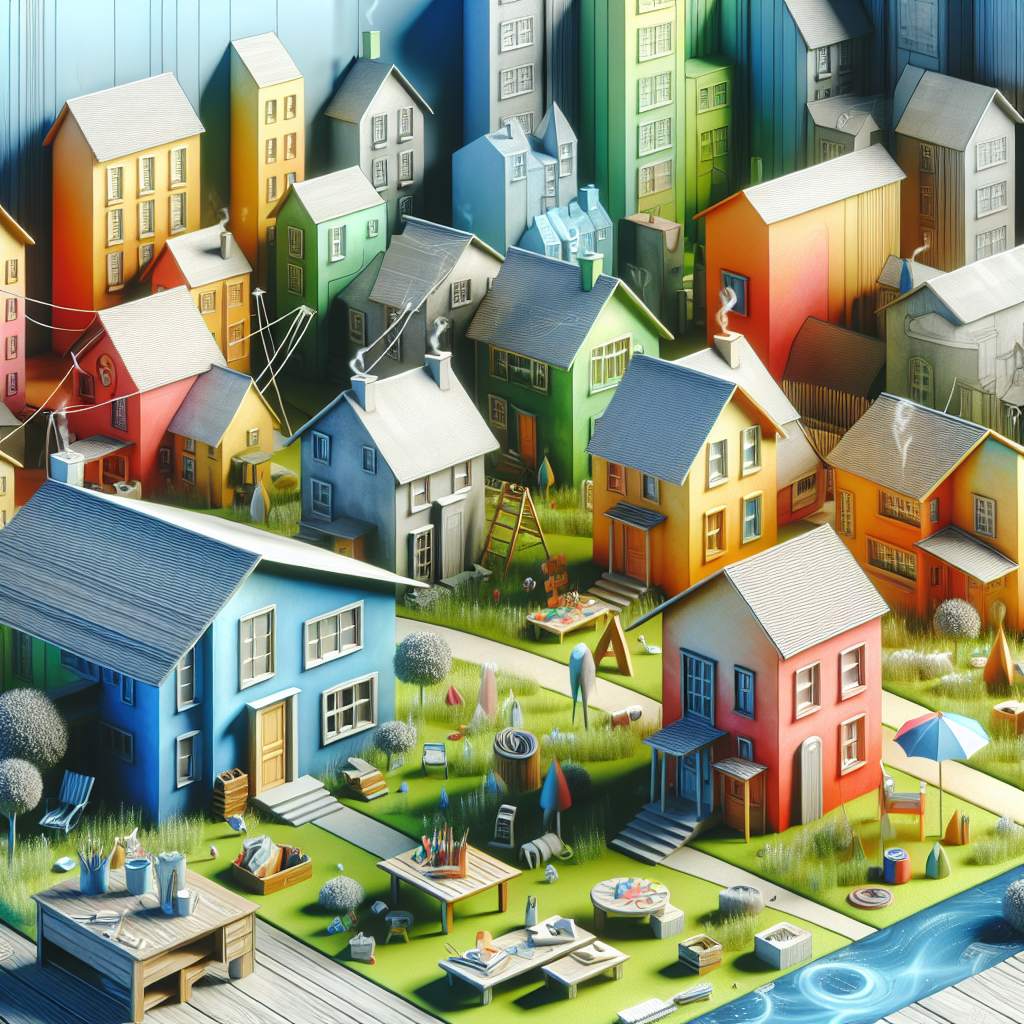

Houses: The Science and Stories Within Four Walls
A house isn't just a static structure made of bricks and beams—it's an entity pulsating with history, science, and the narratives of those who inhabit it. We interact with our homes daily, but have you ever stopped to ponder what makes a house truly come alive, or how its silent existence impacts our lives qualitatively and scientifically? From ancient dwellings to modern smart homes, houses have evolved tirelessly alongside humanity, documenting profound tales of survival, innovation, and human progression.
Who, What, When, Where, and Why of Homes
Our tale starts from the beginning of civilization when humans first sought shelter in caves and temporary structures. Why? For protection! Over time, these rudimentary shelters evolved, with the birth of the first formal houses occurring around 10,000 years ago in the Neolithic age. These homes were scattered across regions from Mesopotamia to ancient China, providing safe havens and community identity.
Fast forward to where we are today, homes appear in myriad forms and reflect the technology and culture of their times. Why is this evolution so significant? Because it is intertwined with technology, social transitions, and the ever-changing landscapes of human ambition.
The Physics of Shelter: Structures and Safety
Understanding a house begins with its construction. Houses are architectural wonders, embodying the principles of physics, geometry, and engineering. The design of a house is a fascinating dance between form and function. Engineers and architects use load-bearing principles, leverage, and material science to create structures that stand tall against gravity and endure natural disasters.
The materials that comprise houses have stories of their own. From mud-bricks used by the Romans to modern-day concrete, steel, and glass—each element has been carefully selected over millennia to suit diverse climates and purposes. The scientific principles that dictate these choices—thermal insulating properties, tensile strength, and sustainability—make our homes comfortable, safe, and energy-efficient.
Houses as Engines of Innovation
Over centuries, the design and functionality of homes have inspired numerous innovations. In the medieval period, homes had chimneys, which were revolutionary in reducing smoke inside houses, replacing the traditional open hearth. Fast forward, the 19th-century invention of indoor plumbing became a public health breakthrough.
And today? The spotlight is on smart homes, where IoT (Internet of Things) technology integrates with architecture to automate security, lighting, and even grocery shopping! Every innovation reflects society's advances. Each also contributes a lesson in efficiency and connectivity, proving our innate desire to make our environments more comfortable and our lives more seamless.
The Sociology of Space: Housing and Community
The narrative surrounding houses isn't just about physical structures; it's about the social and cultural ecosystems they organically nurture. Houses are more than private sanctuaries—they are the building blocks of communities. Over time, housing styles have reflected social stratification and cultural identity. One can decipher societal intricacies just from a glance at someone's home.
Consider Victorian homes with their intricate designs—symbols of status and economic prosperity. Or the Bauhaus movement, which revolutionized architecture by combining form and functionality reflecting the social values post-World War I: simplicity, utility, and affordability.
Houses also mirror societal shifts, such as the growing trend toward sustainability, visible in the rising popularity of eco-friendly homes. These changes articulate our collective hope and responsibility toward environmental stewardship.
The Art of Living: Personal Stories Between Walls
The heart of a house beats through its inhabitants. As animate beings interact with this inanimate space, unique stories breathe life into the walls. Homes witness our triumphs, moments of joy, and our sorrows. They silently observe as we experience firsthand what it means to be human.
Consider a grandmother passing down recipes in her cozy kitchen, or children scribbling their first letters on the wall—these are intimate and universal stories we all relate to. The layout of a house can also influence the dynamics of relationships within. Open floor plans encourage interaction, while separate rooms allow moments of solitude.
Ecological Footprints: Sustainability in Housing
As stewards of the Earth, it’s our responsibility to dwell wisely. Some houses now are testimonials to eco-friendliness. Green architecture incorporates solar panels, rainwater harvesting, and even passive heating and cooling systems to minimize carbon footprints.
Moreover, the trend of tiny houses reflects a minimalist approach to living, embracing simplicity and environmental consciousness. By adopting sustainable practices, houses of the future can be key players in the broader environmental narrative, ensuring that our living spirits exist in harmony with our planetary home.
A Living Entity Through Centuries
So, next time you gaze upon a house, remember that you're not just seeing bricks and windows. You are witnessing a culmination of scientific advancements, historical wonder, and personal stories all steeped into one dynamic existence.
These shelters have weathered time, stood against nature, inspired inventions, and most beautifully, harbored generations of humans. Each is a silent witness to the evolving art and science of dwelling we have embraced throughout time. Is it any wonder they hold such a special place in our lives and hearts?
One wonders what the houses of the next century will look like, and what stories they will tell of our generation. Whatever they become, it is certain that the life of houses will continue to be rich, complex, and intertwined with human progression, just as they have always been.