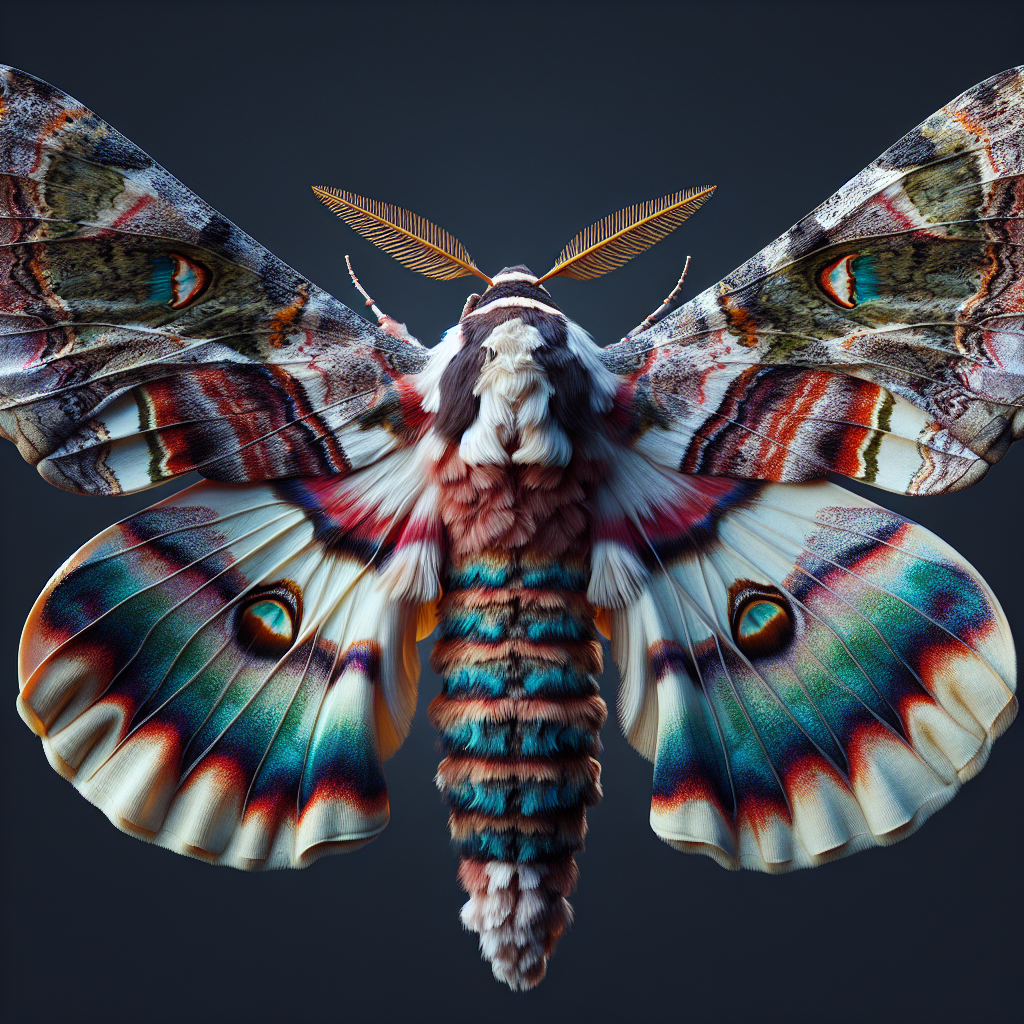

Meet Syntypistis viridipicta: Nature's Leaf in Disguise
If insects could win trophies for their incredible disguises, Syntypistis viridipicta would surely take the gold with its flawless impersonation of a leaf! This incredible species of moth, first described scientifically in the 20th century, is a master of camouflage that fascinates entomologists and nature lovers alike.
Imagine strolling through the lush corridors of the subtropical forests in Northern China, and perhaps portions of Korea and Japan, while one of these little masters of disguise is resting right under your nose—and yet, you’d never know! Indeed, S. viridipicta is an exemplar of natural artistry, living testament to the breathtaking strategy of mimicry employed by countless species to navigate the predators lurking in their environments.
The Science Behind the Art
The physical appearance of Syntypistis viridipicta makes it a particularly thrilling subject for study. This moth is part of the Notodontidae family—an endlessly fascinating group often referred to as the 'prominent moths'. What sets S. viridipicta apart is its extraordinary ability to mimic the appearance of aged and mottled leaves. Its wings are not only colored in shades of green with speckles that appear like organic decay but also possess delicate fraying edges that closely resemble torn leaves.
Scientists have noted that this evolutionary adaptation likely evolved to reduce predation. Birds, which are their primary predators, often overlook what appears to be just another leaf. The mechanism for such camouflage reaches into the depths of evolutionary biology, showing how life can transform over millennia, revealing a continuous tale of survival against all odds.
A Day in the Life of S. viridipicta
Let’s journey through the day of a typical S. viridipicta. Mostly nocturnal, during daylight hours, these moths remain fairly inactive, relying heavily on their camouflage to remain undetected on tree branches or trunks. As dusk approaches, they rouse and begin their search for sustenance. Preferring the cover of night for safer navigation, they traverse the underbrush in search of food, typically feeding on plant leaves.
The life cycle of the Syntypistis viridipicta unfolds with similar drama. Like many moths, they start as tiny eggs that hatch into larvae. These caterpillars voraciously devour leaves, storing energy for the next big metamorphosis into pupation—a phase where the larva encases itself in a protective cocoon, emerging as the adult leaf-mimicking moth ready to start the process anew.
A Major Player in Ecosystem Dynamics
As trivial as the daily life of S. viridipicta might seem, its existence plays a crucial role in the larger web of biodiversity. These moths contribute to the ecosystem as pollinators, though this role isn't as prominent as that of bees or butterflies. Moreover, they serve as a food source for various predators, essentially partaking in the give-and-take of the ecological dance that sustains life.
Yet, beyond ecological roles, they are scientific treasures, opening windows into the evolutionary processes that drive species to develop these complex survival strategies. Understanding the 'how' and 'why' behind S. viridipicta's mimicry could offer insights not only into the world of insects but also wider applications such as improving camouflage technology for human use.
Humanity's Role in Preserving This Natural Wonder
One of the pressing concerns of our time is the loss of biodiversity. As we continue to encroach into natural habitats, understanding and preserving unique species like S. viridipicta becomes crucial. While they may still be abundant, changes in climate, deforestation, and pollution could eventually threaten their existence and, by extension, the rich tapestry of life they weave within their ecosystems.
However, our role is not one of despair but of hope and proactive action. By championing conservation efforts, supporting sustainable practices, and promoting scientific research, we can ensure that incredible species like S. viridipicta remain a living part of our natural world rather than a memory of what once was.
In our quest to comprehend the complexities of the natural world, the story of S. viridipicta inspires a timeless truth: nature's ingenuity is boundless. Each leaf-like moth is an embodiment of creativity fostered by the natural world's relentless push toward adaptation, survival, and balance.