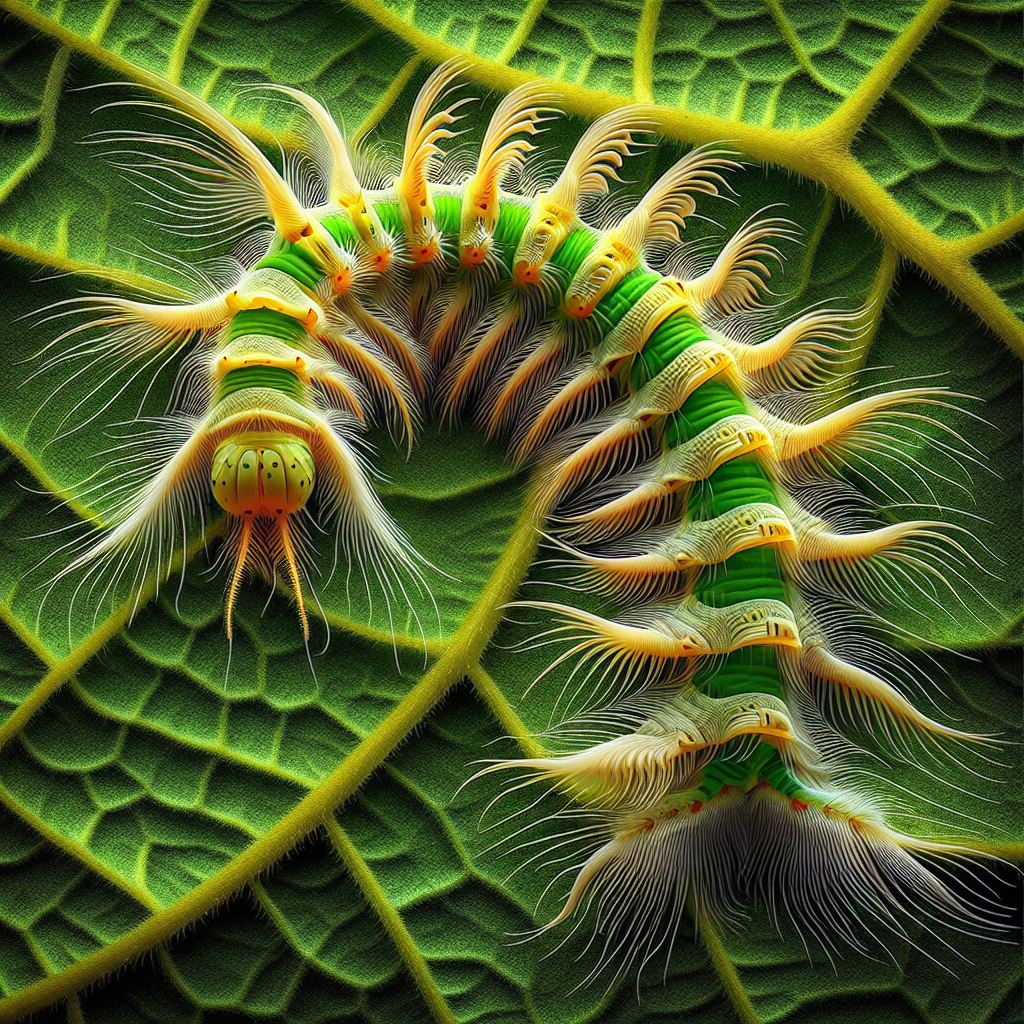

Who would have thought that a creature no larger than a pencil tip could hold a world of wonder within its tiny form? Meet Stigmella aliena, a fascinating species of moth from the family Nepticulidae, with a lifestyle that is just as intriguing as its name. Discovered in Japan, this unassuming moth leads a life full of marvels, primarily as a leaf miner on the host plant Quercus acutissima. Despite its size, Stigmella aliena plays a significant role in the ecosystem and offers insights into biodiversity that stretch our understanding of ecological interconnections.
The Leaf-Mining Wizardry of Stigmella aliena
At its core, Stigmella aliena is a leaf miner, meaning its larvae spend a part of their life cycle inside leaves, creating characteristic mines or tunnels. This might sound routine, but it's a survival tactic that speaks volumes of evolutionary finesse. By living inside the leaves, the larvae enjoy a microhabitat that not only provides food but also offers protection against predators and harsh environmental conditions.
The life cycle of Stigmella aliena begins when the adult moth lays eggs directly on the leaves of Quercus acutissima. Once hatched, the larvae bore into the leaf, navigating through it like an architect crafting underground passages. These mines are not random; they follow specific patterns that can often be used to identify the species responsible. Observing these meandering trails on a leaf is like unlocking a biological puzzle.
The Ecological Impact
The role of Stigmella aliena within its ecosystem extends beyond its interactions with its host plant. Leaf miners are integral to the food web. They impact plant health and attract predators, like birds and parasitic wasps, thus boosting local biodiversity. This tiny moth exemplifies the delicate balance within ecosystems, demonstrating how even the smallest organisms can have a ripple effect throughout the environment.
Despite the potential harm they may inflict on individual leaves, leaf miners like Stigmella aliena can encourage the growth of new leaves and contribute to a dynamic balance that offers opportunities for research and forestry management strategies. The more we understand about these interactions, the better equipped we are to develop sustainable land management practices.
The Journey From Unknown to Studied
Initially hidden from scientific inquiry, Stigmella aliena was only described relatively recently. Its discovery was a part of ongoing efforts to catalogue and understand the rich tapestry of life on Earth. As researchers investigate these minute moths, they unravel stories of evolution, adaptation, and survival that broaden our ecological perspective.
The study of such species requires meticulous attention to detail and a passion for piecing together the natural world. Each new insight into the life cycle or ecological role of Stigmella aliena feeds into our larger quest to learn about biodiversity. Scientists use a variety of techniques, from genetic analysis to field observations, to paint a more complete picture of these moths. The excitement of discovery in areas least expected drives zoologists and ecologists alike—a testament to the endless curiosities of nature.
Why We Should Care
You might wonder, why should we be interested in such a tiny creature? The answer lies in its contribution to the biodiversity tapestry that blankets our planet. Stigmella aliena, like many small organisms, plays an integral role in maintaining ecosystem function and stability. The loss of any species, no matter how small, creates a ripple that can resonate through their ecosystems, affecting food sources, pollination, and overall health of the environment.
Studying these moths and their interactions within nature expands our understanding of ecological resilience. Insights gained from Stigmella aliena and others inform conservation efforts and enhance our ability to predict how ecosystems respond to changes, be it from human interference or natural shifts. Discovering the intricate lives of these insects reminds us of the interconnectedness of life and our role in preserving it.
Final Thoughts
In the world of entomology, creatures like the Stigmella aliena ignite the spark of curiosity. They challenge us to view the natural world not just as an assembly of species but as a vast network of relationships and roles. Knowing and appreciating such intricate life forms can only elevate our passion for exploring and preserving the natural world. Witnessing the dance of life at this scale invites us to rethink the fundamental ties that bind all life on this beautiful planet. Let us celebrate the small yet profound wonders like Stigmella aliena, which remind us that the pursuit of knowledge is an adventure with the potential to enrich all of humanity.