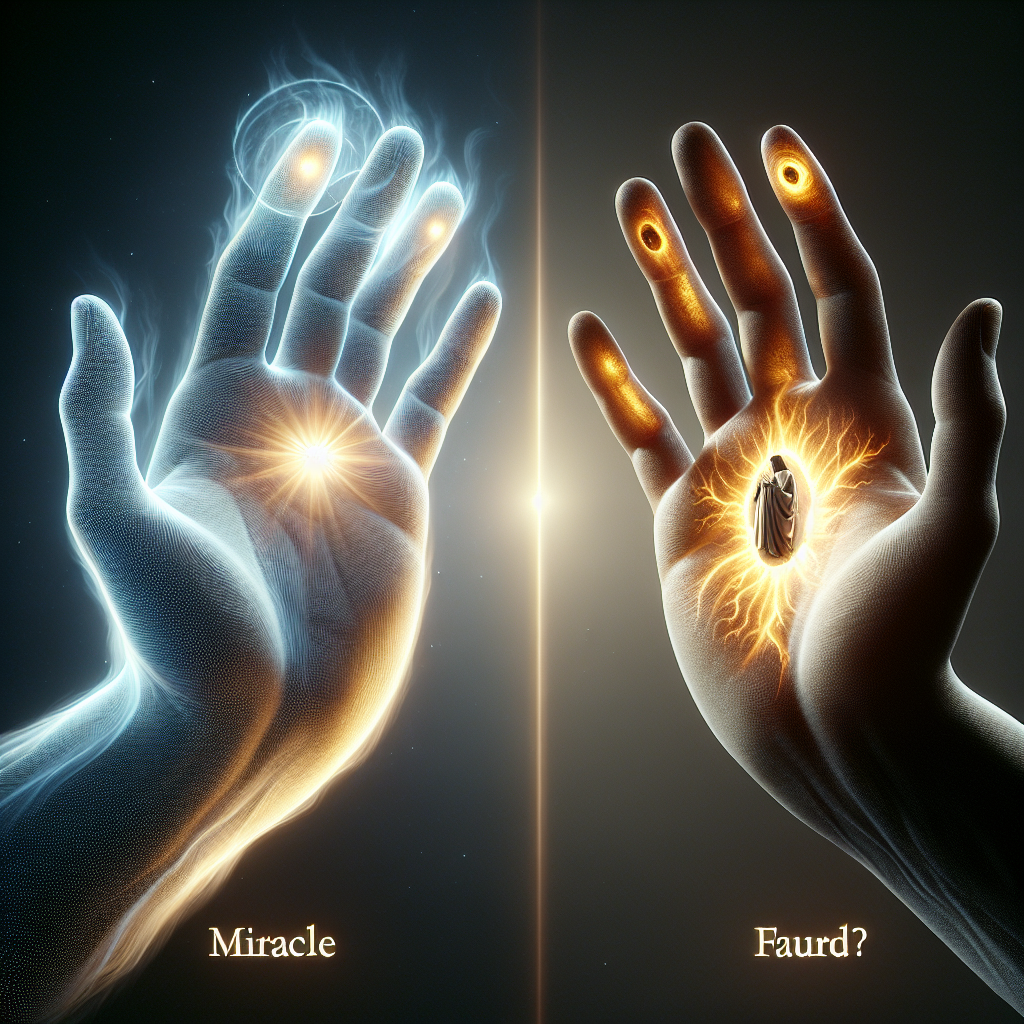

Imagine waking up one day to find inexplicable wounds on your palms and feet, resembling the wounds of the crucified. Throughout history, such phenomena known as "stigmata" have captured the attention of religious devotees, scientists, and skeptics alike. The intriguing question of who experiences these mysterious wounds, what exactly they entail, when they began to stir interest, where they occur, and why they continue to fascinate serve as a dynamic puzzle straddling the realms of faith and science.
Who
The term “stigmata” is derived from the Greek word "stigma," meaning a mark or brand. Historically, stigmata have appeared predominantly among devout Christian followers, instantaneously linking the phenomena to religious experiences. Notable individuals associated with stigmata include Saint Francis of Assisi, who was said to bear the marks in 1224, and, more recently, Padre Pio, a Franciscan monk who reportedly displayed stigmata until his death in 1968. Interestingly, a significant proportion of stigmata bearers are women, raising fascinating questions about gender roles and expectations in religious contexts.
What
In essence, stigmata are unexplained physical marks, sores, or sensations of pain that correspond to the crucifixion wounds of Jesus Christ: hands, feet, side, and forehead from the thorns. These symptoms might appear temporarily or persistently, sometimes accompanied by intense religious devotion, transcendent visions, or mystical experiences. The phenomenon’s physical manifestation continues to challenge the perceptions of what is biologically and spiritually possible.
When
The documented cases of stigmata date back to the early medieval era, with the earliest well-known case occurring in 1224 with Saint Francis. However, interest surged particularly during the Renaissance and again in the 19th and 20th centuries, periods marked by heightened religious expression and revival. Studies and reports about stigmata continue to this day, paving an intersection between historical records and contemporary exploration.
Where
Stigmata phenomena have been noted globally but are predominantly reported in Europe, an epicenter of Christian history and influences. It's important to recognize that while stigmata appear mainly in Catholic contexts, similar phenomena have been recorded in other religious traditions, though with different cultural interpretations and religious symbolism.
Why
Ah, the million-dollar question! Understanding why these phenomena occur is a tantalizing venture that captivates both the devout and the curious. To faithful believers, stigmata represent a profound, personal connection to Christ, often seen as a divine blessing or calling. Meanwhile, psychologists and scientists have pondered psychosomatic explanations, suggesting that intense religious fervor combined with psychological conditions might manifest physically. This leads to a broader philosophical discourse on the power of belief and the mind-body connection.
Scientific Perspectives
The scientific community approaches stigmata with a combination of skepticism and intrigue. Proposed explanations range from psychosomatic processes—where intense psychological states manifest as physical symptoms—to natural or self-inflicted origins. Researchers have studied cases where emotional stress and religious ecstasy potentially trigger physiological reactions akin to what is scientifically termed "conversion disorder." In this fascinating mind-over-matter scenario, the psychological state exerts such a powerful influence that it induces physical symptoms.
Moreover, evolutionary biologically inspired theories suggest that humans have an innate capability for belief that positively affects survival—our brains are hardwired to resonate with profound narratives, altering perceptions and potentially even our biology.
Religious and Philosophical Dimensions
From a theological standpoint, stigmata are seen as signs of divine interconnectedness and sanctity. This perception offers a beautiful narrative around human faith's capacity to transcend the material world. Philosophy offers further intrigue; thinkers ponder whether stigmata challenge or uphold perceptions of reality—blurring lines between belief and evidence, matter and spirit. Debates persist around authenticity and the miraculous, fueling diverse interpretations depending on one's worldview.
Historical Cases
Exploring recorded instances over the centuries uncovers a colorful tapestry of faith's historical journey. Saint Francis's experience arguably set the tone for future cases, indicating a merging of mystical experience and physical manifestation. Historical scrutiny sometimes reveals a mix of genuine religious experiences or possibly well-crafted deceptions, with each case adding layers to this saga.
Modern Implications
In the modern world, where science and spirituality continuously intersect, stigmata ignite conversations about human consciousness and our perception of reality. Regardless of one's stance, stigmata symbolize the age-old human quest for meaning, the intertwining of seen and unseen, and the constant push to better understand our shared human experience.
By exploring the phenomenon of stigmata, we not only uncover an enthralling blend of history, religion, science, and philosophy but also enrich our understanding of humanity’s perpetual dance between known and unknown. As we continue evolving in our quest for knowledge, stigmata remains a fascinating frontier at the intersection of corporeal and spiritual discovery.