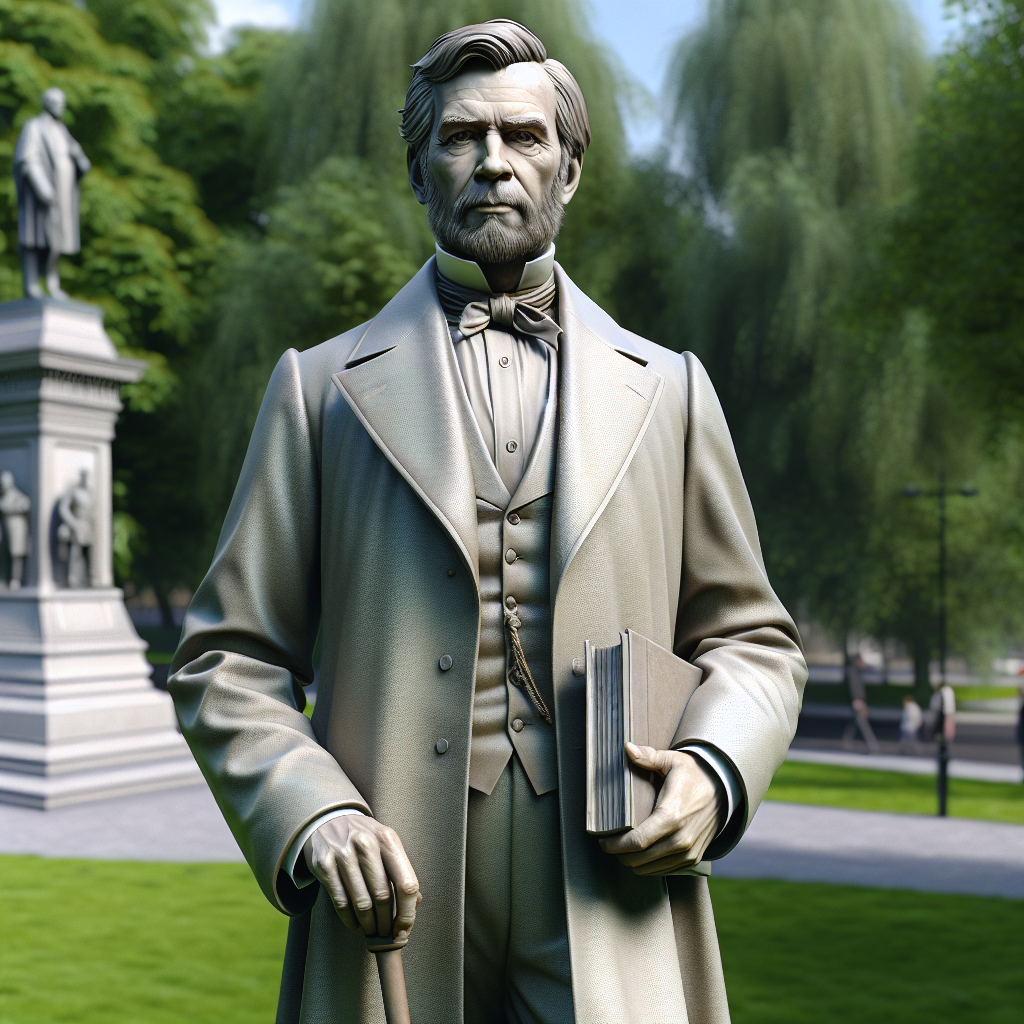

The Statue of William E. Dodge: A Tribute to a Philanthropic Pioneer
Imagine a statue that not only captures the likeness of a man but also embodies the spirit of philanthropy and commerce in 19th-century America. The statue of William E. Dodge, a prominent businessman and humanitarian, stands as a testament to his enduring legacy. Created by the talented sculptor John Quincy Adams Ward, this bronze masterpiece was unveiled in 1885 in Bryant Park, New York City. It was commissioned to honor Dodge's significant contributions to society, both as a co-founder of the Phelps Dodge Corporation and as a dedicated advocate for social causes.
William E. Dodge was a man of many hats—an industrialist, abolitionist, and philanthropist. Born in 1805, he played a crucial role in the development of the American copper industry and was a staunch supporter of the temperance movement and Native American rights. His business acumen and moral compass made him a respected figure in both economic and social circles. The statue, therefore, is not just a piece of art but a symbol of the values he championed throughout his life.
The location of the statue in Bryant Park is significant as well. Situated in the heart of Manhattan, the park is a bustling hub of activity, reflecting the vibrant energy of the city that Dodge helped shape. The statue's presence in such a central location ensures that his contributions are remembered by generations of New Yorkers and visitors alike.
The decision to honor Dodge with a statue was driven by his peers' recognition of his impact on society. His efforts in promoting education, supporting the abolition of slavery, and improving the welfare of the less fortunate were seen as exemplary. The statue serves as a reminder of the power of individual action in driving societal change and the importance of using one's resources for the greater good.
In essence, the statue of William E. Dodge is more than just a tribute to a single man; it is a celebration of the ideals of philanthropy, industry, and social justice. It stands as an inspiration for all who pass by, encouraging them to consider how they, too, can contribute to the betterment of society.