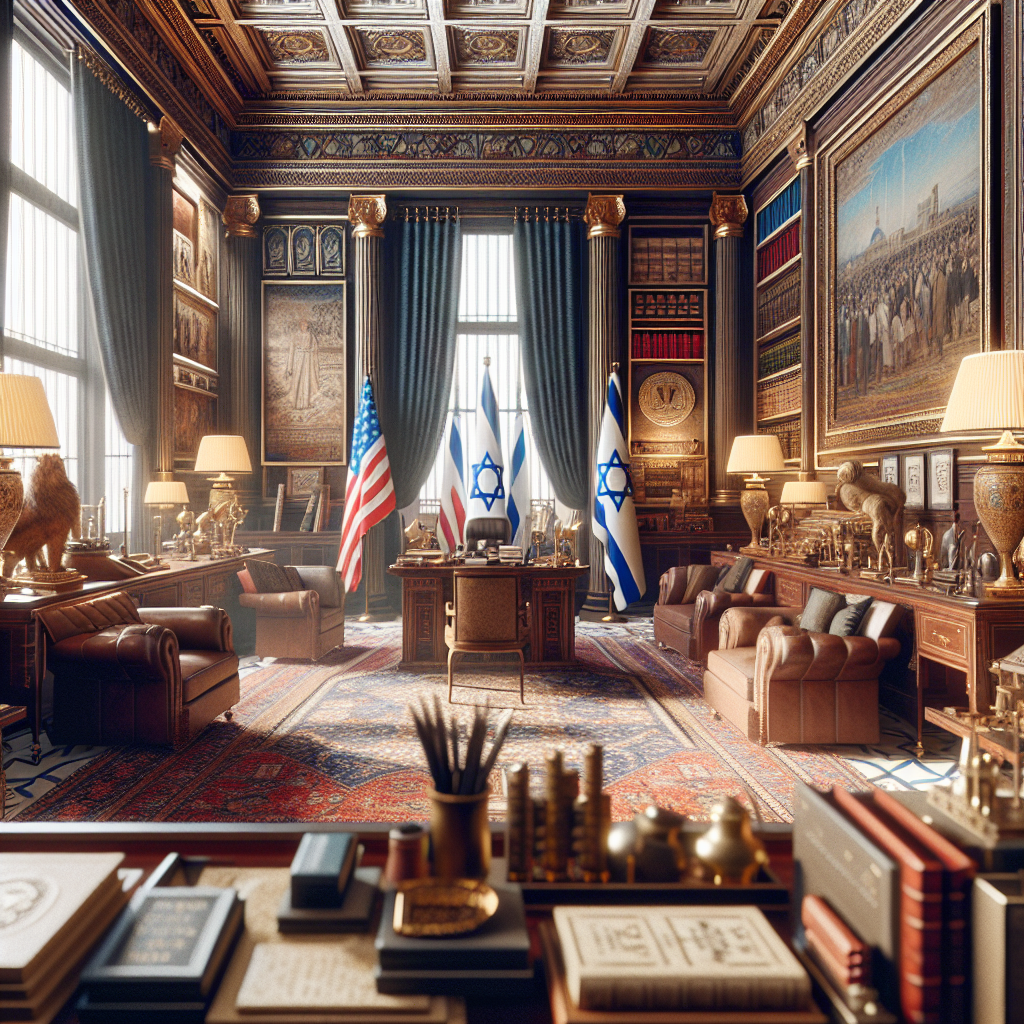

The Heart of Israeli Democracy: Understanding the Speaker of the Knesset
In the colorful and intricate world of Israeli politics, the Speaker of the Knesset emerges much like a maestro conducting an eclectic orchestra, ensuring harmony amidst a medley of opinions. But what makes this role so vital, and who, where, and why does it play such a powerful part in Israel's democracy? The Knesset, Israel's parliament, is where this leadership position holds significant sway. Elected by fellow Knesset members, the Speaker oversees the legislative process, a role taken on at the formation of each new Knesset, which usually happens every four years or following earlier elections. Based in Jerusalem, the Speaker ensures that the legislative symphony aligns with democratic principles and orderly conduct.
The Role and Responsibilities
At its core, the Speaker of the Knesset is entrusted with the monumental task of managing the activities of Israel’s legislative body. This includes not just presiding over the Knesset’s plenary sessions but also navigating the complex procedural rules and upholding fairness and decorum. To truly grasp what this entails, imagine balancing on a tightrope, where on either side lie the demands of policy and the intricacies of parliamentary law.
The Speaker also serves as the public face of the Knesset, representing it in formal occasions both nationally and internationally. Importantly, during moments of political indecision, such as when the President of Israel is to be elected or during transitions of power, the Speaker's role becomes even more paramount, reinforcing the political stability integral to Israel’s democracy.
The Selection Process
How does one ascend to such an esteemed position? The path to becoming the Speaker is as much about political aptitude as it is about electoral tact. Once a general election ends, and a new Knesset is formed, the election of the Speaker becomes one of the first orders of business. Candidates are usually nominated from among the elected Knesset members, primarily influenced by the largest political party or coalition's interests.
It’s crucial to note that while the Speaker is expected to operate with impartiality, they are often members of the ruling party or coalition, exemplifying the intricate dance between maintaining neutrality and representing party interests.
Historical Evolution and Influence
Reflecting on its historic evolution, the Speaker's role has steadily gained importance. Established in 1949 with Israel's first parliamentary body, the position has been pivotal in navigating not just the internal political fabric but also broader social transformations. From Golda Meir to Yuli Edelstein, each Speaker's unique influence has left a distinct imprint, making history both as political leaders and as stewards of the legislative process.
Their decisions have often reverberated through Israel’s political landscape, steering legislative dialogues during pivotal moments in the nation's history. In periods of national crisis or social upheaval, the Speaker's leadership can be the bedrock of parliamentary resilience.
The Dynamics Behind the Role
Understanding how the Speaker’s role interacts with other branches of the Israeli government offers further insight. They work alongside the Prime Minister, President, and Judicial authorities, yet hold a distinct role that centers on legislative processes. While their authority mainly pertains to parliamentary functions, their influence can guide broader political strategy, advocating for or against legislation and shaping the contours of political discourse.
Furthermore, the Speaker plays a crucial part in mediating intra-government conflicts, helping build consensus and bipartisan dialogue—essential ingredients for a vibrant democracy.
Looking Ahead
Step into the future, and the role of the Speaker of the Knesset seems set to grow increasingly complex yet ambitiously dynamic. With Israel's societal landscape continuously evolving due to technological advancements, demographic changes, and socio-political challenges, the Speaker will need to harness a balance of resilience and adaptability.
The Knesset itself will face growing demands for transparency, technological proficiency, and responsive governance—demands that necessitate a Speaker who is both innovative and grounded by strong legislative acumen.
Conclusion
In the grand tapestry of Israeli politics, the Speaker of the Knesset stands out as a beacon of democratic principles and parliamentary wisdom. A critical pillar not just of the Knesset but of Israel's very democratic framework, the Speaker's role shines as a testament to the country's commitment to maintaining democratic integrity amidst an ever-shifting political tide. As we ponder the future challenges and opportunities that lie ahead, one thing remains clear: the Speaker of the Knesset will continue to be at the heart of Israel's democratic journey, orchestrating the complex symphony of governance with an enduring, optimistic cadence.