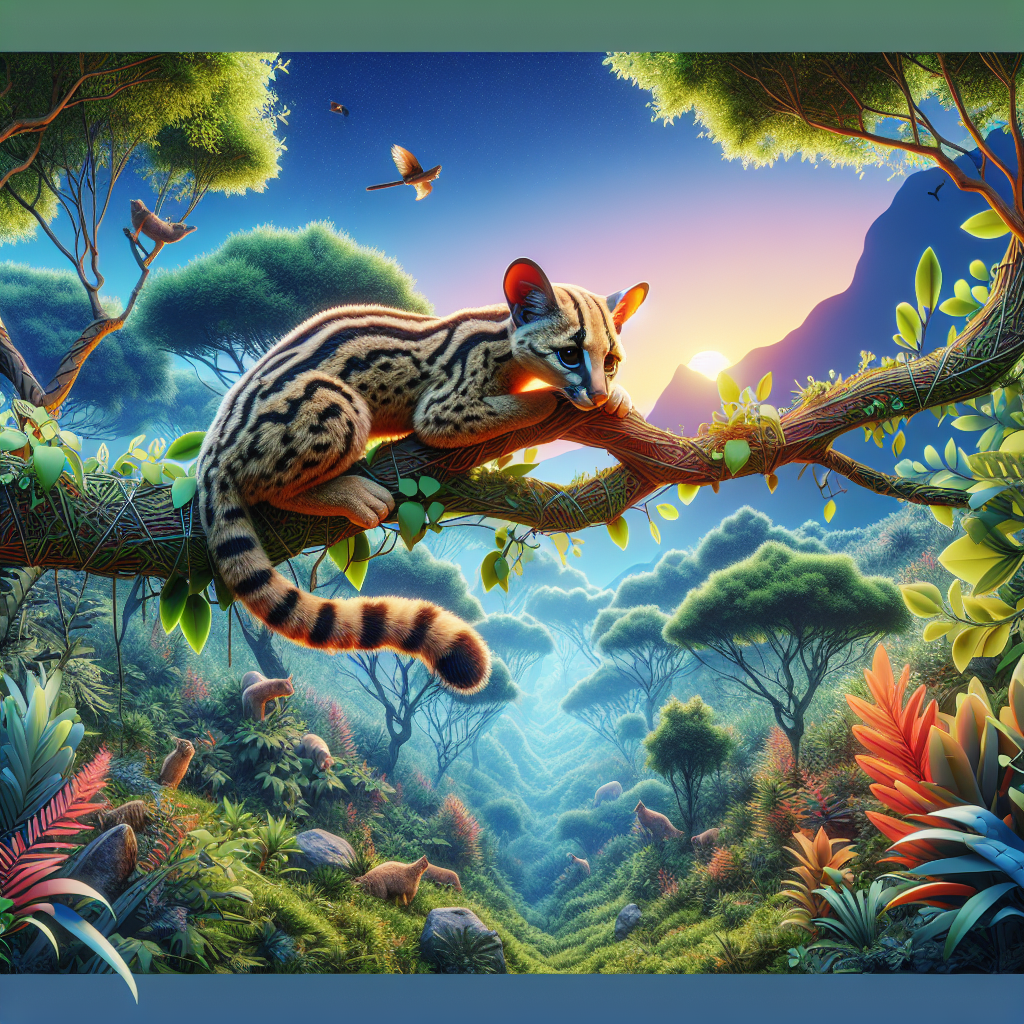

Have you ever imagined a creature that embodies the elegance of a cat, the curiosity of a raccoon, and the sleekness of a weasel? Welcome to the world of the South African small-spotted genet, a fascinating mammal that might just redefine how you think about the diversity of life on Earth. So, who exactly is this enigmatic creature? Native to the stunning landscapes of South Africa, the small-spotted genet (Genetta genetta) is a lithe, nocturnal little beast. It captivates both scientists and animal enthusiasts alike due to its peculiarities and adaptability. But what makes this quirky mammal such an interesting subject for both research and admiration is its role within its natural ecosystem, its social behavior, and its ability to live in the wild alongside increasingly urban human populations.
An Introduction to Small-Spotted Genets
A member of the Viverridae family, the small-spotted genet has intrigued many by its characteristically elongated body, short legs, and elaborately covered tail. Found primarily in the regions of Africa, these animals are common in South Africa, with their habitats stretching across savannas, open woodlands, and the bushy outskirts of urban areas. They stand out with a distinct coat splashed with small black spots, which acts like the natural ID badge of this curious genus.
Adaptation and Behavior
Curiosity fuels the genet's existence. They are known as opportunistic feeders, which essentially means they are not picky eaters. This adaptability in their diet plays an essential role in their survival and contributes to their success as a species. These crafty creatures feast on an eclectic menu that includes everything from small mammals, birds, and insects to fruits and plants. It's not just their diet that is adaptable; their behavior morphs with their environment, showcasing their evolutionary prowess.
Genets are solitary and territorial animals, preferring nocturnal expeditions as they leap through branches with skillful dexterity in pursuit of their next meal. This aloofness during daylight contrasts starkly with the social scene at night when they communicate through scents and a range of vocals, including purrs, clicks, and chuckles. Not little wallflowers, their patterns of affection and rivalries form complex social tapestries that intrigue anyone lucky enough to observe them.
Research and Scientific Interest
The small-spotted genet might not be as famous as the lion or the elephant, but it holds a special place in scientific communities, particularly among those interested in evolutionary biology and conservation. Research into these animals often delves into genome studies, behavioral analyses, and ecological roles that help underline how adaptable life can be. These creatures serve as a living laboratory for learning about adaptation mechanisms, genetic diversity, and the impacts of habitat loss, a growing concern in the scientific community.
One of the key areas of interest is how these genets navigate the increasingly anthropogenic landscapes. Studies have shown their impressive ability to survive in peri-urban areas, reflecting on the interaction of wildlife within human domains. This unique trait not only sheds light on their resilience but also opens up discussions about sustainable coexistence between species in the face of rapid urban development.
Conservation Efforts and Environmental Impact
While the small-spotted genet does not currently appear on any endangered species lists, their conservation remains a topic of importance. Preserving their habitats preserves a more extensive ecological balance. As messengers of ecological health, the well-being of genets parallelly fosters the well-being of numerous other interdependent species within their habitats.
But why should we invest in understanding and safeguarding this unassuming mammal? Much like a resilient thread in a beautiful tapestry, genets form a crucial part of the biodiversity that on its own won't catch headlines but is integral to the rich, complex environments they inhabit. Their continued existence is testimony to nature's tenacious adaptability amidst a fast-paced, changing world.
With an enthusiastic spirit for learning and the curiosity of a genet, we invite the world to recognize the beauty and resilience inherent in every creature, regardless of how small or widely unknown it might be. Through understanding and stewardship, we hold the power to secure a harmonious coexistence that benefits not just the small-spotted genet but passes on a healthier planet to future generations.