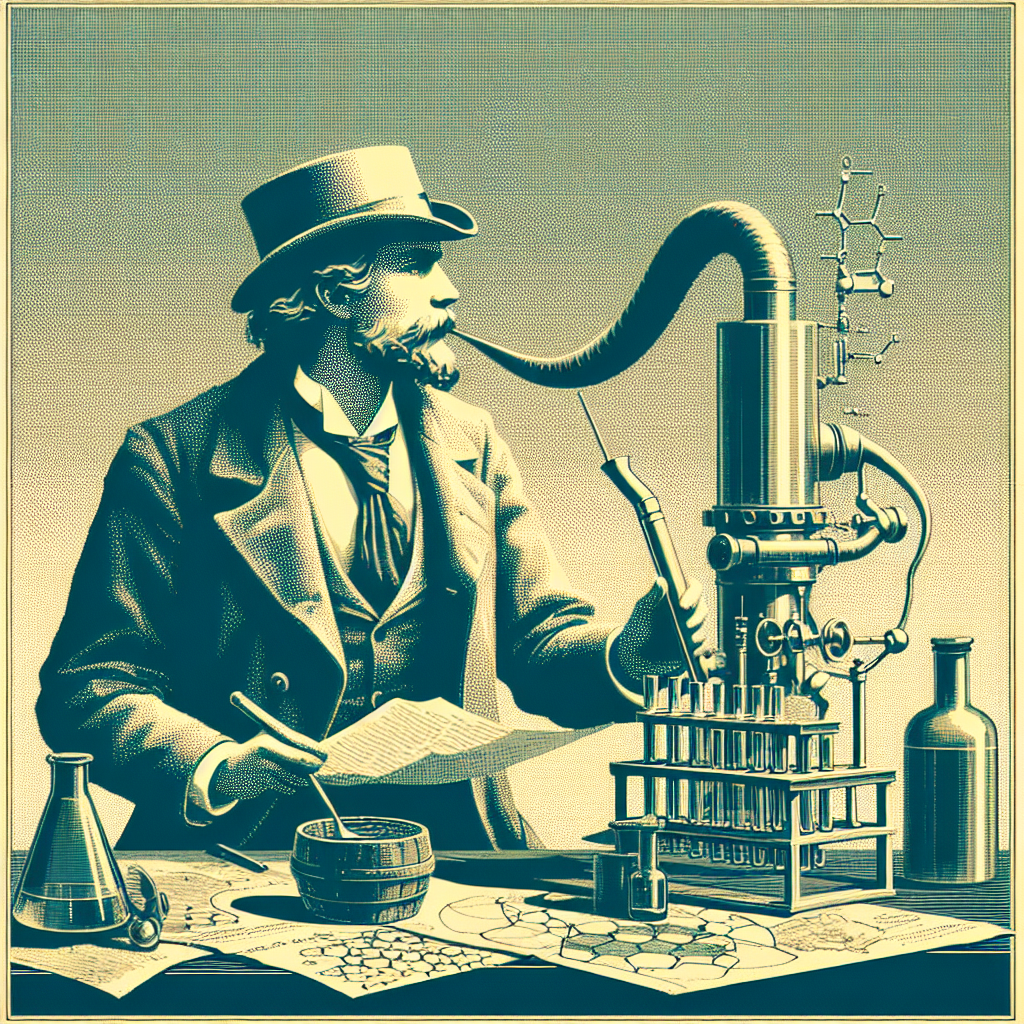

Rudolf Nietzki and His Vibrant Legacy
Imagine a world without the vibrancy of synthetic dyes—a realm where clothing lacks the expressive hues we often take for granted. It’s hard to picture, isn’t it? Yet, before the work of Rudolf Nietzki, this was often the case. Rudolf Nietzki was a pioneering German chemist whose innovative work in the late 19th century brought about significant advancements in organic chemistry, particularly in the synthesis of dyes. Born in 1847 in the winter-struck town of Heiligenstadt, Nietzki lived and worked in an era buzzing with groundbreaking scientific discoveries, contributing significantly to making the world a more colorful place.
The Scientist Behind the Color Revolution
Rudolf Nietzki might have been initially intrigued by the beauty of colors, like many artists. However, his path led him towards the rigorous world of chemistry, where he unravelled the mysteries of color at a molecular level. Following his education and obtaining his Ph.D. from the University of Jena, Nietzki turned his considerable talents toward the burgeoning field of organic chemistry. Here, he began to transform how industry and fashion would appeal to the human eye.
Unraveling the Complexity of Dyes
During Nietzki’s time, the world was the cusp of a major shift, as organic chemistry began to unlock new possibilities. The demand for affordable and consistent colors spurred innovation, driving scientists like Nietzki to probe deeper into the structure and synthesis of dyes. He focused on anthraquinone dyes, the chemical backbone for many vibrant synthetic colors that were previously unachievable.
One of his major contributions involved enhancing the understanding of the chromophores—molecules responsible for color in compounds. By dissecting and synthesizing various dye molecules, Nietzki not only built a framework for future chemists but also provided industries with the practical capability to produce an array of colors, efficiently and economically.
The Impact of Nietzki’s Work
Nietzki’s scientific pursuits were not merely academic; they had tangible effects on everyday life. His work was crucial for the textile industry—an industry eager to expand its palette beyond natural dyes, which were costly and often less reliable in terms of color consistency. Thanks to his breakthroughs, synthetic dyes could be mass-produced, lowering costs and expanding access to vibrant clothing for a wider audience. Fashion, art, and textiles absorbed the vividness of his research, altering human culture on a global scale.
Moreover, Nietzki’s collaboration with the burgeoning German chemical industry symbolized the era's spirit of progress—melding theoretical research with practical application. Companies thus thrived on his research, establishing firmly the place of applied chemistry in the industry.
Educational Contributions and Lasting Influence
Nietzki didn’t stop at scientific discoveries. A true enthusiast of spreading knowledge, he took positions as a professor, including a notable position at the University of Basel. His commitment to education helped lay down a foundation not just for future chemists but also for the entire field of organic chemistry.
Moreover, he authored the textbook “Chemie der Organischen Farbstoffe” (Chemistry of Organic Dye Products), which served not only to guide contemporary chemists but continued to influence educational trajectories long after his passing in 1917. This textbook ably represented his unique ability to break down complex chemical principles into understandable text—a testament to his passion for teaching and clarity.
Rudolf Nietzki: More Than Just a Name
Rudolf Nietzki’s influence goes beyond his immediate contributions. His life and work reflect the ingenuity and possibility of scientific exploration—a bridge between science and societal needs. His work reminds us of how intertwined our mundane and vibrant experiences are with scientific advancement, even those that might seem distant to everyday life at first glance.
His optimism for what chemistry could achieve led not just to personal legacy but also to opening new doors for innovation. The fields of organic chemistry and chemical engineering today owe much to pioneers like Nietzki, who dared to think beyond the known constraints and daringly ventured into nature’s complexities.
As we navigate the colorful tapestry of modern life, it’s worthwhile to remember the figures like Rudolf Nietzki, who through their enthusiasm for learning and humanity, have quietly shaped the world with their curiosity and conviction.