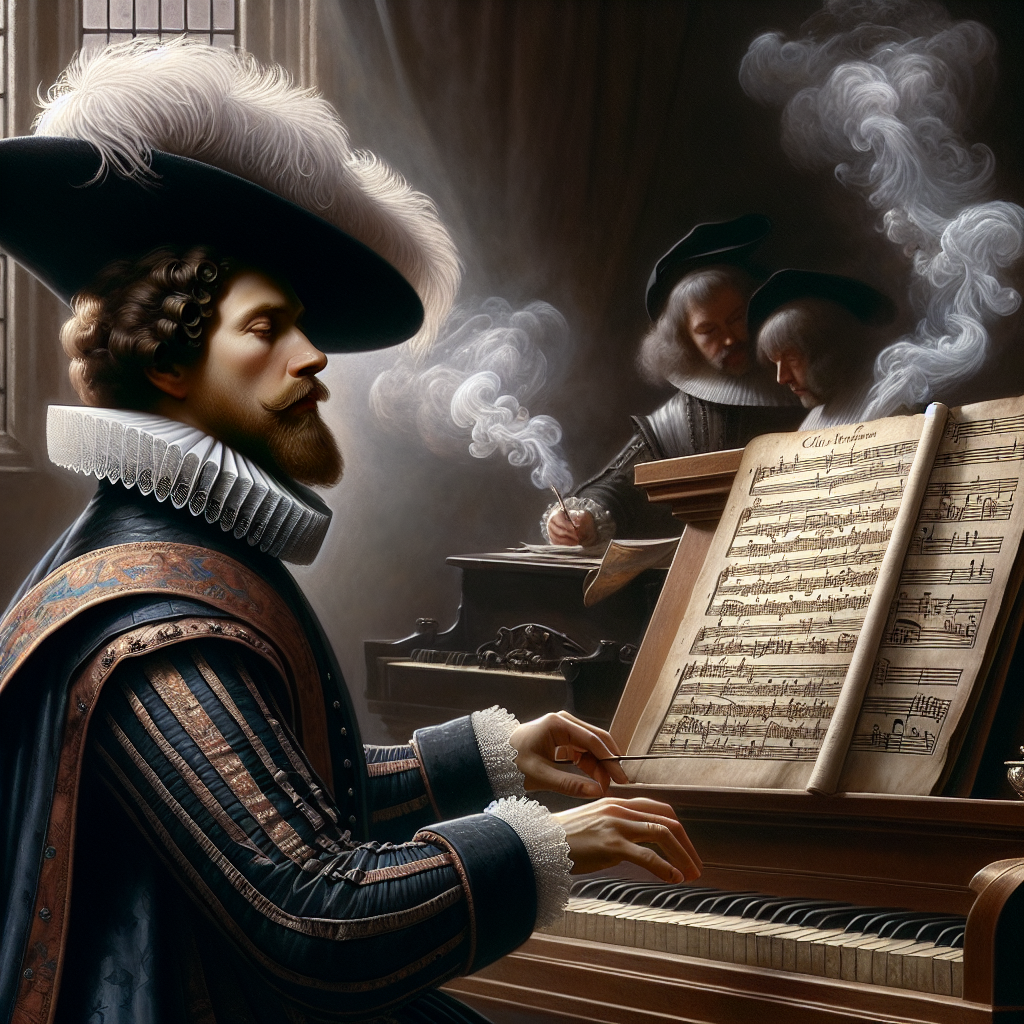

Philip Rosseter might just be one of the earliest musical influencers, long before the age of social media and viral sensations. In the vibrant England of the late 16th and early 17th centuries, Rosseter left an indelible mark as a lutenist, composer, and theatrical manager. Born in 1568, Rosseter was part of a transformative period in history when Elizabethan England was ripe with innovation and creativity, particularly in the arts. Though details of his life remain somewhat scarce, his musical compositions and published works, most notably his collaboration with Thomas Campion, cement his place in music history. But why, you ask? Because Rosseter stood at the confluence of music and poetry, lending a melodic voice to the profound literary expressions of his time.
The Man Behind the Lute
Let's unravel the mystery of the man who was both a master of the lute and a visionary in the world of theatrical performances. Philip Rosseter was more than a composer; he was an architect of emotion through sound. His contributions were fundamental to the evolution of the English lute song, or ayre, a popular genre during the early 17th century. Born in 1568, possibly in Somerset, Rosseter lived through the flourishing period of Elizabethan theatre and music, which shaped his artistic aspirations.
A Confluence of Tunes and Words
One of the most intriguing facets of Rosseter’s career is his collaboration with the poet-composer Thomas Campion. Their joint publication, "A Booke of Ayres" (1601), is celebrated for its fusion of delicate lute melodies with evocative poetry. This collection contains 21 songs by Campion and 21 by Rosseter, each showcasing their unique styles and emphasizing the lute’s potential as an accompaniment to vocal music. What makes "A Booke of Ayres" particularly fascinating is how it reflects the Renaissance spirit of blending art forms to create something profoundly new, a spirit that's brimming with optimism about human creativity.
While Campion contributed significantly with his poetic lyrics and harmonic compositions, Rosseter must be praised for sophisticated musical arrangements. His compositions maintain a lightness and clarity, making them accessible yet profound, bridging the gap between the complex and the understandable. Music and lyrics meld seamlessly, inviting listeners to engage emotionally with the poetry they convey.
The Theatrical Manager
Rosseter's talents were not limited to music. In 1604, he became one of the royal lutenists for King James I. Later, he took on the role of a theatrical manager, collaborating with the Children of the Queen's Revels, a company consisting of talented child actors. This venture placed Rosseter at the epicenter of theatrical innovation during a time when the stage was the podium for storytelling, social commentary, and creative experimentation.
The Intricate Artistry of the Lute
Understanding Rosseter’s work also involves appreciating the instrument that defined much of his career: the lute. The lute, while somewhat overshadowed today by the guitar, was the emblematic instrument of the Renaissance era. Its enchanting, resonant strings offer an aural experience that captures the imagination. Mastery of the lute was akin to understanding a complex scientific theory today—challenging yet infinitely rewarding.
Rosseter's Enduring Influence
Rosseter's legacy lives on not only in historical records or libraries but also through performances that continue to interpret and honor his work. His music, made accessible in modern arrangements, still speaks to audiences, proving the timeless nature of genuine artistic expression. In a world that relentlessly charges forward with technological advancements, revisiting Rosseter’s repertoire invites us to pause and appreciate the simple, unfettered beauty of past ingenuity.
Today, musicologists and performers alike find inspiration in Rosseter's technique and his ability to express the human experience charmingly through music and poetry. His work serves as a reminder that even centuries ago, the human spirit was guided by an innate desire to create, innovate, and collaborate.
A Modern-Day Reflection
Rosseter’s genius, while perhaps overshadowed by more famous contemporaries, is a beacon for those interested in the interplay between music and literature. His life and work remain an inspiring testament to the power of collaborative creativity. He showed us that music is not just about notes and clefs—it's a universal language that offers a historical narrative and a glimpse into the vibrant life of the past.
To explore Rosseter is to embrace an optimistic journey through time—a reminder that, throughout history, humanity has always thrived on artistic collaboration, innovation, and the simple pleasure of a good tune. In rediscovering Rosseter, we might also rediscover a part of ourselves, eternally connected to a shared cultural heritage and the melodic threads that weave us together across time.