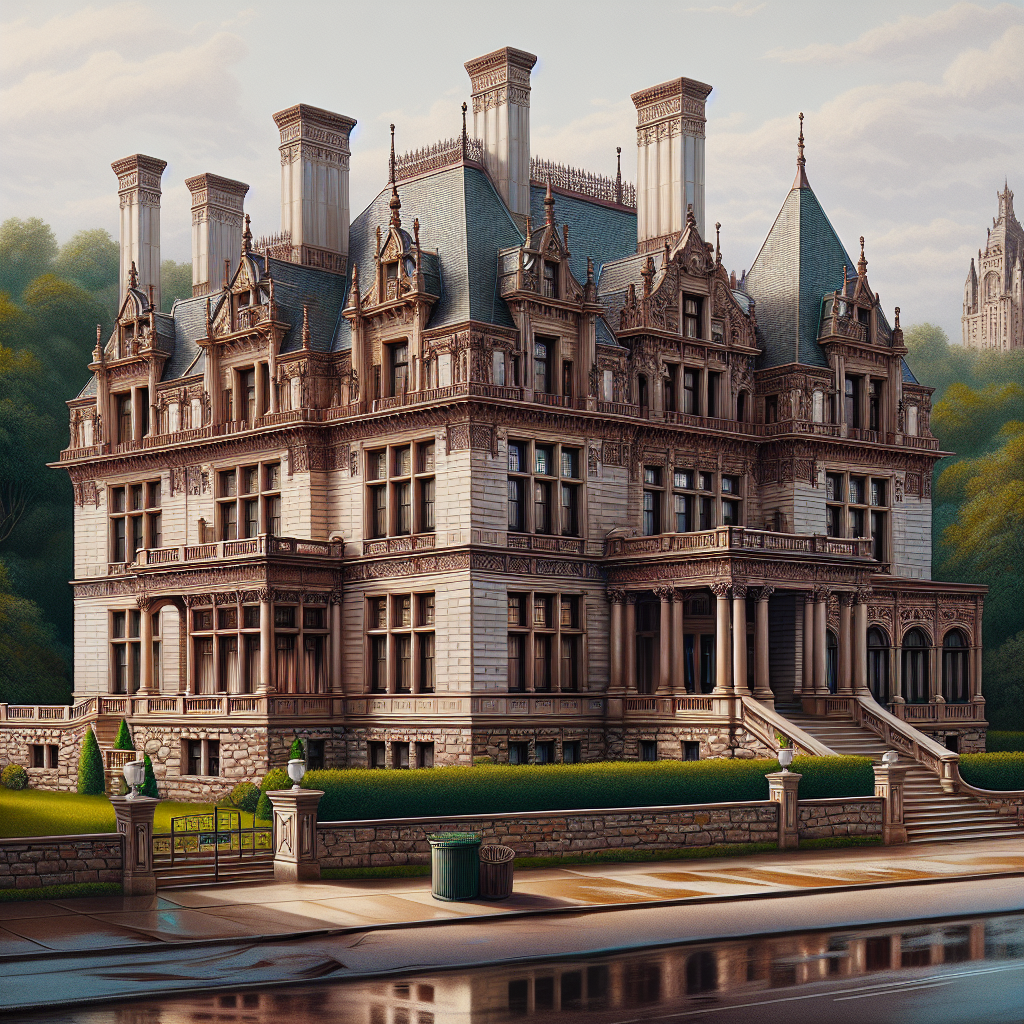

The Enigmatic Beauty of Payne Whitney House: A Journey Through Time and Elegance
There are places that whisper stories from the past, and the Payne Whitney House is undoubtedly one of them. Imagine a mansion where history mingles with breathtaking artistry, a place where you can almost feel the pulse of yesteryears! The Payne Whitney House, located at 972 Fifth Avenue in the bustling heart of New York City, is such a place. Built between 1902 and 1906, this palatial marvel was designed by the visionary architect Stanford White. Its initial occupant was none other than Payne Whitney, a prominent American businessman and member of the influential Whitney family. But what tales does this architectural wonder hold in its elegant embrace, and why does it continue to enthrall the curious minds of today?
A Canvas of Architectural Brilliance
The Payne Whitney House reflects a period when wealth and artistry were seamlessly intertwined. Designed in the Beaux-Arts style, it embodies a grandeur that combines harmony, symmetry, and opulence—a characteristic flair of Stanford White's architectural genius. Beaux-Arts, a trend that originated from France, emphasized classical Greek and Roman design principles, creating a visual feast of columns, pilasters, and opulent ornamentation.
This immaculate structure stands proudly with its extravagant limestone façade, capturing the eye with intricate designs and awe-inspiring features. One cannot help but marvel at the entrance, with its imposing columns and beautifully carved decorations—a testament to the impeccable craftsmanship of the period. As you step inside, you are greeted by a magnificent atrium crowned with a stunning ceiling, where sunlight streams through in delicate patterns that illuminate the elaborate marble floors below.
History Weaved in Elegance
Payne Whitney House was completed in 1906 at a cost of $950,000 (over $27 million today, adjusted for inflation), and served as a private residence for the Whitney family until it was acquired by the French government in 1952. Since its acquisition, the building has served as the French Cultural Services of the French Embassy, further fostering an environment of cultural synthesis and intellectual exchange.
This building’s transformation is an intriguing narrative of adaptive reuse—a commendable practice that preserves the essence of historical buildings by repurposing them for modern utility. The mansion's historical essence remains intact, allowing visitors to indulge in its timeless beauty while immersing themselves in cultural exhibitions and events that continue to breathe life into its historic halls.
Cultural Beacon and Intellectual Hub
Understanding Payne Whitney House today requires an appreciation of its role as a beacon of cultural diplomacy. Housing the French Cultural Services, it has become a cornerstone for fostering Franco-American interactions. The transformation of a privileged residence into a cultural diplomatic space speaks volumes about the endless possibilities of architectural conservation and transformation.
The Payne Whitney House hosts a variety of cultural events, including art exhibitions, lectures, and cinematic presentations. By doing so, it continues to educate and inspire individuals, offering a window into French culture and arts while standing as a reminder of the enduring ties between France and the United States.
An Architectural Treasure with Modern Reverberations
Walking through the Payne Whitney House, one appreciates how it meticulously balances its historical richness with modern-day relevance. Its ongoing restoration efforts are a testament to the collective endeavor to preserve the past while accommodating present-day needs. The building undergoes constant maintenance to ensure that its original splendor is preserved, with restoration projects carried out by architects and craftsmen who deeply respect its architectural legacy.
Today, with increased technological capabilities, preservationists utilize innovative methods to maintain structural integrity and authentic restoration. The fact that this building continues to inspire awe more than a century after its completion underscores the significant role of architectural conservation in safeguarding cultural heritage for future generations.
A Symbol of Transformation and Continuity
Why does the Payne Whitney House remain an object of fascination and admiration? Perhaps it is the profound understanding that such places are more than just bricks and mortar; they are intertwined with human history and emotions. They hold the essence of past lives while evolving to serve future ones.
Visiting the Payne Whitney House is much like stepping into a time capsule where time has beautifully stood still, yet aspects of change are embraced enthusiastically. It's a place where past elegance meets modern cultural expression, continuously contributing to the dynamic tapestry of New York City.
Whether you're an aficionado of architecture, a history enthusiast, or simply someone who delights in beautiful spaces, the Payne Whitney House offers a compelling narrative of temporal beauty and cultural harmony. This exquisite monument to a bygone era teaches us the invaluable lesson that while time moves forward, our cultural legacies must not only be preserved but also celebrated.
Appreciating such historic marvels revives our connection to human ingenuity, reminding us of our collective potential to learn from the past, innovate in the present, and envision the future—always with a sense of respect and hope for the generations to come.