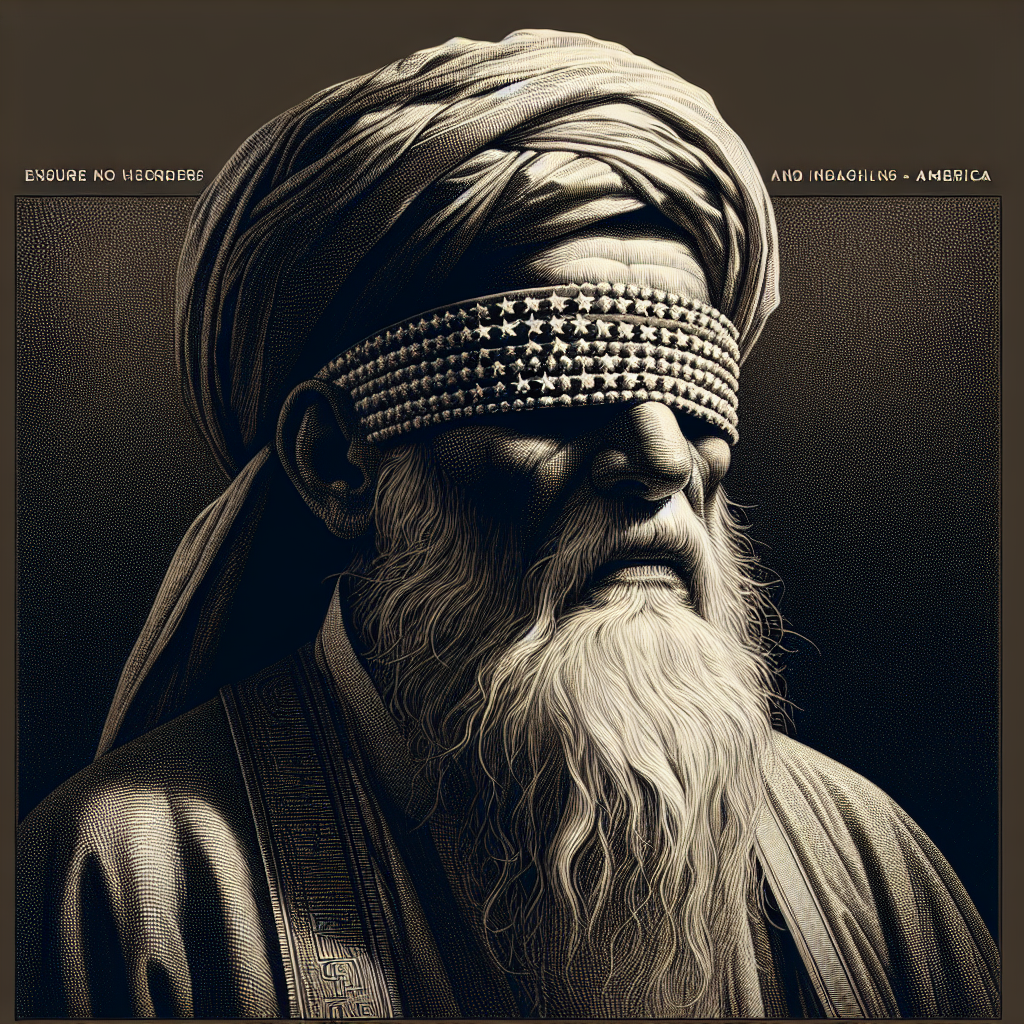

When you think of ‘The Blind Sheikh,’ a whirlwind of history, ideology, and controversy swirls into focus, capturing the attention of anyone intrigued by the intersections of religion, politics, and modern history. Omar Abdel-Rahman, affectionately and infamously known as ‘The Blind Sheikh,’ was an Egyptian-born Islamic leader whose life and actions left a substantial mark on global events.
Omar Abdel-Rahman was born on May 3, 1938, in the small village of Al-Gamalia in Egypt's Dakahlia Governorate. Despite losing his sight due to childhood diabetes, he excelled academically and became a revered and influential Islamic scholar. His journey, both physical and ideological, took him from Egypt to Afghanistan and later to the United States, weaving through conflicts and controversies that challenged societies around the world.
Abdel-Rahman’s influence largely stemmed from his radical interpretations of Islamic tenets, which began during his studies at Al-Azhar University in Cairo, one of the world's prestigious centers of Sunni Islamic learning. While at Al-Azhar, he gained a deep understanding of Islamic law, using this platform to articulate views that positioned him as a vocal opponent of secular governance systems and a proponent for a return to strict Sharia law. This ideological stance fueled his commitment to jihad—a term that has sparked much debate and varying interpretations within Islamic contexts but was used by Abdel-Rahman to advocate violent struggle.
His notoriety in the West primarily arose after he moved to the United States in the early 1990s, where his aggressive proselytizing and fiery speeches enthralled a generation of Islamic radicals yearning for his radical brand of Islam. The culmination of his activities was his 1995 conviction for seditious conspiracy in connection with the 1993 World Trade Center bombing and subsequent plots against New York City landmarks. Sentenced to life in prison, his trials and subsequent imprisonment became a flashpoint for discussions on civil liberties, religious extremism, and immigration policy.
As we explore the complex life of Omar Abdel-Rahman, it’s essential to recognize the broader context that his ideologies inhabited. The latter half of the 20th century was a period marked by the oscillation between decolonization, Cold War tensions, and the rise of global terrorism. Abdel-Rahman's embrace of political Islam was, in part, a reactionary force against both the Western influence perceived in many Muslim-majority societies and secular rulers therein, seen as puppets or allies of non-Islamic powers.
The Blind Sheikh’s message about Islamic governance resonated across borders, appealing particularly to those disaffected by global inequities and perceived cultural imperialism. Importantly, his influence wasn't limited to speech. Abdel-Rahman’s real-world impact was linked directly to violent actions, serving as a catalyst for extremist activities that still reverberate today.
Yet, even understanding his role in these global dynamics requires us to remember the individuals and communities deeply affected by his teachings. In the West, Abdel-Rahman became synonymous with the threats of terrorism, fascinating and terrifying people simultaneously. Security laws were reinforced, bringing about debates over the balance between freedom and safety. In many Muslim communities, however, he was also admired by some as a fervent defender of Islam, representing an ongoing struggle between traditional and modern interpretations of faith.
His life story, dramatic and contentious, prompts us to reflect on how complex individuals can shape historical trajectories. Although his direct influence waned after his imprisonment and subsequent death in February 2017 at the age of 78, Abdel-Rahman’s legacy remains a subject of study and debate as societies continue grappling with extremism.
Our journey through Abdel-Rahman’s life encourages us to ask vital questions: How do ideologies take root? What socio-political environments allow radical ideas to flourish? And, importantly, how can we foster understanding and dialogue amidst diversity? Omar Abdel-Rahman’s legacy is a cautionary tapestry, demonstrating the powerful role ideological convictions can play in steering history. As ever, mankind's challenge remains to navigate the complex interplay of beliefs with empathy and science, seeking solutions that elevate our shared humanity.