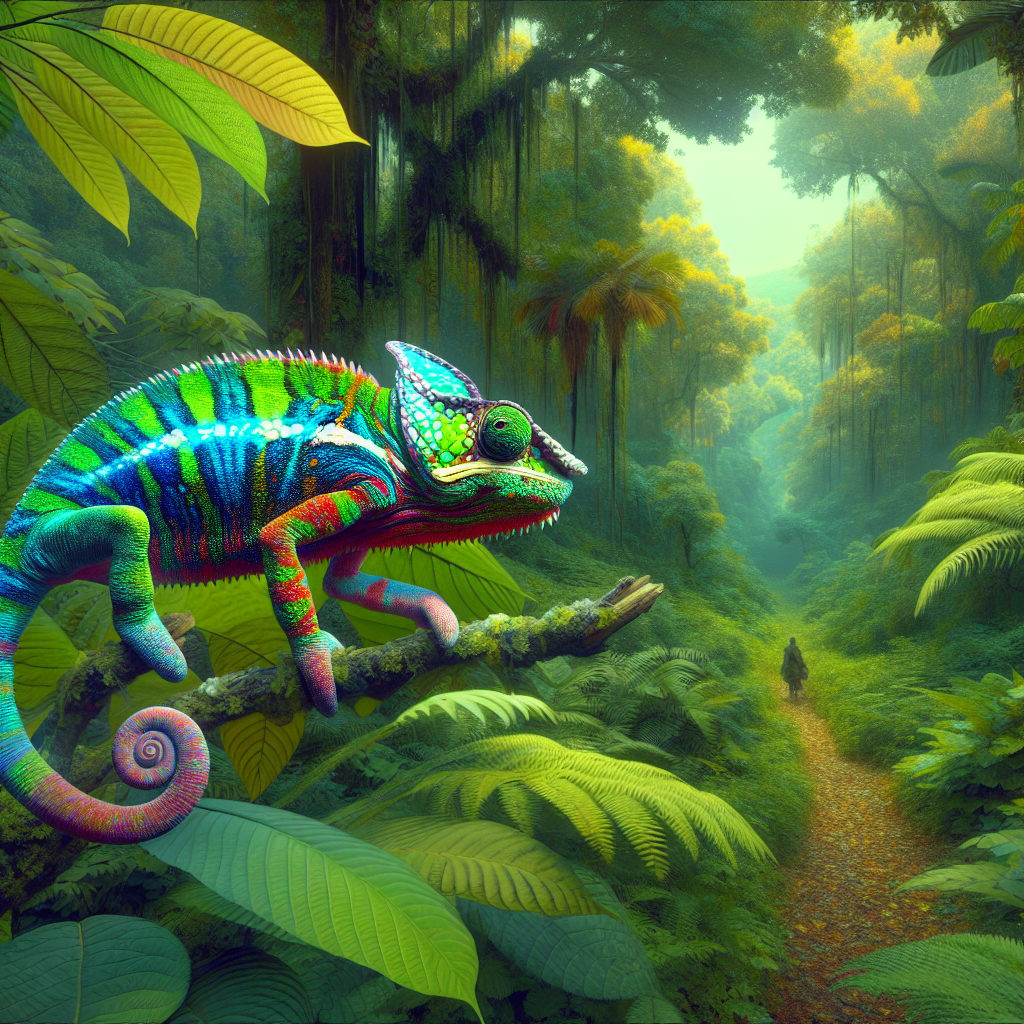

Meet O'Shaughnessy's Chameleon: Nature's Colorful Contortionist
Step aside, Harry Houdini; there's a less famous but equally fascinating escape artist lurking in the forests of Madagascar—the elusive O'Shaughnessy's chameleon! But hold onto your hats because this isn’t just any other chameleon. Known scientifically as Calumma oshaughnessyi, it’s a reptilian superstar with a knack for turning the rhythms of nature into a vivid spectacle of colors. Discovered in the 19th century by enthusiasts of natural beauty, this chameleon is a testament to the marvels of evolution, diversified habitats, and the adaptability of life on Earth.
The Identification: Who and What?
O'Shaughnessy's chameleon is a member of the chameleon family, perhaps one of the most charismatic animal families gracing our planet. With a scientific name honoring the British biologist Arthur W. O'Shaughnessy, this creature is no ordinary resident of the animal kingdom. Characterized by its stunning ability to blend into its surroundings, it can shift through a dazzling array of greens, browns, and deep reds depending on its mood, environment, or light exposure—an adaptation that seems almost magical but is rooted deeply in biology.
Generally measuring up to 30 centimeters in length, this creature is slightly above average compared to its other chameleon cousins. Its size, along with unique physical features like a knee or turret-shaped casque (a sort of helmet-like structure), makes it recognizable to those who seek it out.
The Habitat: Where in the World?
When it comes to location, O'Shaughnessy’s chameleon claims the dense tropical forests of Madagascar as its home, specifically in the eastern regions, where rainforests flourish. These vibrant jungles are rich in biodiversity, offering an excellent environment and an abundance of feeding options—primarily insects, which it catches with a sticky, lightning-fast tongue.
Madagascar itself is known as an evolutionary playground and a biodiversity hotspot, where generations of isolation have led to the development of flora and fauna unseen anywhere else in the world. Four out of five species found here are unique to the island. It’s an organic laboratory for learning, vital for scientists and nature enthusiasts aiming to comprehend ecosystems, evolution, and conservation in action.
Taking a Peek: When and Why
O'Shaughnessy's chameleon was first described in the late 19th century, a time when exploration of the natural world was not just a career but a way of life for many adventurous souls. Madagascar’s unique position as a biogeographical enigma fueled much of the interests of these naturalists. But why does this chameleon steal the spotlight? Simply put, it plays a vital role in its ecosystem as both predator and prey.
Its camouflage isn’t just a neat trick; it’s a survival tool, keeping the little creature out of sight from predators such as birds of prey or even snakes. At the same time, its sharp vision allows it to spot and capture insects with amazing efficiency, contributing to the balance of its habitat.
The Marvel of Adaptation: How Does It Work?
At the core of O'Shaughnessy’s chameleon’s chameleon-like behavior is its unparalleled capacity for color change. Unlike a mood ring from the 90s, its changing hues serve several potential purposes. These include camouflage, social signaling or interaction, temperature regulation, or physiological conditions like stress responses.
Underneath the outer skin layer are specialized cells called chromatophores, which contain different colors of pigments. Through expansion and contraction, they reflect light differently, causing the whole array of visible colors. The chameleon’s brain and nervous system direct this color-changing symphony, orchestrating it to be as subtle or striking as needed.
Conservation and Future Outlook: An Optimistic Approach
Despite the splendor of its adaptive tricks, O'Shaughnessy’s chameleon faces challenges. Habitat destruction due to logging, agriculture, and expanding human development threatens the lush forests of Madagascar—its sole home. While it is currently not listed as endangered, local conservation efforts are pivotal to preserving its natural sanctuary.
For chameleons and other unique creatures of Madagascar, sustainable practices and innovative conservation approaches offer hope. Education, responsible ecotourism, and support for local communities are key to ensuring their survival, serving as a microcosm of broader efforts to balance human activity with environmental stewardship.
Wrapping Up: A Fascinating Creature Worth Protecting
O'Shaughnessy's chameleon isn’t just a creature to admire; it represents the intricate tapestry of life, mixing art and science in its skin. By understanding its story, we step closer to appreciating the silence of the forest and the creatures that live within. It serves as a joyful reminder that the world is full of mysteries waiting to be uncovered, and these discoveries are as much about learning as they are about being in awe of life’s grandeur. We have much to learn from this little magician, not only about adaptation but about resilience, survival, and the beauty of biodiversity.
It’s in our hands to ensure that such wonders continue to thrive, so future generations can also be inspired and educated by the remarkable O'Shaughnessy's chameleon and its enchanting life in the emerald groves of Madagascar.