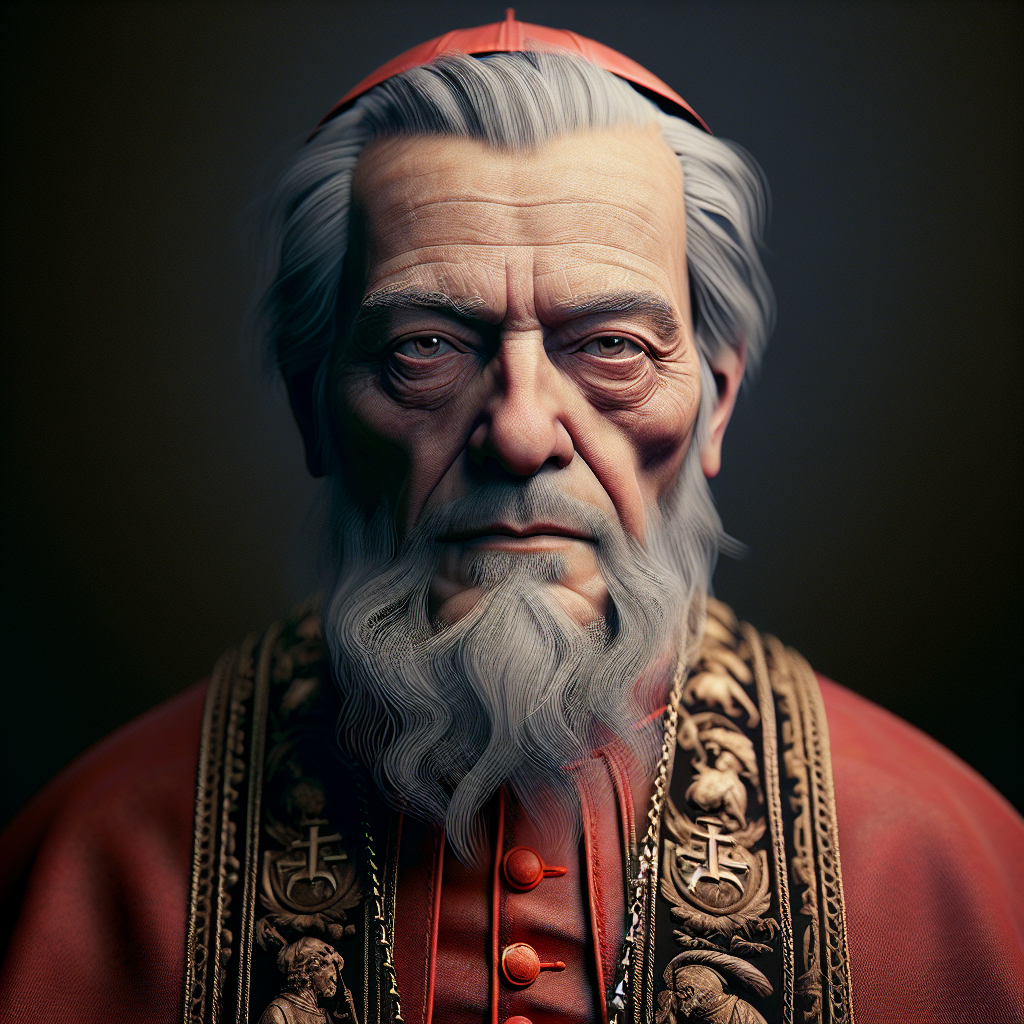

Nikolaus von Schönberg: The Cardinal Who Bridged Science and Theology
When a cardinal encourages a heliocentric theory, you know that history is not just about rituals and robes—it’s a gripping saga of intellectual courage and curiosity! Nikolaus von Schönberg, a German cardinal of the Catholic Church and a Renaissance humanist, played a significant role during a time when the universe was unfurling its secrets to a world poised on the crest of modernity. Born in 1472 in the little-known town of Schönberg, he later passed away in 1537 in the vibrant city of Rome, where he fearlessly navigated the complex dance between faith and emerging scientific thought. Why does a cardinal matter to the scientific community, you ask? Let's unfurl this exciting yarn of discovery and faith!
A Rivalry of Realms: Religion Meets Science
In the fervent age of the Renaissance, where art and science flourished like wild blooms, Nikolaus von Schönberg stood as a synapse between two seemingly disparate worlds. As a card-carrying member of the Catholic Church and a cardinal no less, his life was an embodiment of religious authority. Yet, beneath the grandeur of red vestments lay a mind genuinely excited about the universe's workings, resonating with the intellectual epicenter of his time.
One might think of the Church as rigid and resistant to the winds of scientific inquiry, but Schönberg represents an often-overlooked narrative—where faith and curiosity had their own harmonious symphony. His patronage extended towards Nicolaus Copernicus, the illustrious Polish astronomer famous for his revolutionary model placing the Sun, rather than the Earth, at the center of the cosmos. Schönberg’s interaction with Copernicus, urging him to publish his theories, is not only a historical footnote but a cataclysmic endorsement of science itself.
The Letter That Shook the Heavens
In 1536, von Schönberg wrote a letter to Copernicus, an intimate document that underscores his profound respect and enthusiasm for the new understanding of celestial mechanics being proposed. This wasn't just small talk or ceremonial gestures—it was a notable validation. Schönberg explicitly encouraged Copernicus, urging him to share his detailed findings with the wider world. Schönberg remarked on the 'novel thought', which made contemplation at such heights akin to divine inspiration. It was an epic interlude where theology and astronomy clasped hands in a mutual quest for truth.
Humanism in a Cardinal’s Heart
Beyond his bridge-building in science, von Schönberg exemplified core tenets of Renaissance Humanism. He fostered many intellectual exchanges, espousing ideals that emphasized human endeavors and achievements. Schönberg’s educational background was built upon the classical studies that were regaining popularity during this period, nurturing a love for knowledge that transcended traditional boundaries.
He advocated for education that wove together religious and scientific thoughts—a radical perspective at a time when these two were often at odds. Schönberg's beliefs resonate today, highlighting the immense value of comprehensive learning systems that cater to both our spiritual and rational curiosities, fostering a holistic understanding of our world.
Diplomatic Prowess: A Cardinal Navigates the Turbulent 16th Century
Nikolaus von Schönberg didn’t only make waves in the scholarly seas but navigated the treacherous political currents of his era with dexterity befitting a state diplomat. His service through various ecclesiastical positions, like the Archbishop of Capua, echoes tales of his astute diplomatic skills, which were put to the test during complex negotiations and ecclesiastical councils.
In his capacity, Schönberg executed the art of diplomacy, intertwining juristic, theological, and scientific understandings, augmenting his keen advocacy for peace—an eternal campaigner for the ethos of unity amid burgeoning sects and schisms in the Church. For Schönberg, everything from governance to celestial navigation had its part in the greater understanding of humanity and our purpose.
Schönberg’s Legacy in the Interstellar Tale
Nikolaus von Schönberg's engagement with Copernican theory and the humanist torch he carried into religious halls leave a legacy woven into the very fabric of science and philosophy. His actions affirm the belief that science and spirituality can magnificently coexist, each enriching the other.
His storied life, with all its significant intersections, stands to encourage modern scholars and theologians to understand that dwelling between faith and reason is not simply a trial but a transformative journey. Schönberg’s chapter in the timeless book of the universe immortalizes the veneration of knowledge pursued with passion and an open heart.
In celebrating Schönberg, we remember a human treasury of thought and a beacon that reminds us of the brilliant convergence of belief and evidence. Let us continue drawing maps in the stars—a tip of the cardinal's hat to Schönberg, whose compassion for understanding brought clarity to both church and cosmos.