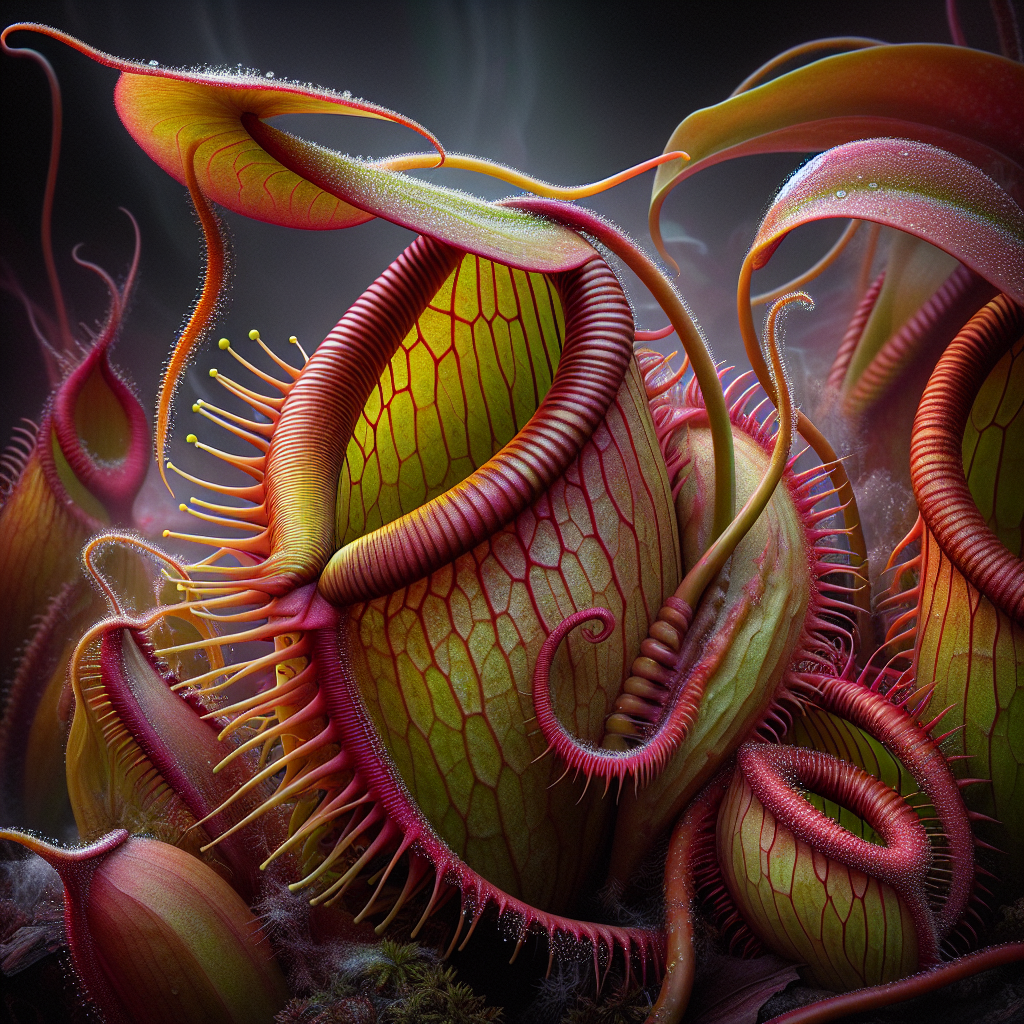

The Marvelous Nepenthes Micramphora: Nature's Tiny Pitcher Plant
Imagine a plant that not only survives but thrives by turning the tables on the animal kingdom! Meet the Nepenthes micramphora, a fascinating carnivorous plant species that hails from the lush, tropical regions of the Philippines. Discovered in 2002 by botanists Matthew Jebb and Martin Cheek, this diminutive yet captivating plant is found primarily on the island of Mindanao, specifically in the high-altitude montane forests of Mount Hamiguitan. The "why" behind its carnivorous nature is a brilliant evolutionary adaptation to nutrient-poor soils, allowing it to supplement its diet by trapping and digesting insects.
Nepenthes micramphora is part of the Nepenthaceae family, known for their unique pitcher-shaped leaves that serve as pitfall traps. These traps are ingeniously designed with a slippery rim and a digestive fluid-filled cavity, luring unsuspecting insects with nectar before they meet their fate. The plant's small size, with pitchers typically measuring just a few centimeters, makes it one of the more petite members of the Nepenthes genus. Despite its size, it plays a significant role in its ecosystem, controlling insect populations and recycling nutrients.
The discovery of Nepenthes micramphora was a significant addition to the botanical world, highlighting the incredible biodiversity of the Philippines. Its habitat on Mount Hamiguitan is a UNESCO World Heritage site, recognized for its rich flora and fauna. The plant's existence underscores the importance of conservation efforts, as its unique environment faces threats from deforestation and climate change.
The study of Nepenthes micramphora offers insights into the complex interactions between plants and their environment. Researchers are particularly interested in its digestive mechanisms and how it attracts prey, which could have broader implications for understanding plant evolution and adaptation. This tiny pitcher plant is a testament to nature's ingenuity, showcasing how life can adapt in the most unexpected ways.