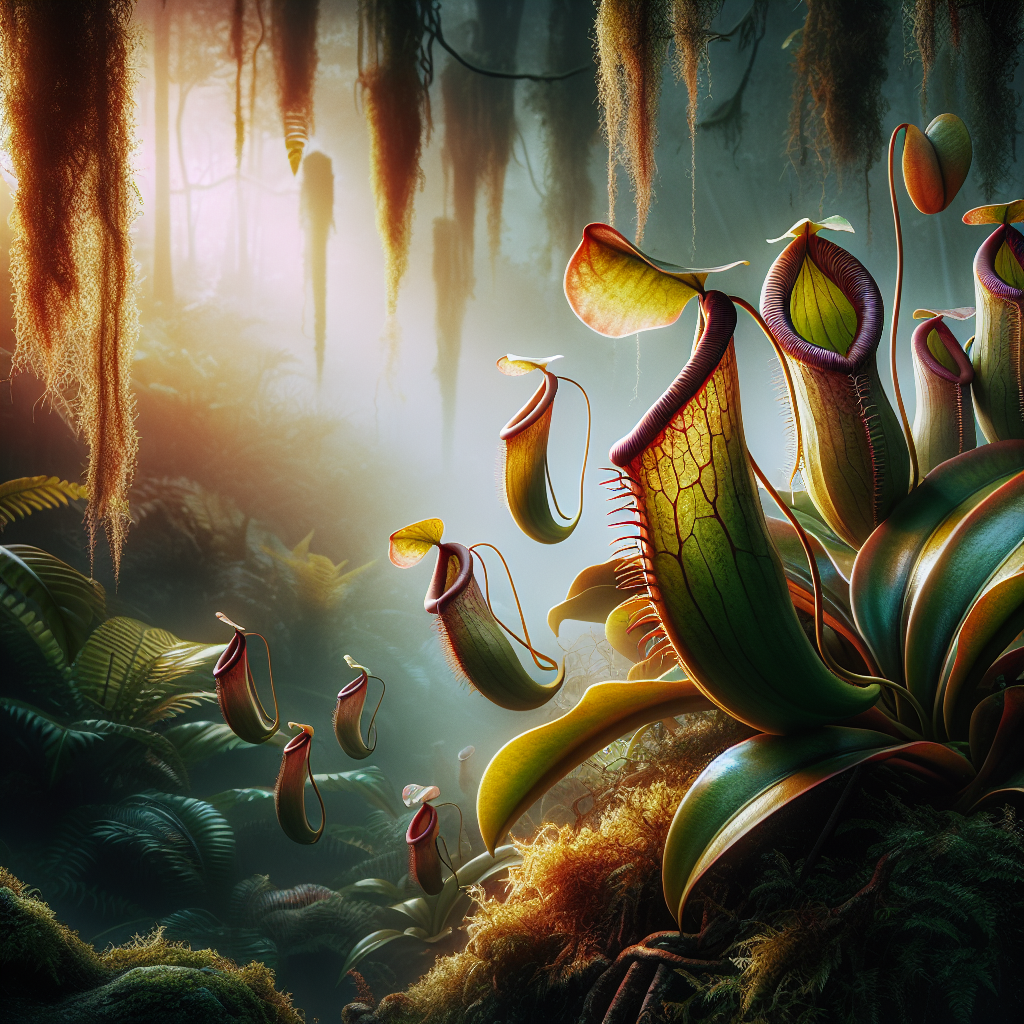

Nepenthes khasiana: Nature's Green Engineer
Prepare to be captivated by a plant that seems to have leapt straight out of a science fiction novel—the Nepenthes khasiana, a thrilling example of nature's curious ingenuity! This sublimal species of pitcher plant, boasting both scientific intrigue and enchanting beauty, is native to the lush, mist-laden hills of Meghalaya, India. With its exotic allure and vital role in biodiversity, this plant is not just another pretty face in the botanical world.
A Slice of Natural History
Nepenthes khasiana features prominently in the tapestry of plant evolution, showcasing a blend of biology that's as perplexing as it is effective. Picture a plant with a penchant for catching small animals and insects—a necessity born out of the nutrient-deficient soils in which it thrives. Known to botanists since it was first described in 1835, it was officially named and classified by the great Joseph Dalton Hooker in the 19th century.
Living Laboratories: Habitat and Adaptation
Nestled in the northeastern states of India, primarily Meghalaya, this endemic marvel inhabits altitudes ranging from 1,000 to 1,500 meters. Here, it finds a perfect home in humid, acidic soil where other plants might struggle to survive. In this environment, it dons the role of a crypto-omnivore, supplementing its nutritional needs through cunning traps that owe their efficiency to precise evolutionary adaptations.
The Natural Engineering
Nepenthes khasiana showcases an extraordinary natural architecture. Its ‘pitchers’ are sophisticated traps, hinged upon deceptive simplicity. At their core, these pitchers—a specialized leaf structure—secrete sweet nectar that lures unwary insects. Upon entering, the prey is ensnared within the slick, waxy inner walls of the pitcher. Submerged in the pool of digestive enzymes at the base, the prey succumbs to a slow, meticulous breakdown that results in the extraction of essential nutrients like nitrogen and phosphorous.
A Dance with Biodiversity
Why, one might wonder, does such a complex feeding system matter in the grand scheme of things? The answer is biodiversity. Nepenthes khasiana plays a critical role in balancing its ecosystem, both as a predator and as a host for myriad organisms. Its pitchers harbor small rainwater pools, nurturing a surprising demography of life forms such as mosquito larvae, tadpoles, and even some small vertebrates reliant on this makeshift aquatic habitat.
Current Threats and Conservation Efforts
Sadly, the thrill of seeing these remarkable biological wonders is becoming increasingly rare. With habitat loss, illicit trade, and the looming effects of climate change, this species has been pushed into the vulnerable category as per the IUCN Red List. But fret not, for human innovation is also a defender of nature! Dedicated conservation initiatives and educational programs in Meghalaya and beyond are tirelessly working to restore and protect the delicate ecological balance Nepenthes khasiana represents.
A Beacon for Future Evolution
The story of Nepenthes khasiana is one of hope amidst dire challenges. This plant is a precious genetic resource, a testament to the survival of the fittest—and the oddest. As we embrace the relevance of plant conservation, this carnivorous plant is a riveting example of nature's answers to environmental hurdles. It sparks curiosity, not only about its intricate biology but also about the grand potential of living systems to adapt, accommodate, and flourish.
Each soft ripple and stark adaptation within Nepenthes khasiana offers keys to unlocking senses of wonder and anticipatory zeal for what natural evolution might yet hold. In seeking to understand this plant, we find ourselves peering into the broader biosphere, envisioning futures where human actions align with the wisdom nurtured by millions of years of natural trials.
Nepenthes khasiana asks us to marvel and learn. Are you ready to embark on a journey with it?