
Discovering the Elegant Allure of Neoclassical Architecture in Russia
Have you ever wondered how the grandeur of ancient Greece and Rome made its way into the sprawling landscapes of Russia? The answer lies in the monumental transformation of Neoclassical architecture during the 18th and 19th centuries. This architectural style became a canvas for expressing Enlightenment ideals through symmetrical beauty and classical elegance right in the heart of Russia.
A Journey Back in Time
The emergence of Neoclassical architecture in Russia took place primarily in the late 18th century, flourishing through the early 19th century. It was a period steeped in optimism, where architects looked to the rationality and harmony of ancient cultures to inspire their designs. This style made prominent appearances in major Russian cities like St. Petersburg and Moscow, ushering in a new era of artistic expression that spoke to the rationalist spirit of the Enlightenment.
Why the passion for these classical designs? Well, the trend was part of a broader European love affair with ancient Greco-Roman culture, but it was also a reflection of Russia’s ambition to project power and sophistication. As Catherine the Great ascended to power and embarked on modernizing the empire, she gravitated towards Neoclassical architecture, seeing it as a way to align herself with Western Europe and its intellectual advancements.
Unveiling Neoclassical Symbols
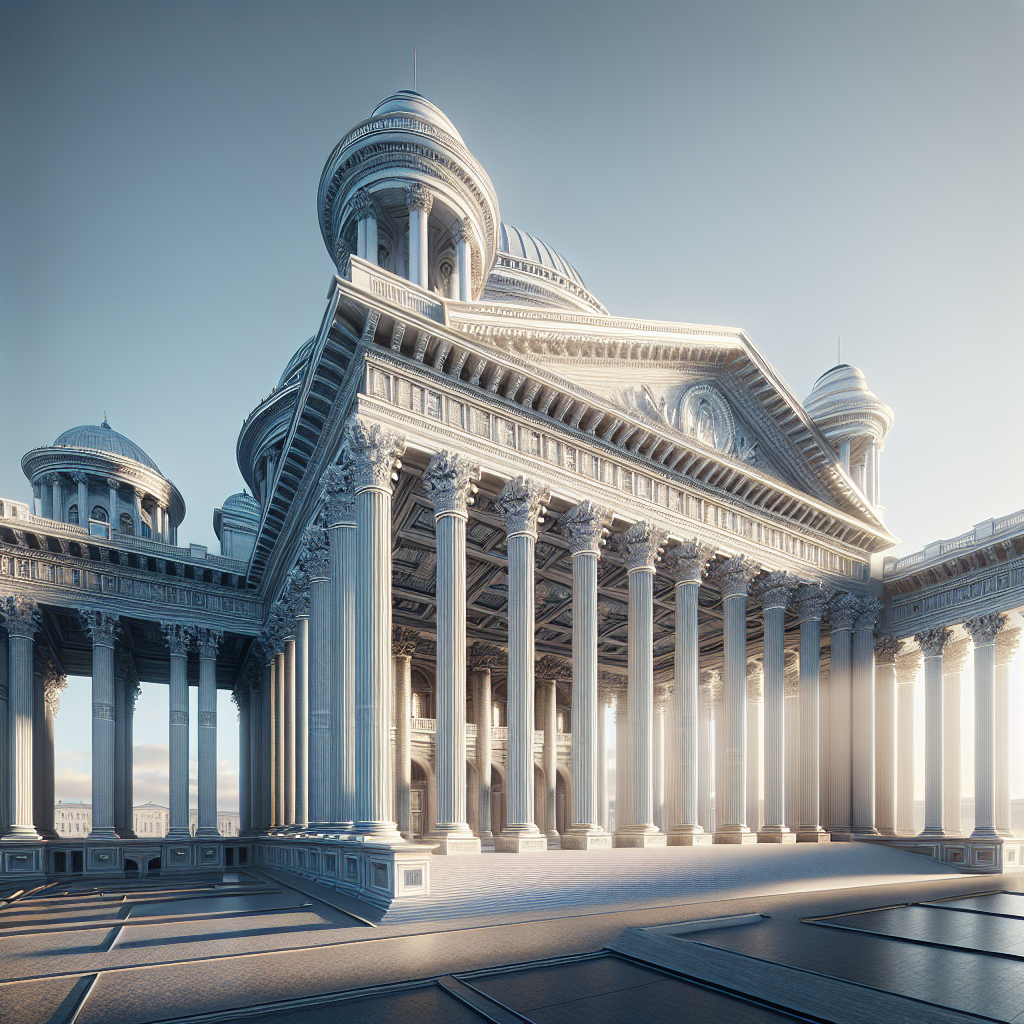
Diving into the visual hallmarks of Russian Neoclassical architecture, you'll find a captivating combination of formality and luxury. The fundamental characteristics included grand columns, symmetry, domes, and triangular pediments—all hallmark features of classical antiquity. These elements were integrated meticulously to design public buildings, palaces and even residential structures that would mark the skylines of Russian cities.
A prime example is the majestic Kazan Cathedral in St. Petersburg, designed by Andrey Voronikhin. Its colonnade draws inspiration from ancient Roman basilicas, symbolizing endless grace fused with structural stability. The cathedral became a centerpiece that not only illustrates architectural excellence but also reflects a national architectural narrative interweaving religion and history.
Beyond St. Petersburg, Moscow also became a pivotal stage for Neoclassical wonders. Architects like Domenico Gilardi and Osip Bove left indelible marks with buildings like the Bolshoi Theatre and the Pashkov House. Their work exemplified the blend of artistic ingenuity and deeper philosophical messages that challenge the confines of function-only architecture.
Voices Behind the Stones
An illuminating component of this architectural journey includes the architects themselves, whose vibrant imaginations painted Russia’s urban silhouette with Neoclassical brushstrokes. One such forward-thinking mind was Giovanni Battista Quarenghi, an Italian architect whose projects for Catherine the Great comprised several iconic palatial buildings. The Alexander Palace, with its linear layouts and majestic poise, stands testament to Quarenghi’s influence and mastery in marrying Western European tastes with Russian innovation.
Another influential figure was Russian architect Andrei Voronikhin. Having trained as a serf, Voronikhin symbolizes the socio-cultural evolution in Russia. His design for the Kazan Cathedral reflected not only his natural aptitude for classical sensibilities but also a spirit undaunted by societal constraints.
The Continuing Charm
Though the Neoclassical period was rooted in the past, its stories are still being written. Today's Russia bears many of these structures as heritage sites, functioning not merely as tourist attractions or scholarly interests, but as vibrant entities in culture and community. The preserved sites like the Winter Palace and the Hermitage Museum stand as magnets for eager learners and passionate historians alike, prompting questions about preservation and adaptation in contemporary contexts.
Restoration projects continue to breathe life into these historical structures. Whether through museum exhibitions or structural refurbishments, Neoclassicism’s spirit persists, inviting a continual rediscovery of the vision and narrative from the days of yore.
In Reflection
The charm of Neoclassical architecture in Russia goes beyond its aesthetic allure—it is a testament to human aspiration, a marriage of artistic elegance with functional integrity. Born in a time where ideas of enlightenment and progress held the world’s attention, it finds resonance even today. Perhaps, as you wander through these streets, the underlying optimism of the neoclassical vision encourages us all to look forward with a similar lust for understanding and beauty.
In essence, Neoclassical architecture in Russia captivates partially because it represents a collective human desire to reach towards intellectuality, aesthetics, and resilience. As you gaze upon these architectural masterpieces, let them remind you of the timeless aspiration to synthesize past grandeur with present ambitions—continuing dialogues that span centuries, connecting hearts and minds across time and space.