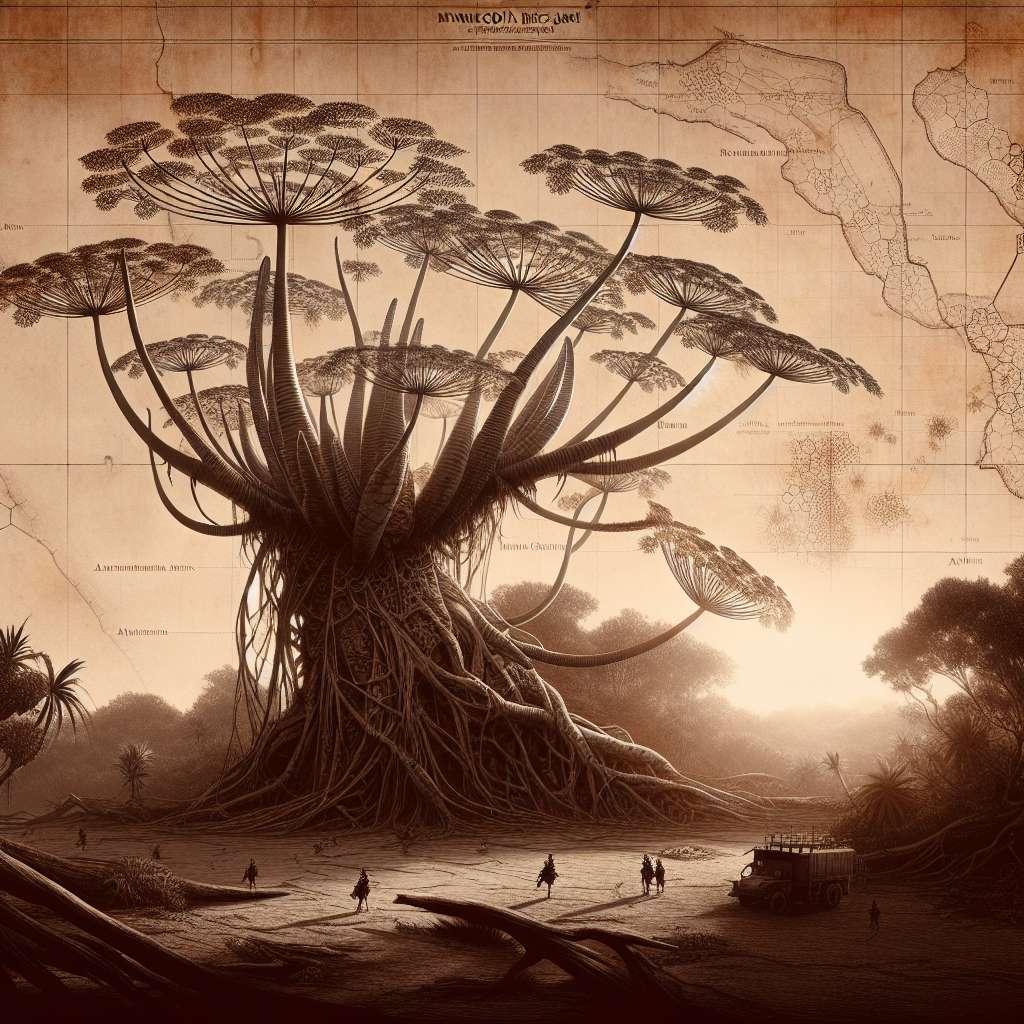

Unveiling Nature's Oddity: A Living Puzzle
Imagine stumbling upon a plant that seems like a tropical enigma, a hybrid of nature’s ingenuity and biological complexity. That’s Myrmecodia beccarii, a marvelous anthophyte whose existence is like a chapter taken straight from an evolutionary novel. Characterized by its bulbous body and symbiotic relationship with ants, this plant can be found serenely perched in the canopies of Queensland, Australia.
What Makes Myrmecodia beccarii Exceptional?
Myrmecodia beccarii, also known as the ant plant, isn’t your typical green companion. It belongs to the family Rubiaceae and is one of many plants that showcases a fascinating mutualistic relationship with ants. But why is this relationship so intriguing, you ask? Think of it as a mutual self-help club: the ant plant provides shelter and nourishment for ants, while the ants, in return, guard their leafy abode against predators and hordes of herbivores. It's a win-win scenario that deserves a closer look!
The Dynamic Duo: Plant and Ant
Envisage a bulbous, spiny chamber with a network of tunnels inside—it’s not a scene from a sci-fi movie but the natural architecture of the ant plant. These internal tunnels are meticulously crafted to house ant colonies. Ants help the plant by depositing nitrogen-rich waste within its tissues, which the plant absorbs as a vital nutrient. This incredible symbiotic relationship even plays a role in deterring herbivores from nibbling at their defensive plant partner.
Biologists like to call this fascinating teamwork ‘myrmecophytism’. It’s a showcase of evolution’s creative prowess, emphasizing the power of cooperation, which is as inspiring in the botanical world as it is in human endeavors.
Home Sweet Home: Queensland’s Canopy
The story of Myrmecodia beccarii unfurls in the lush rainforests of Queensland, Australia. Here, these unique plants thrive as epiphytes, meaning they grow on trees rather than in the soil. Their bulbous stems not only support the ants but also store water, allowing them to withstand periods of dryness.
The tropical climate and dense foliage of Queensland provide an ideal environment, offering both the humidity and tree branches these plants need to prosper. In this natural spectacle, both ants and ant plants are actors playing out a timeless narrative of mutual survival.
The Ant Plant’s Journey Through Time
Named after the famous Italian botanist Odoardo Beccari, who first documented the plant in the 19th century, Myrmecodia beccarii carries both scientific and historical significance. Beccari's contributions have laid the foundation for understanding not just this plant but a myriad of other ant-associated species. His work underscores the intrinsic value of plant-animal interactions and remains a valuable point of reference for modern-day botanists.
A Closer Look at Adaptation
Nature’s inventiveness doesn’t end there! To fortify the alliance between ants and the plant, Myrmecodia beccarii has evolved particular physical characteristics that ensure this relationship thrives. The plant's thickened, spiny exterior wards off animals that may cause harm, while the internal tunnels are a perfect refuge for ant colonies. These specialized adaptations highlight an evolutionary journey finely tuned for cooperation and survival.
The Cheerful Side of Science
Science, after all, is not just about unraveling mysteries but celebrating them. The tale of Myrmecodia beccarii is a testament to nature’s remarkable ability to innovate, adapt, and cooperate. This wonderful collaboration between plant and ant highlights how life on Earth is interconnected, encouraging us to see the natural world not as separate entities but as a harmonious intricacy of life.
Conservation and Curiosity
Preserving such marvels is more essential than ever. With rainforest ecosystems facing threats from deforestation and climate change, supporting conservation efforts ensures that we continue to uncover the untold stories of the natural world. As curious minds with limitless potential, our role is not just to study but to cherish these ecological wonders.
A Living Textbook: Lessons from the Ant Plant
Myrmecodia beccarii challenges us to rethink traditional views on organisms as solitary survivors. Instead, it reveals a world where synergy, cooperation, and mutual benefit are cornerstones of ecological success. As we peer closer into the lives of these tidal organisms, we’re invited to learn and perhaps implement some lessons in our quest for harmony. So whether you’re a seasoned botanist or just a lover of life’s oddities, the ant plant beckons us all: what other secrets does nature hold?