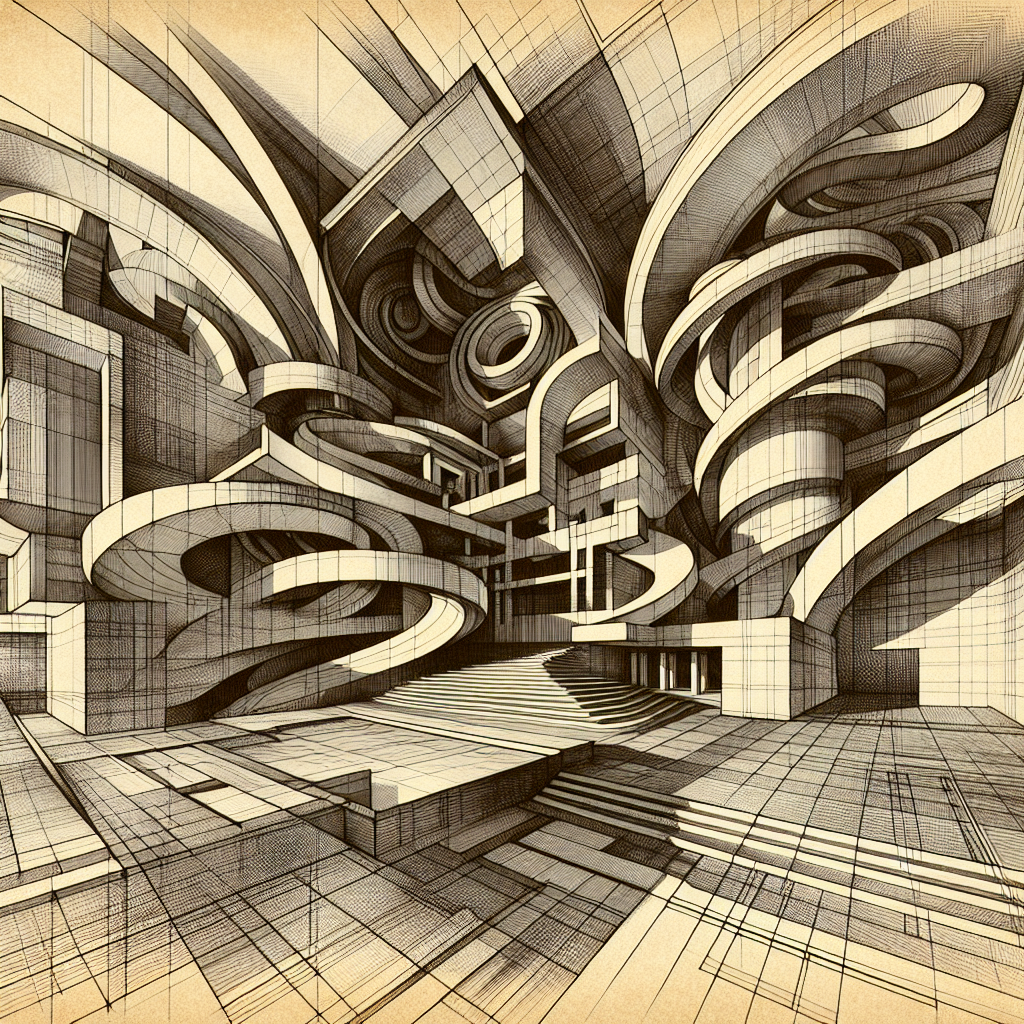

Morris Lapidus: Architect of Joy
Picture this: stepping into a hotel where the surrounding architecture seems more like an exuberant dance than a static structure, drawing you into its very fabric of pleasure and luxury—that's exactly what Morris Lapidus, the mastermind of 20th-century American architecture, intended! Born in Odessa in 1902 and having made his mark primarily in the bustling and innovative world of Miami, Lapidus became known for his bold use of color, curves, and his trailblazing theatrical style, revolutionizing hotel architecture in the post-WWII era.
A Journey Through Time
Morris Lapidus was a visionary whose innovative designs broke away from the utilitarian style that was mainstream in his early career. Trained as an architect in New York City at Columbia University, Lapidus initially dabbled in retail design, orchestrating storefronts that captured the attention of passersby. It wasn't until the late 1940s, when he set his sights on Miami Beach, that he began crafting his legacy. The backdrop of sunny Miami provided the perfect stage for his imagination to flourish.
One of Lapidus's most renowned creations, the Fontainebleau Hotel, completed in 1954, exemplifies his unique approach. Here, Lapidus embraced the challenges of creating grandeur within a beachfront property. His designs were often filled with what he termed "the architectural whimsy." He wasn’t one to shy away from breaking the rules—spiral staircases leading nowhere and extravagant lighting fixtures became hallmarks of his affectionately nicknamed "Miami Modern" style.
The Architect of Joy
What made Lapidus truly stand out was his philosophy that architecture should evoke joy and delight, qualities often overshadowed by formality in his peers’ designs. An incorrigible optimist at heart, he sought to achieve what he believed people wanted: a touch of drama and exuberance. Lapidus famously argued, "You don't love it because it's beautiful; it's beautiful because you love it." His work was all about the emotional response, making his structures not just places of habitation but settings that created unforgettable experiences.
His work met with criticism from traditional architects who deemed it kitsch and overly theatrical. But for the tens of thousands of guests who flocked to hotels like the Eden Roc and the Americana (later known as the Sheraton Bal Harbour), and who admired the Lincoln Road Mall—a pedestrian street turned into an artistic promenade—Lapidus had crafted architectural stories that would become beloved memories.
Pushing the Boundaries
The flamboyance of Morris Lapidus can be understood best through the innovations he brought forth in his designs. Heavily influenced by his background in theater design, Lapidus employed all the theatricality one would find on stage, including illusionary landscapes, extravagant design motifs, and the ever-iconic "Staircase to Nowhere." This design element embodied his philosophy, adding an element of surprise and whimsy, deliberately contrived to make life feel like a nightly gala.
This boundary-pushing style continues to influence elements of modern architecture today. As hotels becoming more experience-oriented in the 21st century, with social media influencing design thinking, Lapidus's legacy finds itself in a burst of nostalgia, resonating with the Instagram generation that values aesthetic experiences.
The Legacy of Lapidus
Morris Lapidus passed away in 2001 at the venerable age of 98, leaving behind a legacy that inspires architects and adores guests to this day. The renaissance of his style in the late 20th and early 21st centuries is a testament to how far ahead of his time he really was.
Perhaps what we can learn from Lapidus, in this fast-paced world of ours, is the importance of joy itself. His architecture invited people to linger, smile, and be enchanted—a reminder that our environments can elicit emotion and beauty even in their simplest indulgences.
Lapidus's work serves a higher purpose in architecture: not merely to provide shelter, but to enrich lives through the expression of imagination, color, and vivacity. To embrace his work is to embrace a spirit of innovation and a zest for life that we, as a society, are ever in search of.
Today, as we walk past the Lincoln Road Mall or stay at his acclaimed hotels, we aren't just interacting with buildings but experiencing joy through world-class architecture. Morris Lapidus didn't just build structures; he gave us the gift of spectacular expression—a sacred promise that life, indeed, should be lived in a grand parade of vibrancy.