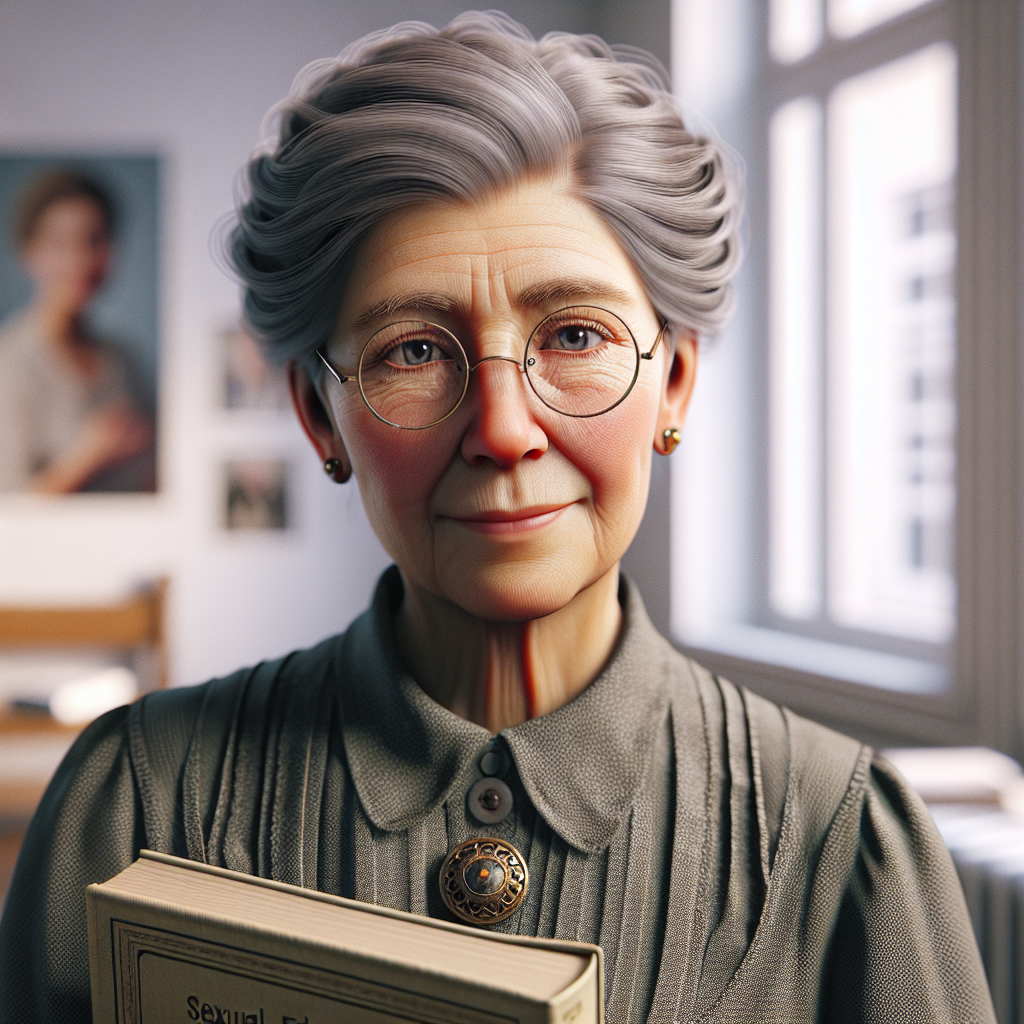

Monika Krause-Fuchs might have been the original cultural ambassador of inner freedom and open discussion in Cuba—a place where traditional values tend to clash with modern ideals. Originally from Germany, Monika was a woman ahead of her time when, in the late 1970s, she blazed a trail in Cuba that intertwined sexuality, education, and openness. Her pioneering work as a sex educator in post-revolutionary Cuba raised eyebrows but brought about meaningful change by fostering a more frank dialogue about human sexuality.
The Journey of an Unlikely Ambassador
Monika Krause-Fuchs's odyssey began in her native Germany, where she was born in 1941. With a background in psychology, her early career was influenced by the socio-political landscape of post-war Europe. Her life took an intriguing turn when she married a Cuban diplomat, leading her to Cuba—a land of complex cultural traditions and conservative ideologies regarding gender and relationships.
Upon arriving in Cuba, Monika discovered a society steeped in privacy about issues concerning sexuality and reproductive health. Realizing the gaps in education and resources, especially concerning women’s health and rights, she embarked on an ambitious mission: to promote open dialogue about human sexuality on this vibrant but reticent Caribbean island.
Education as a Tool for Empowerment
In the early 1980s, Monika became director of Cuba's National Sex Education Program, a groundbreaking initiative under the auspices of the Casa de Orientación a la Mujer y la Familia (Women's and Family Guidance House). Her scientific approach was both practical and empathetic, addressing not just the biological aspects of sexual health, but its psychological and social dimensions as well.
Her optimism and dedication to learning drove her to tailor educational content to suit Cuban sensibilities, aiming to replace myths and misconceptions with informed discussions. Under her leadership, educational programs flourished. She made sure that sex education was not only about preventing unwanted pregnancies and STDs but also about nurturing healthy relationships and self-awareness.
Breaking Cultural Barriers
Imagine a society where talking about sex was as taboo as discussing one's finances. Monika Krause-Fuchs tackled such cultural barriers with courage and sensitivity. By capitalizing on her European perspective and blending it with an understanding of Cuban culture, she managed to challenge and gradually change societal norms. It’s a testament to her engaging personality and scientific rigor that Monika’s work resonated across age groups and societal strata.
She delivered lectures, conducted workshops, and even created television programs to reach different demographics. Her work also inspired educational content for schools, aiming to introduce sex education as an integral part of the curriculum. One might say that Monika didn't just educate Cubans about sex; she liberated their conversations about it.
The Legacy of Monika Krause-Fuchs
After over 20 years of groundbreaking work in Cuba, Monika returned to Germany but left behind an indelible legacy. Her contributions helped transform how sexual education was perceived and implemented across the island. The essence of her work wasn't just in the programs she developed or the countless workshops she conducted, but rather in the change of mindset she inspired.
Today, institutions in Cuba continue to develop sex education programs that are grounded in Monika’s original framework. Her legacy echoes through the educational materials, policymaking, and the gradually shifting cultural landscapes. This shift towards a more open dialogue about sexual health and gender equality exemplifies the optimism and humanity that Monika tirelessly championed.
Reflections on Human Understanding
Monika Krause-Fuchs's work is a shining example of how educational initiatives, when combined with cultural sensitivity and unyielding determination, can foster significant societal change. Her life story enlightens us on the importance of intertwining scientific understanding with empathy—a combination crucial for addressing complex human issues today.
Her story is a reminder that the path to progress is often paved by those unafraid to speak openly in societies that resist change. Monika's journey reflects the potency of optimism and the power of education in enhancing human life.
The Inherent Hope in Human Progress
Ultimately, Monika Krause-Fuchs stands as a testament to humanity’s ability to learn, adapt, and evolve. Her scientific approach illuminated the way for many in Cuba, catalyzing a transformation that transcended time and space. The lessons from her life encourage us to remain hopeful—her belief in the potential of open, informed conversations continues to inspire those striving for social progress today.