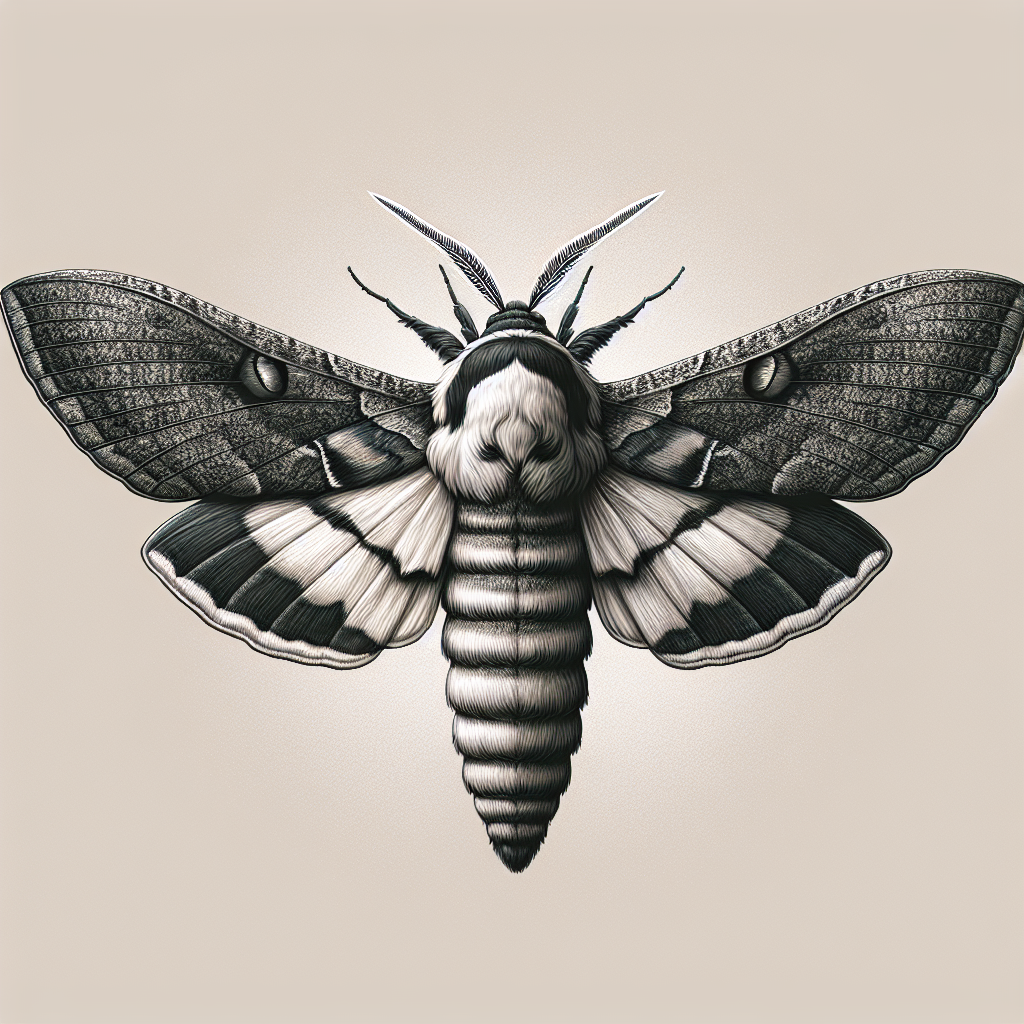

Imagine strolling through a tropical forest at dusk when, suddenly, a shadowy figure flutters past like a miniature hummingbird. Welcome to the captivating world of Manduca gueneei, a moth species that dances elegantly through the night. This incredible insect belongs to the family Sphingidae, popularly known as hawk moths, residing primarily in the lush regions of Central and South America. First described in the late 19th century, the Manduca gueneei stands out due to its mysterious allure and unique characteristics. In this post, we'll explore what makes Manduca gueneei special, why it captures the imagination of entomologists, and how it fits into our ecosystem.
A Unique Place in Nature
At first glance, Manduca gueneei may seem just another insect in the rich tapestry of the rainforest. However, its existence is a testament to nature's intricacies. It's part of a system that has evolved over millions of years, where every creature plays a critical role. Manduca gueneei acts as both pollinator and prey, bridging the gap between nocturnal flora and fauna. Its life revolves around not just surviving but maintaining the balance within its environment.
A Family Affair
Understanding the significance of Manduca gueneei requires a closer look at its family—the Sphingidae. This family is famous for their speed and agility, traits that have earned them the nickname 'hummingbird moths.' Members like the Manduca gueneei have adapted to nighttime life, with their ability to hover and feed from flowers at night providing critical pollination services. The Manduca genus itself is renowned for several well-known species, such as the tomato hornworm, a bane to gardeners but a wonder of the natural world.
Anatomy of a Night Flyer
Let’s gaze closer at the anatomy of this fascinating moth. Manduca gueneei typically boasts a wingspan of up to four inches, with wings that are tapered and built for speed and endurance. The body is sleek, adapted for rapid flight, allowing the moth to zip between flowers and escape predators. Its thorax contains powerful muscles that fuel these rapid movements, a testament to insect engineering.
Coloration and Camouflage
The coloration of Manduca gueneei is a study in masterful camouflage. It often sports a mix of grays, browns, and greens, mimicking the shades of tree bark and foliage. This ability to blend into its surroundings provides essential protection from predators such as birds and bats. Interestingly, the underwing can have more vibrant colors, which may be used to startle predators when the moth is in flight.
The Life Cycle of Manduca gueneei
The lifecycle of a Manduca gueneei is a journey through transformation. Its life begins as an egg, usually laid on the underside of a host plant. Upon hatching, the caterpillar proceeds through several larval stages, known as instars. During this time, it exhibits voracious feeding behavior—essential for storing energy for the pupal stage. This stage is a wonder in itself, where within a protective casing, the insect undergoes a metamorphosis into its adult form.
Adaptations for Survival
Survival in the wild demands adaptability, and Manduca gueneei is well-equipped. The caterpillar stage is crucial for growth, and during this time, it may switch host plants if necessary. As an adult, its nocturnal habits help avoid many predators active during the day. Nature has imbued these moths with the tools needed to thrive across generations.
Ecological Roles and Contributions
Manduca gueneei is not just a participant in its environment—it actively contributes to its health. Through its pollination activities, it aids in the reproduction of various plant species, ensuring floral diversity. This symbiotic relationship illustrates the interconnectedness of all species within an ecosystem.
Interdependence in the Ecosystem
In a broader context, the presence of Manduca gueneei signals the health of its habitat. Its existence supports other wildlife, providing food for predators and helping sustain a balanced food web. In this way, Manduca gueneei emphasizes the delicate balance and interdependence within nature—the loss of one species can ripple through the entire ecosystem.
The Human Connection
Humans have always been both observers and sometimes disruptors of natural systems. Our understanding of species like Manduca gueneei shows how human actions impact wildlife, and the need to protect these intricate worlds. Entomologists and conservationists work tirelessly to understand and preserve such habitats, recognizing their value—not only for their beauty but for their crucial role in sustaining life on Earth.
Conservation Efforts
Steps to conserve species like Manduca gueneei involve protecting natural habitats and encouraging biodiversity-friendly policies. Efforts are also made to educate the public, showcasing the beauty and essential nature of such creatures. Growing awareness and appreciation for biodiversity play a critical role in fostering stewardship and sustainable practices.
Conclusion
Through this journey of understanding Manduca gueneei, we've touched upon the elegance of evolution and survival. This moth is a marvel of adaptation and resilience, serving as a reminder of the interconnectedness of life on this planet. As we continue to learn about such species, we not only enrich our knowledge but also deepen our connection with the natural world, ensuring its splendor is preserved for future generations to cherish.