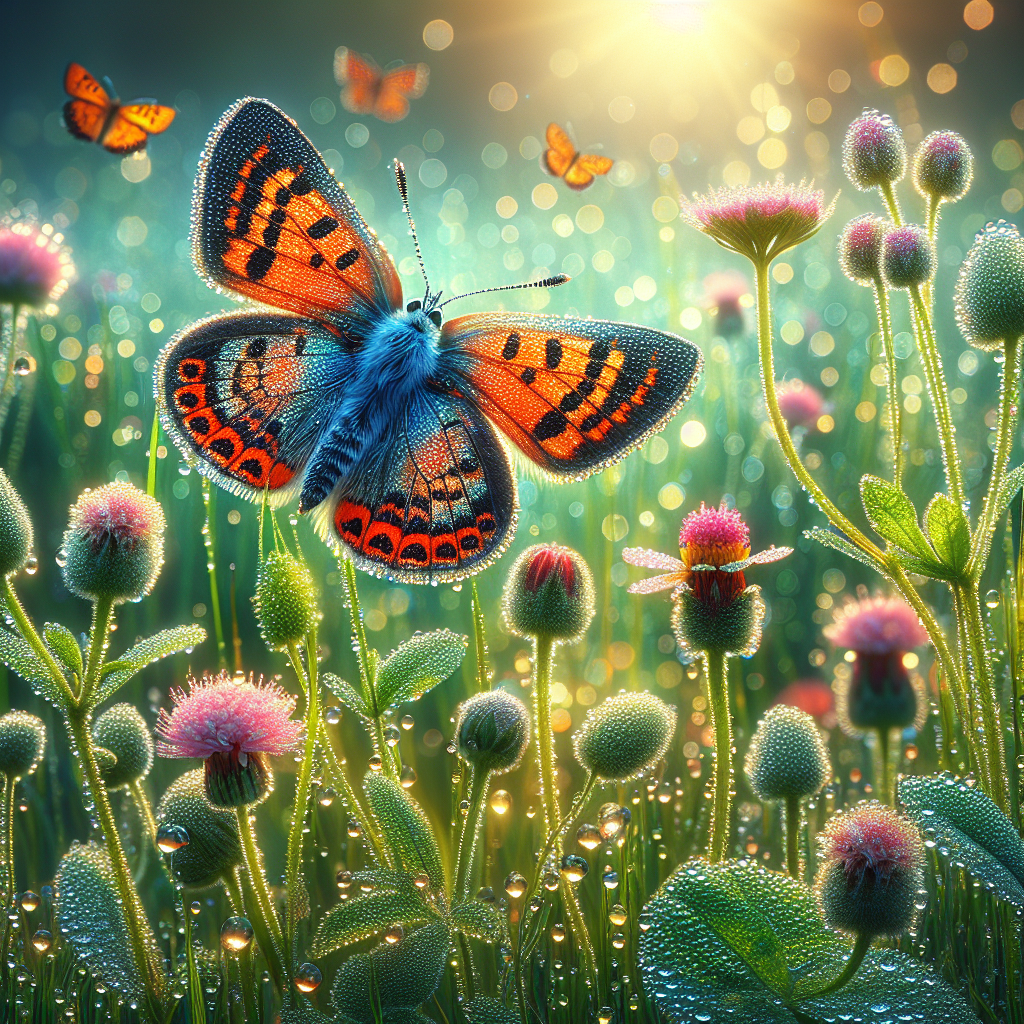

The Dazzling World of Lycaena editha: A Butterfly Marvel
Imagine a butterfly so captivating that it seems to have been painted by the hands of an artist! Meet Lycaena editha, a stunning species of butterfly that belongs to the family Lycaenidae. This enchanting creature can be found fluttering through the meadows and grasslands of North America, particularly in regions like California and Oregon. The first scientific description of this butterfly was penned by the entomologist William Henry Edwards in the 19th century, who was fascinated by its vibrant colors and delicate form. But what makes Lycaena editha so special, and why should we care about this tiny marvel?
Lycaena editha, commonly known as the Edith's Copper, is a small butterfly with a wingspan ranging from 25 to 32 millimeters. Its upper wings are a brilliant coppery-orange, adorned with black spots and a dark border, while the undersides are a more muted gray with subtle orange and black markings. This coloration not only makes it a joy to observe but also plays a crucial role in its survival, as it helps the butterfly blend into its surroundings to avoid predators.
The life cycle of Lycaena editha is a fascinating journey from egg to adult butterfly. The females lay their eggs on specific host plants, primarily species of the dock and sorrel family. Once hatched, the caterpillars feed on the leaves of these plants, growing and molting several times before pupating. After a period of metamorphosis, the adult butterflies emerge, ready to continue the cycle of life.
The presence of Lycaena editha in an ecosystem is an indicator of environmental health. Butterflies, in general, are sensitive to changes in their habitat, making them excellent bioindicators. The conservation of this species is vital, as it reflects the well-being of the ecosystems they inhabit. Protecting their natural habitats ensures the survival of not only Lycaena editha but also countless other species that share the same environment.
In a world where biodiversity is increasingly threatened, the story of Lycaena editha serves as a reminder of the beauty and complexity of nature. By understanding and appreciating these delicate creatures, we can foster a greater sense of stewardship for the natural world and work towards preserving the intricate web of life that sustains us all.