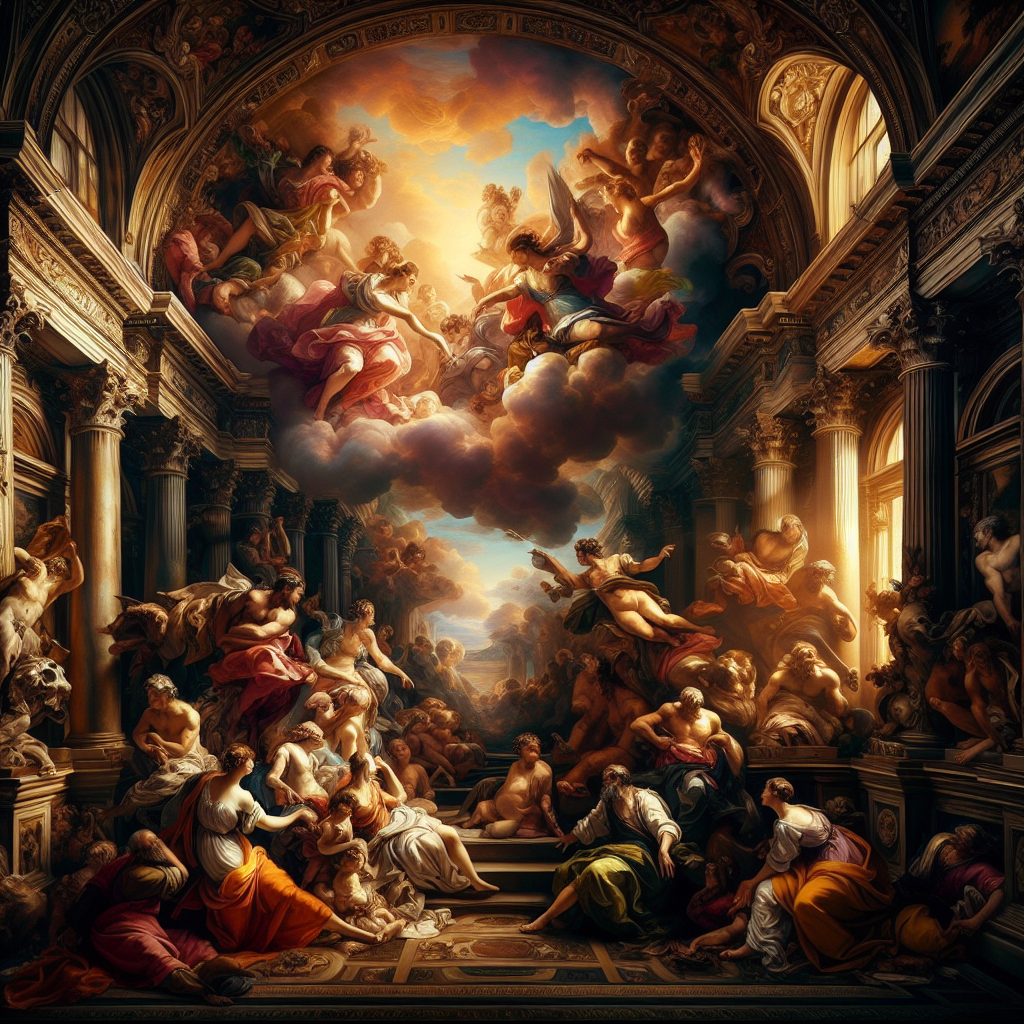

Luca Giordano—imagine a painter so fast he could seemingly outrun the very passage of time! Known as the 'Thunderbolt' of the art world, this remarkable Italian artist of the 17th century captivated audiences with his rapid brushstrokes and vast body of work. Born in Naples in 1634, Giordano wielded his brushes with a dexterity that was second to none, painting his way across Italy and Spain, infusing the Baroque era with his vibrant creativity. Why should you care? Because understanding Giordano helps us to appreciate the layered evolution of art, the expression of dynamic human emotion, and the reflection of societal changes during a transformative period in history.
The Remarkable Speed and Skill of 'Luca Fa Presto'
Luca Giordano, affectionately called 'Luca Fa Presto'—'Luca, Work Quickly'—earned his nickname through an uncanny ability to produce artwork at an astonishing pace. But what exactly made him the speed demon of his era? It wasn't mere rush; it was efficiency blended with astonishing skill. Giordano's ability to painterly capture nuanced emotion and layered histories on his canvases suggests not haste, but mastery.
Giordano’s technical prowess allowed him to execute complex compositions with bold colors and dynamic forms. He revolutionized the Neapolitan painting scene with his colorful interpretations and strategic employment of light and shadow, almost like composing a symphony on canvas. His paintings are living testaments to a mind that could anticipate the next stroke before the first had dried. Consider, for instance, his work in the Santa Maria della Salute in Venice, a space transformed by Giordano’s ecstatic vision—a vision that looks almost effortless.
A Prolific Career Spanning Italy and Spain
Why was Giordano’s work so critical to Italy and Spain’s cultural fabric? Because it reflected a time of shifting tides in the socio-political landscapes. Giordano crisscrossed Italy, bringing with him an electric energy that lit up cathedrals, palaces, and monasteries. His work reached its pinnacle during his eight-year tenure in Spain, serving under King Charles II. Imagine standing in the Escorial Palace, where his frescoes breathe life into the walls, each scene a vivid tableau of history and devotion.
While his rapid execution stirred envy (and sometimes dismissal) among contemporaries, it was this very speed and proficiency that allowed Giordano to contribute prolifically to the Baroque movement. From grand religious scenes, intricate portraits, to vivid mythological depictions, his oeuvre is an eclectic narrative reflecting the human spirit’s resilience and search for meaning.
The Human Element in Art and Technique
We all marvel at the finished artwork, but have we considered the intellectual rigor behind it? Giordano’s art provides a conduit to explore how human intellect, emotion, and ambition intertwine in the tapestry of creativity. His efficiency wasn’t merely a byproduct of speed but demonstrated a deep understanding of materials and techniques, transposing his internal world into palpable beauty.
Consider his painting 'The Fall of the Rebel Angels'—a dynamic collision of color and form, capturing the biblical story with visceral intensity. It’s a vivid illustration of how Giordano interpreted human struggle and redemption, using chiaroscuro to dramatize divine narratives. This narrative depth, character essence, and emotional resonance are what makes his work perennially captivating.
Why Luca Giordano Matters Today
You might wonder, why delve (oops, let's say 'explore') into a 17th-century artist’s life in today’s digital age? It’s pretty simple, really. Luca Giordano's work compels us to reflect on creativity as a timeless element, transcending time, space, and medium. His paintings lay a cornerstone for conversations about speed versus quality, tradition merged with innovation, and the universal reach of art.
Moreover, understanding Giordano invites a larger conversation about adaptability and how it plays a crucial role in thriving even during unpredictability. By examining how he seamlessly worked across differing cultural landscapes, it encourages us as humans to be flexible, open-minded, and ready to embrace change.
A Legacy of Inspiration
Luca Giordano's artistic triumphs remind us that art transcends mere creation; it is an ongoing conversation with humanity's past, present, and future. We are reminded that creativity, open-mindedness, and speed not only can coexist but can also create works that influence generations.
In essence, by diving into Giordano’s life, we not only appreciate the fruits of his labor but also find inspiration to confront our own endeavors with vigor and speed, without sacrificing quality. Whether it’s a stroke of paint or a keystroke on a laptop, embracing the momentum of creativity can propel us as societies and individuals towards innovation and discovery.